Showing posts with label plant lists. Show all posts

Monday, March 29, 2021

2021 List of Great Culinary and Medicinal Herbs

In my email recently I got my “Just the Essentials.”  It is the “extra” short publication that we get on the in-between months of The Essential HerbalMagazine.  I regularly write for the magazine, which comes out 6 times a year as an eMagazine.  “Just the Essentials” tides us over until the next full version arrives.  I love it because it brightens my email box with fun herb info at unexpected times.


In the most recent version, Tina Sams compiled a list of Culinary and Medicinal herbs that are most important to her.
  It got me thinking because my list was not the same as hers. So I am sharing my 2021 list of great Culinary and Medicinal Herbs.

I had a lot of winter kill this year.  My thyme plants are not reviving as I would like and my rue plants died, however they self-seed, so once the soil warms I will probably be fine. As a result I am beginning my shopping because there will be many plants that I will have to replace!

2021 List of great Culinary and Medicinal Herbs

Culinary List:
Basil – I like to get Genovese, Red Rubin, Purple Ruffles and Sweet Dani Lemon Basil.  As Tina says you can never have too much Basil!

Chives – this easy Spring blooming perennial is perfect for making herb vinegar and the mild onion flavor is great in recipes, dips, salads, side dishes, and or course on potatoes.
Cilantro – Seed this plant over and over to get a constant crop and save the seed which is coriander and great in baking and pickling. Remember if it is not for you it is all inn your genes.
Dill – An annual, I sow a row, then reseed the row every two weeks to give me a continuous crop throughout the summer and plenty of seed to save and use for pickles.

Flowering Marjoram


Marjoram – You can use this as a substitute for oregano, it is harder to get a bad flavored plant, and the flowers that arrive in late summer are nice to preserve and use as a dried decoration for packages, soup wreaths and dried arrangements.

Rosemary – adds so much to chicken and beef roasts and stews.  Very tender perennial that I have to grow in a pot or transfer to a pot of overwintering.  I found the best place to keep it in winter is by the back door.  Less dry and less hot in that location and it continuers to stay green and lush..
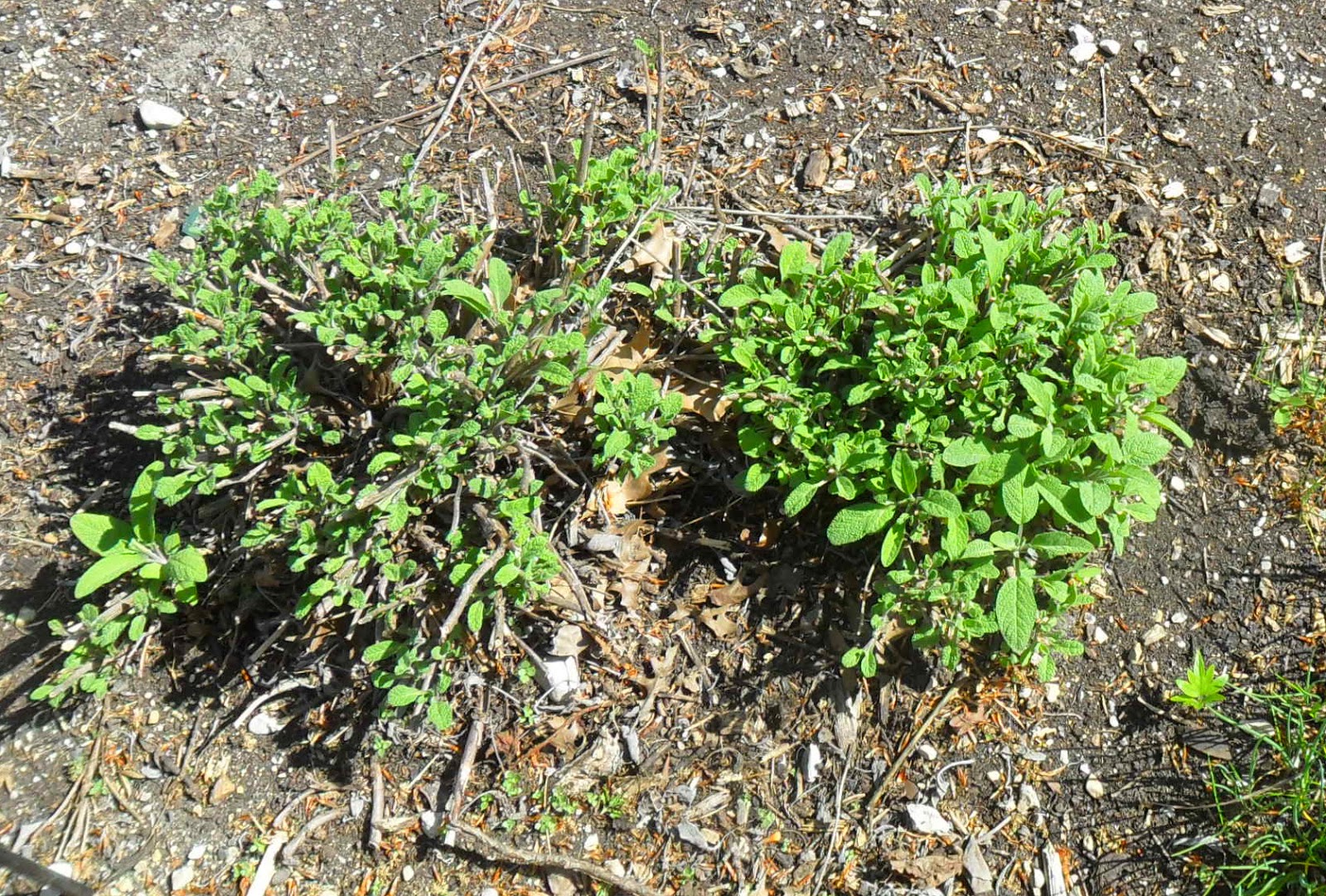
Sage – So delicious with fall dishes and once it’s in the garden, it can find its way into lots of meals. I prefer Berggarten Sage as the leaves are large and the plant takes longer to get woody.


The rounded leaves of berggarten sage

Tarragon – this flavorful sauce herb also makes a great vinegar.  Remember to plant it in the back as it gets tall and unruly and trim to the ground in spring as the new growth always springs from the root.

Thyme – should be perennial, but often requires replacement. Doone Valley is my favorite Lemon Thyme variety, and Wedgewood is lovely in a border with its variegated leaves.


Medicinal List:

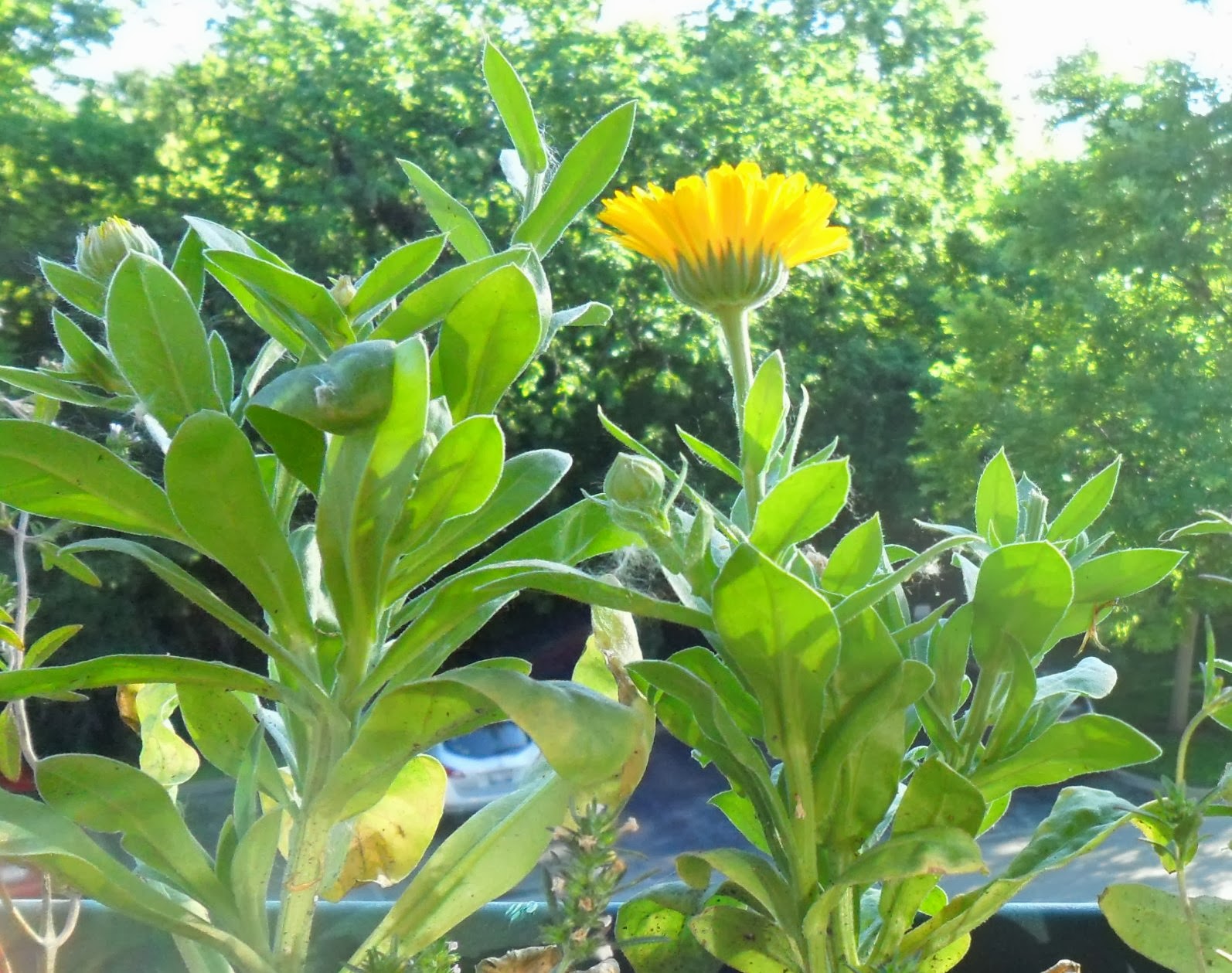
Calendula – I agree with Tina, no matter how much gets planted, it’s never enough. Used in tea, facial creams and salves. I love to use it in baking and cooking for the color.
Chamomile – I like because it shows up early in the year.  Many consider it a perennial, but I think it just reseeds because those small flowers are a bit hard to harvest.  The apple flavor and relaxing attributes are perfect for tea.


Chamomile

Echinacea – reliable perennial that has seeds for animals in winter and seed saving. I love the flowers, leaves and roots and divide the plant in half each year to harvest the roots and allow the mother plant to expand. Purple is the best for medicinal properties to boost immunity.
Elder – If you have the room this perennial shrub, it is a must have.  Lovely flowers in spring can be used for tea and cordials and the berries in fall make great healing syrups for colds and flu.

Feverfew – There is a plant in our Illinois area called feverfew that is actually wild quinine, if you want the medicinal plant good for headaches and migraines you want Tanacetum parthenium which is in the daisy family and has ferny leaves and white flowers with yellow centers.  Both the leaves and flowers can be used for tea for headaches and cold symptoms.


Notice the subtle difference between feverfew (here) and Chamomile (above)


Holy Basil – Get some seed and grow your own, as nursery plants are hard to find.  The ability to help with emotions and sleep makes this a wonderful medicinal.
Lavender – gentle, relaxing, and tasty, the fragrance alone can help one relax and the flower stems dry such a nice shade of blue.  The crown must be protected from cold weather, which can take its toll on the plant so they are not as perennial as one might like.  I add a couple new each year to make up for those I lose to the elements.
Lemon Balm – An easy to grow perennial with a delicious lemon scent and flavor.  I love to harvest it and stroke the leaves for the relaxation they impart and a good tea with it is stress-relieving too.

                                                                             Lemon Balm

Mint – I grow two mints. Peppermint and Spearmint.  If I grow more, they just cross pollinate and become spearmint in a year or two.  However, Pineapple mint with its randomly variegated leaves always makes it into at least one planter because I love the leaf color.  Mint is soothing to the stomach and the mind as well as perfect for sachets and scented pillows.


Sunday, March 14, 2021

Container Gardens - Garden Planning pt 2

I am formal gardener, even if I don’t seem to be.  I like my plants to stay in their own space.  I grow them next to each other, then trim them back to create a border between plants.  I suspect that reflects on my personality in some way. 

I have always leaned toward placing one plant in a container and then grouping the containers in my garden.  I have learned to break this rule to make floral containers to decorate my shade gardens and love it.  Here is my formerly shaded book nook where I could read or play my psaltry and enjoy my garden views with several multi-color flower combos.

That big tree to the left is gone now so the book nook will be full sun this year.  With my red hair, I cannot read in full sun, so I will have to move the reading nook, meaning I can make this into a new garden area.  I have been experimenting in designing containers to go into this area which is planted with Creeping Jenny and Ajuga to give me the opportunity to experiment with what will grow there and how it will look.  After this season, I will make decisions on what I want to plant in that area and hubby will create raised beds for this space for next year!

So here I am sharing a few designs for containers for this corner.  Each of these containers has multiple plants to provide texture and interest in the corner as well as get me used to planting where the plants will crowd one another.  I am learning two things at the same time, and you can too!

If you are into vegetable pots I found some great container ideas with Black Gold soils - Black Gold Spring Salad Pots For Quick, Easy, Fresh Eating

Mediterranean Herb Pots

First is a series of 12-inch pots planted with Mediterranean Herbs.  I think three pots will be perfect to tuck in around larger pots.


                                       2- English Lavender, purple sage, Greek or golden oregano

1- Sweet basil, Lettuce leaf Basil and Red Rubin Basil          3- Thyme, Pineapple Sage, Rosemary

These groupings are about water needs.  Basil needs more water, but the other herbs do not, so they can be allowed to hang out together.

Round Mocktail Container

Next, I created a round container plan that I will use in my wrought iron basket (the one above with the inpatients.)  It is 40” in diameter, which makes it perfect for a mocktail container. I am going to use the method detailed by Ben Futo of the Allen Centennial Garden in Madison, Wisconsin in his great PBS digital series called “Let’s Grow Stuff” which is geared toward beginners.  The episode is “Planting a Container.” You can find the entire 2020 season here: Let's Grow Stuff - PBS Wisconsin.

He talks about Thriller, Spiller, and Filler method of creating a container and used several herbs and edible flowers, suggesting they make good cocktails.  That got me thinking about a great way to create a mocktail planter so I adjusted his plan a bit.


Last year I discovered some beautiful yellow and black/purple striped petunias that my husband actually loved, so I knew I was going to have to grow them again.  I had planted them with lantana so Ben’s first two suggestions caught my attention. Then I thought Lavender (1), Lemon Verbena (1), Bronze Fennel (2), thyme, common or lemon(2-3), and a scented geranium (1) would give me lots of different textures and abilities to make different mocktails.  Then for the Filler I will use Chamomile and Yellow Calendula to fill in the spaces between plants.

This design would also work well in a half barrel or large in-ground round bed if you are so inclined.

Rectangular Planter

I also have a rectangular planter so I thought I could put Hardy Herbs in it, then if they work out, I can just transplant them.  Almost all of these herbs are hardy to -20 degrees F, so they can winter over in the container.  If I choose to leave them in the planter I will just put a new two inches of compost in the container at the beginning of the next growing season.


The Sorrel will be Rosemary I have decided, but Rosemary will need to be removed or left to die as it is not hardy over an Illinois winter, but the rest should be.  Being located next to the fence they will be sheltered and should be okay over the winter.  Because I took the photo before I put the measurements on it, the planter is 36 inches across the front and 24 to 30” deep. 

Any of these designs will look good at your house, so why not try them?

If you have a suggestion for a new container combo I would love to hear about it.

Tuesday, March 14, 2017

Planning a garden in Four Squares

Some of my favorite days are spent when it is raining and dingy and I turn on all the lights in my workroom and drag out my favorite garden planning books and start to design gardens.  Sometimes they are gardens for my home, sometimes they are gardens for my patio and sometimes they are gardens for some imaginary house I will own with limitless garden space and someone else who will weed it.

Four Square Garden in Williamsburg
In the process of these imaginings I have come up with several great, reproducible ideas for gardens that I thought I could share.  These may help you with ideas for your own space so do not be afraid to borrow all the ideas you can use.

As will my Cottage Garden Plans there will be several different plans presented over several days so you can see the variety this style provides.  Unlike a Cottage Garden, a Four Square Garden is an organized and symmetrical plan.

This Four  Square garden is in Ohio
FOUR SQUARE

My husband and I believe the perfect home will be a four square style bungalow and we have been searching for one for years without much success.  However, in sympathy to this I created a garden space consisting of four even squares joined at the center with a decoration.  Although some days that center changes from a pain path into an elaborate container structure or a three dimensional abstract sculpture. Each of the Squares is its own individual theme garden. I like this design because I could call it my "Backyard Patches."


The squares each measure 9 feet by 9 feet this allows for easy reaching for 3 feet in from each side.  I run a path diagonally through each square to give access the to center spaces.  In one design of this garden I made a each square a different use for the herbs: Bath herbs, Tea herbs, Culinary herbs and Medicinal herbs.

Although many herbs cross over from one category to the other I was still able to fill each space with unique herbs.  And I could choose more unusual medicinal or tea herbs when the basic herbs seemed to end up in the culinary patch.  Here were the plants by section:

Culinary                                                               Tea
   Mustard                                                                     bergamot
   Cilantro                                                                      lemon balm
   Dill                                                                             lemon grass
   Nasturtiums                                                                lemon verbena
   Fennel                                                                        anise hyssop
   Chives                                                                        chamomile
   Marjoram                                                                   hyssop
   Oregano                                                                     mints              
   Parsley                                                                       scented geraniums
   Savory                                                                        catnip
   Tarragon                                                                     Meadowsweet
   Thyme                                                                        marigold, scented
   caraway
   lovage

Bath                                                                     Medicinal

   Comfrey                                                                      comfrey
   Chickweed                                                                  feverfew
   Nettles                                                                         penny royal
   Lavender                                                                     sage
   Rosemary                                                                    southernwood
   Sage                                                                            thyme
   Marjoram                                                                     borage
   Chamomile                                                                  valerian
   Roses                                                                           betony
   Aloe                                                                            marsh mallow
   Witch hazel                                                                 sage
   Lady’s mantle                                                             ginger
   Peppermint                                                                  St. John’s Wort
   Lemon balm                                                                Echinacea
   Calendula                                                                    primrose
   Clary sage                                                                   catnip
   Thyme                                                                         eyebright
   Yarrow                                                                        sweet cicely


The numbers match the layout in the photo above.

Another Four Square pattern I crafted was the single plant version.  This one has smaller squares within the squares each one containing multiple varieties of a single species, like Basil, Mint, Lemon, and Thyme (I'll use any excuse to plant a variety of thyme species.)

Here is the Plant arrangement list for the drawing above:

Lemon Herbs
Lemon basil
Sorrel
Lemon balm
Lemon thyme
Bergamot

Basils
tulsi basil (holy)
sweet basil spicy globe basil
purple basil
purple ruffled basil
lemon basil
lime basil
basil genovese

Garlic and Onion
onion chives
garlic chives
shallots

Sages
Common sage
Bergarten Sage
tri-color sage
purple sage
golden sage
pineapple sage (focal)
mint

Thyme varieties
lemon thyme
common thyme
silver thyme
golden thyme
wedgewood thyme
french thyme
english thyme

Mints
peppermint
spearmint
apple mint
variegated apple mint
pennyroyal
pineapple mint
curly mint
Corsican mint


Flowering Herbs
Although most herbs flower, as a dedicated herb grower I usually clip the flower heads off as soon as they arrive, but there are some herbs that you actually grow for the flowers.

Scented Marigold
Mexican mint marigold
bergamot
calendula (Pot marigod)
pineapple sage
Hyssop and anise hyssop

My favorite by far and the one that took me the most time to complete a design for was a color four square garden.  This one was designed with four complimentary colors and a color matching path.  Rather than put a path down the middle of of each square I made the squares only 6 by 6 feet so you could reach all the plants from the outside path.  Notice However that the colors were not placed in squares but in triangles to get the most attractive contrast when viewed from a distance or from above.

Silver
Peruvian sage
common sage
Bergarten sage
lavender
silver thyme / wedgewood thyme

Dark green to purple
peppermint
winter savory
purple sage
purple basil

Bright green
lemon balm
lemon basil
pineapple mint
lemon grass
variegated thyme
variegated mint

Golden
golden sage
golden thyme
calendula
lemon scented marigolds

With this garden I also planned a center diamond to accent the colors with a tiered raised bed
the bottom tier was dark green with rosemary and creeping thyme, the second tier silver with dusty miller and the third tier was purple and green with purple ruffled basil and red flowering thyme

Friday, February 14, 2014

Cocktail Container Garden - Designing Gardens #3

Want some summer backyard fun? Create a cocktail garden around your patio to spread some cheer for a gathering of friends or for just relaxing after a hard day's work. This is a garden to get creative with-grow your favorite herbal garnishes, mixes, ingredients for alcoholic beverages and even a liver-booster to help out if you overdo the festivities. This inviting little garden will also be a cocktail party conversation-starter, no question.

Throw in some silliness if you’d like. Whisky barrels and half barrels are irresistibly appropriate containers for some of the tender plants in our cocktail collection. Use wine corks for mulch if you have a ready supply. Do you collect beautiful bottles? I've been known to sometimes choose a wine simply for the shape or color of the bottle to add to my collection. Display them here, where they can line a pathway or sit prettily among the plants to twinkle in the sunlight. String some lights or hang some lanterns to create a party atmosphere for the cocktail hour. Or like this become the edging.


Herbs for Cocktails

There are quite a few herbs that play starring roles in mixed drinks. Probably the most familiar are the mints that are mulled for a mint julep and the popular mojito; that strong minty flavor is an essential ingredient to the character of these festive drinks. Are you interested in brewing your own beer?

Whether you are or not, you can plant some fast-growing hops along a fence line. Lemon balm is an easy garnish for a summer wine cooler (or tea for the teetotalers). For the legion of fans of Bloody Marys, the perfect morning-after pick-me-up and headliner of the Sunday brunch, grow some tomatoes for juicing and some lovage, since its hollow stems and celery taste make it part garnish, part straw. Add a slice of lime from your patio lime tree, and how perfect is that?


Don't forget the milk thistle, whose seeds yield the best liver boost in the natural world. It has been used for thousands of years for its protective, cleansing effects; you can make a simple decoction from the seeds.

Care and Containers

This little garden, placed on or surrounding a patio, will be so close by that you won't forget to water and feed the plants, especially if it becomes a place you hang out in at the end of the day. Get to know your plants and their needs, including water requirements, fertilizer needs, cold hardiness and light requirements. Some of these suggested plants need overwintering indoors, so be sure that you know the average first and last freeze dates in your area; if you don't, a quick online search or phone call to the county extension office will give you that information.

Row cover, an inexpensive lightweight fabric that lets in sunlight and moisture but gives some cold protection, is helpful to have on hand for sudden cold snaps. A good garden center can turn up some useful plant trays with wheels on them, to make transporting a large pot easier. Garden centers also have other helpful pot-lifting aids.

My example is to place all the herb plants and tomatoes in a single container or raised bed that is approximately 12 feet in diameter.  If it is done in two containers use one tall plant Milk Thistle or Lovage in the center and alternate between mints and tomatoes around the edge.  All these plants have a wide spread under ideal conditions so extra space between plants is always a great idea.

These plants are a great start for your very own cocktail garden. And all will help create a fabulous patio haven.

• Tomato (T) (Solanum lycopersicum). Plant in a sunny spot, stake or cage it, and give it plenty of water and regular feeding. Any flavorful tomato produces a good tomato juice; some favorites for juicing include 'Porter', 'Rutgers', 'Ponderosa Pink', 'Better Boy' and many beefsteak varieties.

• Milk thistle (MT) (Silybum marianum). With glossy, marbled leaves, this plant can reach 5 feet or so in bloom, with a purple thistle flower head. It can be annual or biennial, and is hardy to Zone 7.

• Lovage(L) (Levisticum officinale ). This rock-hardy perennial, with its celery taste, can reach 5 feet by midsummer in sun or part shade. Propagate from seed or division.

• Lemon balm (LB) (Melissa officinalis). A mint relative with a lemony fragrance, this hardy perennial is best grown in a pot; it can be aggressive in the garden. Easy to grow from seed, cutting or division.

• Spearmint (SM) (Mentha spicata). This common garden mint, including such varieties as 'Kentucky Colonel', is easy to grow but a bit rambunctious, so it is best grown in a container. Start it from a cutting, a division from a friend, or a transplant from a garden center, as it does not set viable seed; adaptable, can grow in sun or part shade.

• Mojito mint (MM) (Mentha xvilfosa), also called Cuban mint or yerba buena, is propagated by cutting or division. Keep your mints in separate containers, and harvest or prune regularly to continually force out new green growth and prevent flowering.
Mojito mint in the lemon verbena

For those with more space or living farther south than Zone 5, you may want to think about including these plants in your cocktail garden as well:

• Blue agave (Agave tequilana). At 6 feet or taller, this large succulent, native to Mexico, can make a handsome smaller specimen plant in a container. It's drought-tolerant and it needs a sandy or gritty, fast-draining potting medium, a sunny location and winter protection. This is the plant they make tequila from, but growing it does not mean you can actually make the drink, as it is sort of complicated.

• Lime and lemon trees (Citrus hybrids and varieties). These small trees thrive in warm landscapes
(Zones 8 and higher), although they are grown in other climates in pots on the patio and brought indoors for the winter, as most won't tolerate a freeze. Needs a sunny location. Dwarf citrus varieties are available, including a dwarf Meyer lemon; try Makrut lime (C. xhystrix) leaves, which are often used in Thai cuisine.

Depending on your climate and your willingness to overwinter pots indoors, citrus trees can fit in perfectly here. Many cocktails and highballs demand a wedge of lime or a sliver of lemon peel. Over the years, citrus plants, including dwarf varieties that lend themselves to pots, have become popular and are often available in garden centers. While they take some nurturing because of their tender nature, they can become pets and even give back fruit in agreeable conditions.

• Hops (Humulus lupulus). A fast-growing, twining vine for a fence line, this is a perennial hardy to Zone 3. It needs a full-sun location and a deep, rich soil; start it from cuttings, suckers or purchased plants.  It grows very fast and needs space to grow on a fence or trellis.

I love growing this.  As a backdrop you can train it on a fence, it can cover a trellis in one season, and it had a very pretty look.

Monday, February 10, 2014

Planting a Spa Garden - Designing Theme Gardens #2

January gave me great weather for herb garden designing.  It has been too cold or snowy to do anything else.  I have been repeatedly trapped in my apartment with nowhere to go and a book shelf full of books on landscaping, flowers and herbs.

Since this year we plan to get back into a house and I can actually have a pretty garden in addition to my production garden, I am pondering, scheming and planning.  I thought I would share some of the garden ideas I have pulled together.

Today I have for you a garden filled with herbs that can be used to craft personal Spa items. What could be better than a garden planned around plants that can be used to make luxurious, pampering potions for the bath and body? So many herbs make wonderful contributions to health and beauty, why not put them all in one place for easy access? Here are a few of my favorites that not only look great in the garden but will provide you with pure and effective spa treatments.

My first choice is calendula, Calendula officinalis. This sunny, easy to grow annual, also called pot marigold, can be used in lotions, balms, ointments, bath teas and facial steams. It prefers full sun, well drained soil and moderate watering. Calendula blooms all summer into fall and gives you lots of volunteer seedlings the next year. Harvest the yellow and orange blooms for a bevy of skin soothing treatments.


Comfrey, Symphytum officinale, is a must for the spa garden. Rich with allantom, a chemical that promotes cell regeneration, the whole plant is used in soaps, lotions, creams and salves. Very soothing to dry, irritated skin. Give it partial shade and a little extra water and it will return yearly.

Chickweed, Stellaria media, is another of my favorite plants. Considered a weed, it is a pretty little groundcover plant covered with white flowers. It is full of vitamins and minerals and is a tasty replacement for spinach in the kitchen. I harvest it throughout the winter where it hides under the snow. It likes to grow where it is cool, shady and wet. Very soothing for dry, irritated skin, I use it in salves, lotions, poultices and bath teas.
 
chickweed
Nettles, Urtica dioica, is a bristly plant full of trace minerals used for its anti-inflammatory effects on allergies, but it has been used for years as a hair tonic. A strong tea of the dried leaves used as a hair rinse will leave your hair soft and glossy. The seeds made into oil and rubbed into the scalp are reputed to prevent baldness. Nettles like to grow on the shady side with extra water. They can spread quickly if you provide the ideal conditions, so keep an eye on them and harvest with gloves.

Other herb rinses for hair health include rosemary (Rosmaria officinalis) for removing traces of accumulated hair products, sage (Salvia officinalis) to help darken and condition grey hair, and chamomile (Matricaria recutita) for blond highlights. Grow all three of these herbs in full sun, rosemary and sage like it on the dry side.

 
sage
Roses (Rosa) are a beautiful addition to your spa garden. The petals can be steeped to make rosewater, and combined with glycerin will provide a simple, effective lotion that will moisturize and tone dry, inflamed skin. Try dipping a washcloth into strained, cold, rose petal tea, wring it out and place over red, irritated eyes to relieve and refresh. Give roses full sun and rich soil to keep them happy.

Aloe is renowned for its healing properties. Squeeze the gel from the leaf onto burns, rashes, and irritated skin to provide immediate relief. Aloe likes full sun, little water and needs to be taken inside once it gets cold. They make great houseplants.

Catnip (Nepata cataria) is often discounted as an herb for people, but it is soothing, calming, a light sedative, purifies the blood, relieves colic, works as a digestive aid, and is mild enough for small children.
 
catnip
Lavender, Lavandula officinalis, is very soothing to skin and easy to grow, give it a hot, semi-dry area. I use the leaves and flowers in everything, from skin spritzers, creams and salves to hair rinses. Medicinally, lavender packs quite a punch.  It has antiseptic, anti-bacterial, anti-fungal, anti-inflammatory, anti-convulsive, anti-depressant properties. Lavender benefits stress, anxiety, exhaustion, irritability, headaches, migraines, insomnia, depression, colds, digestion.
 
lavender
Use an elderberry bush for something tall in back of your garden. It will provide you with fragrant flowers to dry and use to tighten pores and clarify skin. Used in a bath it will soothe and moisturize irritated skin. And take internally to avoid illnesses and boost immunity.  Elderberry will grow in sun or part shade and appreciates regular watering.

Some other plants to include are witch hazel, lady's mantle, raspberry, peppermint and lemon balm.

And to get you thinking how to use these herbs.  Here are a few recipes to get you started:

Rose Water
Cover 2 cups of unsprayed, fresh rose petals with 2 cups of boiling water. Steep until cool or overnight, strain and use. Keep leftovers in refrigerator. To make a stronger brew, after straining the first batch, reheat, but don't boil, and pour the rose water over a fresh batch of petals to steep.


Herbal Hair Rinse
1 tablespoon each of dried nettles, rosemary, lavender, dried rose petals and chamomile. Pour 1 cup boiling water over herbs and steep until cooled. After shampooing and conditioning, pour tea over hair and wring out excess. Dry as usual.

Lavender Catnip Honey for Women
Honey can help shed water weight, clear lymph nodes and balance lymph fluid, dry out sinuses, increase circulation, aid in the healing of ulcers, sooth sore throats and coughs, and help reduce allergies (if using for this purpose, make sure you use local honey.

Combine 1 cup honey with 1 Tbls. fresh or dried catnip and 2 Tbls. fresh or dried lavender flowers.  Warm the honey in the microwave or saucepan and allow to steep for 1 to 2 weeks.  Rewarm and strain out the herbs.  Then use in tea, or as an ingredient in lozenges or take off a spoon for a sore throat. 

Lavender Hand Cream
3 tablespoons grated beeswax
½ cup dark sesame oil
1 tablespoon coconut oil
1 teaspoon honey
2 tablespoons spring water
2 to 3 drops lavender essential oil
1/8 teaspoon baking soda

Directions:
Combine all ingredients in a heat-resistant container or double boiler.  Gently heat (do not boil) the mixture in a microwave or on the stove top over medium heat, stirring often, until wax and oils melt completely.  Pour the mixture into a container or jar and allow it to cool.  After it has cooled completely, give it a final stir before capping.  To use, massage the cream into clean hands.

Always make this in small batches as it has no preservatives and you do not want it to go bad before you use it.  I think a 6 to 12 month shelf life is about all you can hope for.


Monday, March 12, 2012

Winter Sowing


I am attending the Chicago Flower and Garden Show this weekend and next week will be sharing gardening ideas I picked up or improved learning there.  To get you in the mood, I thought I would share an idea I have been toying with and finally decided to accomplish.  If there are no pictures with this post, please bear with me, I am having some trouble with the computer recognizing the .jpgs  I will post photos as soone as it allows me too!

Winter sowing is an easy germination method that allows you to start hardy seedlings for pennies.  Winter sowing is done outdoors during winter using mini-greenhouses made out of recyclables.  There is no heating devices, no energy using grow lights and nothing very expensive at all to start your seeds.

The best source on the internet for winter sowing tips and guidelines is www.wintersown.org by Trudi Davidoff.  On that site you can identify what can be winter sown or if you should just save the seed and direct sow it in the garden.

This is a great green project for recycling old milk jugs and toilet paper rolls, yet you can get a bit of dirt under your finger nails when it is hard to do that outside in Illinois just yet.

What you need:

Sharp scissors or a knife
Milk cartons, gallon size or paper towel tubes and a card board box
Seed packets
Waterproof marker
Water
A roll of duct tape
Potting soil
Outdoor location to place your planted seeds

Steps:

Place the tubes in a small cardboard box spaced so they touch each other and do not fall over.

Or poke holes in the bottom of a one gallon milk carton.  Then using sharp scissors cut the carton all the way around by the handle, leaving the handle intact.  This will leave a hinge for opening the milk jug.

Add the potting soil to the milk jugs or paper towel rolls.  It does not need to be very deep about 1 ½ to 2 inches at most.  Label the milk jug or writ on the inside edge of the towel rolls the name of the seed you will be planting.  You can put a label on the bottom of your milk jug too in case the other falls off.

Give the soil a good watering before placing your seeds.  This will keep them from floating away when watered after.  I watered the milk jug before I planted and the towel rolls after I planted them. 

Remember to plant the seeds at the depth specified on the seed packet.  Pat the soil down or add a layer of soil on top of the seed instead of pressing them in.

You need to have 2 inches above the soil to allow space for seedlings to grow.

Secure the sides of your cut milk jug with duct tape and place it in the snow outside or on a picnic table, sidewalk ledge or balcony.

I put plastic wrap, double thickness over the top of the cardboard box.  To give the greenhouse effect I need to get the seeds to start.

Herb seeds I recommend for winter sowing:
Calendula
Viola
Flax
Basil
Mint
Oregano
Parsley
Sage
Thyme
Dill
Hyssop
Marjoram
Chamomile
Chives
Yarrow


UPDATE: we actually planted a variety of herbs in winter sowing containers in 2014.  Here is a step by step
Related Posts Plugin for WordPress, Blogger...