Showing posts with label culinary herbs. Show all posts

Thursday, January 1, 2026

Simple, Comforting Kitchen Rituals

Simple, comforting kitchen rituals that fit real winter life, especially when days are short and schedules are full. These are easy to weave into everyday routines without turning into “one more thing to do.”


1. The Daily Teapot Ritual

Keep one teapot (or French press) as the winter teapot.

  • Refill it once a day—morning or mid-afternoon.
  • Use the same favorite blend for a week to create continuity and comfort.
  • Let it be your pause: steep, inhale, sip—no multitasking.

Why it works: Repetition creates calm, and warmth is grounding in winter.

 2. One-Pot Mondays (or Anyday)

Designate one evening a week for a single pot or pan meal.

  • Soup, stew, braise, or sheet-pan dinner
  • Use a go-to herb blend so you don’t have to think
  • Leftovers become lunches or freezer meals

Why it works: Fewer decisions, fewer dishes, more nourishment.

 3. The “Flavor Boost” Habit

Add one intentional herb or seasoning to an otherwise ordinary meal.

Why it works: Small upgrades make winter meals feel cared for without extra work.

4. Light Before Dinner

Before starting dinner, light a candle or turn on soft lighting.

  • Do it before cooking begins
  • Let the kitchen feel warm and welcoming even if dinner is simple

Why it works: Signals a shift from day mode to evening mode.

5. The Weekly Jar Reset


Once a week, refill or refresh one kitchen staple:

Why it works: Keeps your kitchen feeling stocked and intentional without a big prep day.


6. Warm Drink After Dinner

Replace dessert some nights with a warm, gently spiced drink.

  • Herbal tea
  • Warm apple juice or cider with mulling spices
  • Milk or plant milk with a pinch of spice

Why it works: Supports digestion and helps signal the body it’s time to slow down.

7. Recipe Card by the Stove

Keep one favorite winter recipe card out for the week.

  • Familiar, comforting, no decision fatigue
  • Even if you don’t make it every night, it sets the tone

Why it works: Familiar food = emotional warmth.


8. The “Clean & Close” Ritual

End the night by fully closing the kitchen:

  • Wipe counters
  • Empty sink
  • Turn off lights with intention

Why it works: Waking up to a reset kitchen feels like a gift to your future self.


9. Use the Same Herbs All Week

Choose 1–2 herb blends and use them repeatedly:

  • Soup - robust herbs like rosemary, sage or thyme
  • Eggs - savory herbs like chives, parsley, dill or chervil
  • Roasted vegetables - strong herbs for roasting like thyme, oregano, or marjoram
  • Grains - flavorful herbs like basil, oregano, and chives

Why it works: Builds flavor memory and reduces overwhelm.

10. One Quiet Moment each Day

Even just 2 minutes:

  • Standing with a mug
  • Watching steam rise
  • Tasting intentionally

Why it works: Ritual isn’t about time—it’s about attention.


Monday, March 29, 2021

2021 List of Great Culinary and Medicinal Herbs

In my email recently I got my “Just the Essentials.”  It is the “extra” short publication that we get on the in-between months of The Essential HerbalMagazine.  I regularly write for the magazine, which comes out 6 times a year as an eMagazine.  “Just the Essentials” tides us over until the next full version arrives.  I love it because it brightens my email box with fun herb info at unexpected times.


In the most recent version, Tina Sams compiled a list of Culinary and Medicinal herbs that are most important to her.
  It got me thinking because my list was not the same as hers. So I am sharing my 2021 list of great Culinary and Medicinal Herbs.

I had a lot of winter kill this year.  My thyme plants are not reviving as I would like and my rue plants died, however they self-seed, so once the soil warms I will probably be fine. As a result I am beginning my shopping because there will be many plants that I will have to replace!

2021 List of great Culinary and Medicinal Herbs

Culinary List:
Basil – I like to get Genovese, Red Rubin, Purple Ruffles and Sweet Dani Lemon Basil.  As Tina says you can never have too much Basil!

Chives – this easy Spring blooming perennial is perfect for making herb vinegar and the mild onion flavor is great in recipes, dips, salads, side dishes, and or course on potatoes.
Cilantro – Seed this plant over and over to get a constant crop and save the seed which is coriander and great in baking and pickling. Remember if it is not for you it is all inn your genes.
Dill – An annual, I sow a row, then reseed the row every two weeks to give me a continuous crop throughout the summer and plenty of seed to save and use for pickles.

Flowering Marjoram


Marjoram – You can use this as a substitute for oregano, it is harder to get a bad flavored plant, and the flowers that arrive in late summer are nice to preserve and use as a dried decoration for packages, soup wreaths and dried arrangements.

Rosemary – adds so much to chicken and beef roasts and stews.  Very tender perennial that I have to grow in a pot or transfer to a pot of overwintering.  I found the best place to keep it in winter is by the back door.  Less dry and less hot in that location and it continuers to stay green and lush..
Sage – So delicious with fall dishes and once it’s in the garden, it can find its way into lots of meals. I prefer Berggarten Sage as the leaves are large and the plant takes longer to get woody.


The rounded leaves of berggarten sage

Tarragon – this flavorful sauce herb also makes a great vinegar.  Remember to plant it in the back as it gets tall and unruly and trim to the ground in spring as the new growth always springs from the root.

Thyme – should be perennial, but often requires replacement. Doone Valley is my favorite Lemon Thyme variety, and Wedgewood is lovely in a border with its variegated leaves.


Medicinal List:

Calendula – I agree with Tina, no matter how much gets planted, it’s never enough. Used in tea, facial creams and salves. I love to use it in baking and cooking for the color.
Chamomile – I like because it shows up early in the year.  Many consider it a perennial, but I think it just reseeds because those small flowers are a bit hard to harvest.  The apple flavor and relaxing attributes are perfect for tea.


Chamomile

Echinacea – reliable perennial that has seeds for animals in winter and seed saving. I love the flowers, leaves and roots and divide the plant in half each year to harvest the roots and allow the mother plant to expand. Purple is the best for medicinal properties to boost immunity.
Elder – If you have the room this perennial shrub, it is a must have.  Lovely flowers in spring can be used for tea and cordials and the berries in fall make great healing syrups for colds and flu.

Feverfew – There is a plant in our Illinois area called feverfew that is actually wild quinine, if you want the medicinal plant good for headaches and migraines you want Tanacetum parthenium which is in the daisy family and has ferny leaves and white flowers with yellow centers.  Both the leaves and flowers can be used for tea for headaches and cold symptoms.


Notice the subtle difference between feverfew (here) and Chamomile (above)


Holy Basil – Get some seed and grow your own, as nursery plants are hard to find.  The ability to help with emotions and sleep makes this a wonderful medicinal.
Lavender – gentle, relaxing, and tasty, the fragrance alone can help one relax and the flower stems dry such a nice shade of blue.  The crown must be protected from cold weather, which can take its toll on the plant so they are not as perennial as one might like.  I add a couple new each year to make up for those I lose to the elements.
Lemon Balm – An easy to grow perennial with a delicious lemon scent and flavor.  I love to harvest it and stroke the leaves for the relaxation they impart and a good tea with it is stress-relieving too.

                                                                             Lemon Balm

Mint – I grow two mints. Peppermint and Spearmint.  If I grow more, they just cross pollinate and become spearmint in a year or two.  However, Pineapple mint with its randomly variegated leaves always makes it into at least one planter because I love the leaf color.  Mint is soothing to the stomach and the mind as well as perfect for sachets and scented pillows.


Tuesday, July 26, 2016

Backyard Garden Update July

July was a whole lot of let it grow.

These are some of the plants in bloom


 Mabel Grey Scented Geranium

 
 Calendula just before it began to bloom.
 Nasturtiums
 Swamp Milkweed


 Gazania
 Anise Hyssop

 Yarrow

 Artemesia

The back yard enjoying growth and decoration.  We added a third trellis back by the fence for Hyacinth Bean.  I got some seed from the Garden Club and planted them along the bottom.  The trellis is to keep Chas from trimming them down before they get big enough to grow on the trellis.  Hyacinth bean can grow inches in a day, so although an annual it can cover the trellis by the end of the season with no problem.


 The peas have taken over the string.  I am not sure what to do now that they are higher than the posts.


 Scented geraniums by the back door.


 The vegetable garden is getting tall and full with much potential by the end of the month.


The herbs seemed to be growing more slowly than I expected so I started a program of adding compost tea and new rich soil and compost to the garden in 2 week intervals to see if there is improvement.  By month end they are beginning to get better.


 The rain garden in mid summer


 By month end the calendula and Nasturtiums joined the rest of the flowers in bloom!


Tuesday, June 28, 2016

Backyard Garden Update

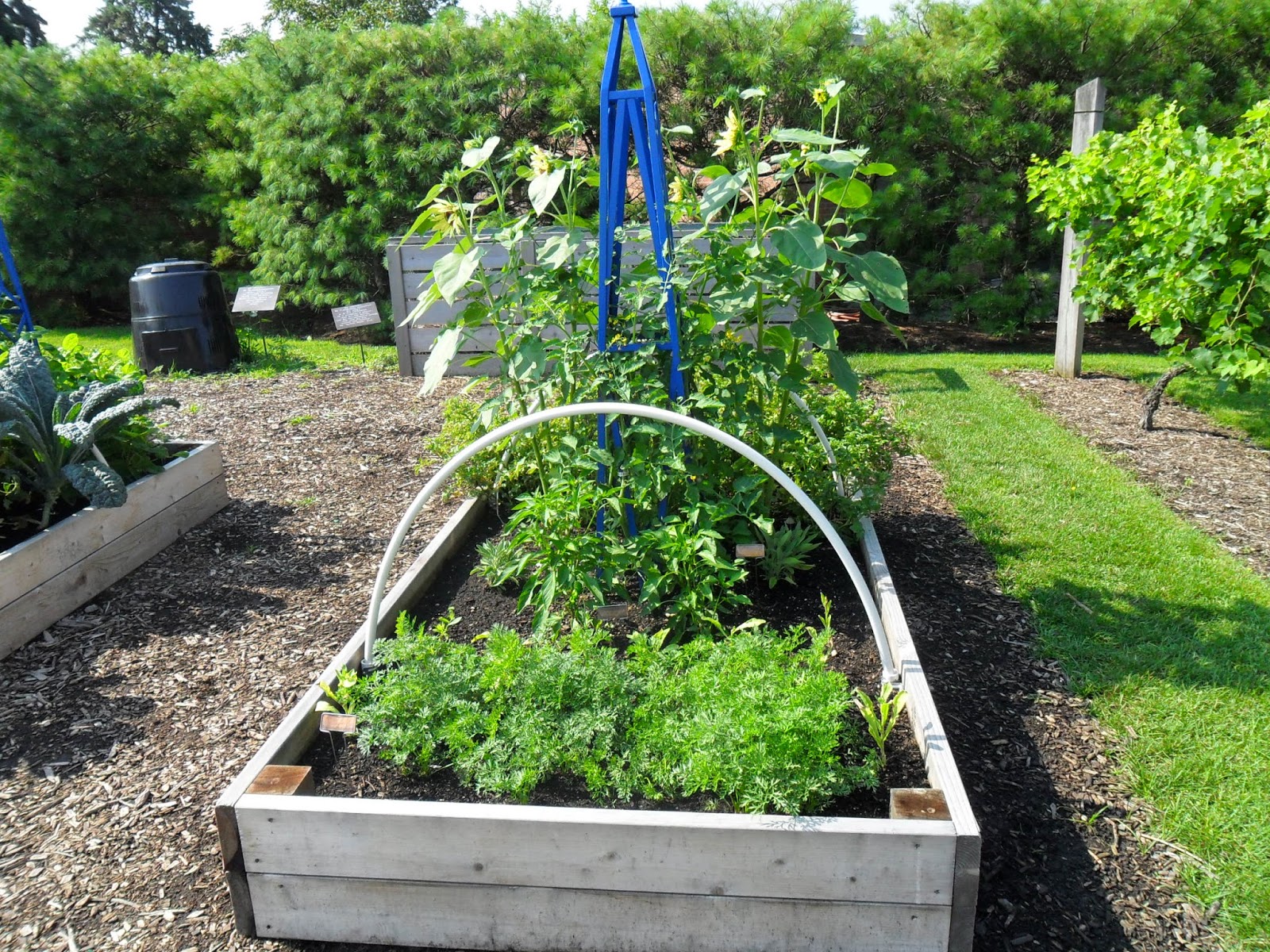
We crafted the raised beds back in late May and planted them over a couple of weeks.

We started with the two front (closest to camera beds) then added three more behind them.  The former sandbox in the far right was converted to an herb garden last year and added to this year.


The hubby made me two trellises.  One for cucumber (foreground) and one for coreopsis in the background.


Three of the raised beds were given to me by a friend in the garden club.  The two not so weathered are new.  Was going to make them from scratch, but found these at ACE hardware and they matched the others so we were thrilled.                                                                                                                                                                                     We still did not have enough room, so ended up planting extra plants in the "corners" between two raised beds, or at the ends.  May regret this when things start to spread.

Strung string between to posts for the snap peas to grow on.  These are for Chas.... I hate peas!


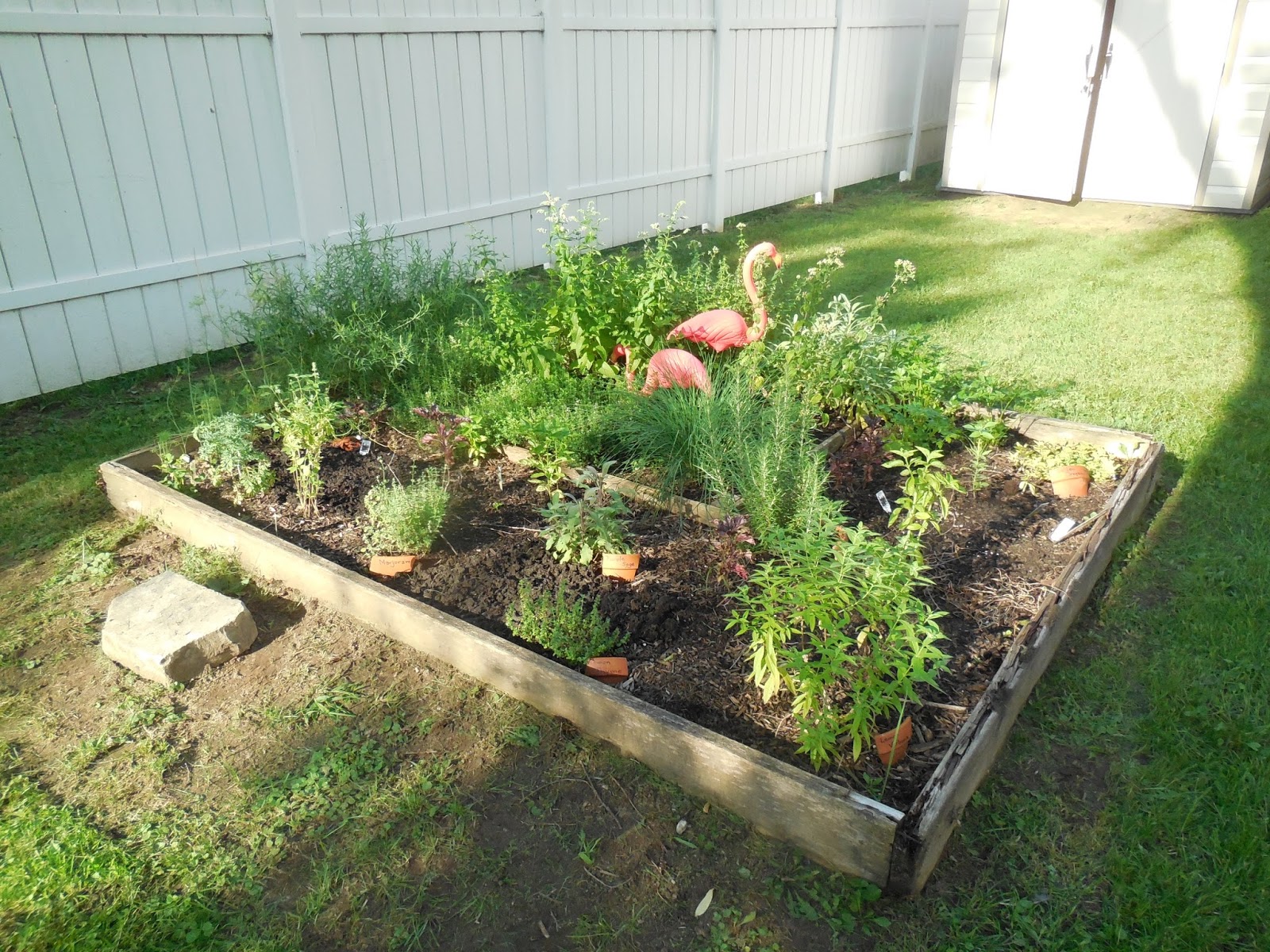
 Here is the Herb garden.  The larger plants are the ones planted last fall. The L-shape area was prepared with compost and additional soil to be able to take new plants.  The older area I prepped in a hurry last fall and only had enough soil for that small space.  We composted fall leaves and sticks and had more soil by springtime.


 I put in a rosemary and a lemon verbena in the ground.  I have not done that in years.  They grow so much better in the ground, but then you have to dig them up in the fall.

This year someone in the garden club had strawberry plants so I used my strawberry pot!

Wednesday, December 10, 2014

Still More Edible Gifts

Prepping for the Holiday

Wrap up some bread pans, bread mixes and flavored butters or spreads tied up in a table cloth or apron. 

Here is another idea for a bread basket that is a bit easier than baking bread.  Make seasoned pita chips.  In a basket provide several packages of pitas, a bottle of olive oil and a seasoning mixture in a shaker made with this recipe.

Seasoned Pita Chips

4 pitas, cut in 8 wedges
3 Tbls. extra virgin olive oil
Shaker of seasoning

Preheat oven to 350 degrees.  Arrange pita wedges on a rimmed baking sheet.  Brush top of each wedge with olive oil.  Sprinkle seasoning mixture evenly over wedges.  Bake 8 to 10 minutes, or until nicely toasted but not hard.

Possible Shaker seasonings:

Blend #1
1 Tbls. sea salt
1 tsp. dried dill
¼ tsp. black pepper

Blend #2
or Backyard Patch Pesto Blend

Blend #3
2 Tbls. Parmesan Cheese
2 tsp. oregano
1 tsp. basil

Products we recommend if you do not have time to make your own:

Cornbread in a Can (a savory cornbread mix you prepar in the ribbed can provided).


Thursday, April 11, 2013

Creating a Culinary Herb Garden

In my family bland food was the norm.  I longed for food to taste like it did in fancy restaurants.  My mother however, was not interested in cooking, so as soon as I could cook without supervision, I was let loose in the kitchen.  At first I worked with those herbs that I could find easily in the store, then I worked up to unusual herbs that I needed to grow myself.  Today it is much easier to find fresh and dried herbs in the markets, but those elusive flavors from specialty herbs still require growing them yourself.  So if you love to cook and enjoy experimenting with favors I recommend putting together a Culinary Herb garden for yourself. 

Herbs to Choose
Garnish Herbs

chives
The most useful herbs for garnishing are parsley and chives. You can pluck a leaf of parsley and place it on a plate.  Nibbling the herb after a meal takes away food breath. 

Fresh chives clipped onto a baked potato or
Parsley border
snipped into a salad add a tasty dimension with no fuss.  These herbs are indeed readily available in grocery stores, but in one's own garden, you can have them fresh daily, whenever you need to pluck a few stems for use. 


These are also perfect herbs for a container, so you don’t need a large garden, just place a pot by the kitchen door.


Basic Herbs for the Herb Garden

Experiment with the herbs grown in the garden. The basic herbs most cooks use are:
  • Rosemary
    thyme
  • sage
  • rosemary
  • parsley
  • chives
  • dill
  • marjoram
  • basil
  • tarragon
  • oregano
Dill


Choosing which herbs to grow is a matter of taste and experimentation.  Usually only one or two plants of any variety are needed. Sage, for instance, can grow into a very leafy low shrub. A family of three or four likely won't need more than one plant.
sage
If you love basil, remember it is an annual and not very hardy in cooler temps so placing it in a pot means you can bring it in when the weather cools.

Sweet basil

Exotic Herbs
Holy Basil in bloom
These are those special herbs, like scented geraniums, lemon-scented basil, apple mint, lemon verbena and other less-commonly seen herbs, that you must grow yourself if you wish to utilize them.  Purple Basils and Holy Basil are also among this group as finding fresh or dried can be a real challenge.  

Pineapple sage flowers


I grow Pineapple Sage and Lemon thyme because the tastes of these are so fleeting that even if you can find a source the quality is not always as good as it can be when you grow them yourself.  Choose one or two exotics to start with and experiment with them, then slowly add more to your garden.


Planting the garden
Basil & tomatoes together in rows
Requirements for a Healthy Herb Garden

For the most part, herbs require full to partial sun and an open location with good drainage. Even though they do best in open locations, they still need protection from those drying winds. A hedge or row of trees several feet away would be a perfect location, depending on which way the wind blows in the garden location.  

Herbs are not demanding when it comes to soil conditions, but clay which will hold too much water should be augmented with sand; and sand which does not hold enough water should be improved with compost.  


Till the soil down 15 inches to make it loose for the plant roots and plant according to spacing directions provided by the nursery or a good plant book.  Since spacing differs from plant to plant and are based on the potential of the plant to spread sideways as well as up, you need a bit of guidance for this or you could end up with an over crowded garden.  I recommend Rodale’s Encyclopedia of Herbs for spacing information and sun requirements.  Mulch around the plants to preserve moisture and keep down on weeds.

Thyme bed spaced with room to grow
The most important piece of information you need to start gardening is what your Hardiness Zone is.  I live in northern Illinois which is zone 5a meaning the winter average temp at its lowest is -20 degrees and the summer highest temp averages less than 90 degrees.  For full details on hardiness zones, check out:  the National Gardening Association Zone Finder.

The Herb Garden

Herb gardens can be traditionally laid out with raised beds, decorative patterns, or as a cottage or wildflower garden.  
thyme in a corner bed
You can even plant them in rows as the gardener would plant a vegetable garden.

vegetable-style patch in a raised bed

Whichever pattern chosen, nurturing the herb garden is most pleasurable pursuit.  Walking around the herb garden lightly touching the leaves can inspire recipes to suit the herb rather than herbs to suit the recipe.

The Basil Bed at the Case Western Reserve Herb Garden
Conclusion

Growing and nurturing a culinary herb garden gives you instant access to those special ingredients that add punch to a recipe. Even a few little pots of herbs on a balcony or in a kitchen window may be enough to get you started.  The scents alone will create a fun experience in the kitchen and the wonderful foods created with these fresh ingredients will only make you yearn for more!


Related Posts Plugin for WordPress, Blogger...