Showing posts with label calendula. Show all posts

Friday, September 4, 2026

Sunburn Bath Soak - Bath Blend of the Month

Remember just because the summer is ending, the effects of the sun are not diminishing, so create this blend and use it to soothe the skin after a bit too much sun.

  • 1/4 cup dried mint leaves
  • 1/4 cup calendula flowers and/or leaves
  • 1/4 cup dried chamomile flowers
  • 1/4 cup dried lemon balm leaves
  • 1/4 cup green tea leaves

Blend all dried ingredients together and store in a jar with a tightly fitting lid.

TO USE: add 1/2 to 1 cup of blend to a small muslin bag.  Fill bathtub with slightly warm water and allow bag to steep for a few minutes as water cools.


Sunday, February 15, 2026

Pleasant Home Tea Blend - Tea of the Month

 In Late January I did one of several programs called Curative Properties of Tea (see program page if interested). As part of this program we sip tea while learning about herbs and thier various properties.  At the Park District of Oak Park, Pleasant Home facility, 12 people braved the cold and the snow to join us.  As the final part of the program we use our new knowledge to create a tea bland to sample.

It was described as smooth, flavorful and light by participants.  It is a light pink to red color with a ton of medicinal properties from the herbs included. We used a base of lemongrass with all of its anti-inflamatory and anti-bacterial properties and built on that with immunity boosting ingredients.

Lemongrass imparts a fresh, lemony, and slightly gingery flavor to dishes and beverages. It is great for digestive health, has anti-inflammatory and antioxidant effects.  It can reduce anxiety and aid sleep.  It will also help to detoxify the body with its diuretic effects.

Hibiscus – Used in tea to add a bit of color, Hibiscus has been studied recently to confirm that it can be helpful in lowering cholesterol, improving HDL “good” cholesterol, and lowering blood sugar.


Elderberry – a documented immunity booster, these berries are used for reducing the symptoms of the flu.  Only the berries and flowers should be used, not the stems or leaves as they can include cyanide.

Calendula – this lovely golden flower is an effective skin care treatment is does have antioxidant, anti-inflammatory and would healing properties.

Rosehips- Rosehips are the seed-filled bulbs that grow at the base of the blossom of a rose. They have been used in traditional medicine to treat a variety of ailments. Native Americans have used rosehip tea to soothe sore throats and indigestion.  Rosehips contain vitamins C, E, and B as well as other minerals and antioxidants.  They also contain a substance that may ease inflammation.

Pleasant Home Tea 

2 parts Lemongrass

1 part Hibiscus

1 part Calendula

1 part Elderberry

1/2 part Rose hips

Blend the herbs in a jar and shake to combine.  Use about 1 to 2 tsp per cup of hot water and allow to steep 5 to 7 minutes before serving.  Sip in the morning or afternoon to enjoy the health benefits.

Hope you enjoy this tea as much as we did!

Tuesday, June 24, 2025

How to make Edible Flower Spread - How Tuesday

One of the most decorative and easy to create dishes you can make for summer gatherings. Just a few simple ingredients but a lovely item that will be talk of the event. 


Here is a list of possbile Edible flowers to use in your creation:

  • Pansies are probably the most common of all edible flowers, so pretty and they come in a wide range of colors and hues. Pansies are really more showy than flavorful but you might note a slight "grassy" taste.

  • Violets
    grow wild in the spring and early summer (depending on where you live) and can also be grown as a landscape perennial (known as sweet violets). Violets have a sweet, floral flavor in both leaves and flowers. However, don't confuse violets with African violets which are usually considered non-edible.
  • Johnny-Jump-Ups look like miniature pansies, but have a different flavor that is slightly "minty." some say they taste a bit like bubblegum! They're perfect on cakes or with soft mild cheese. Johnny-jump-ups, pansies and violets are all members of the Viola genus.
  • Marigolds, like the name says, come in shades of yellow and gold. They have a mild citrus flavor. Another bonus to marigolds? Deer are not too wild about them, and tend to leave them alone in the garden!
  • Roses are not only beautiful to look at and smell! All roses are edible, each has a delicate, slightly sweet flavor. So stop and eat the roses!
  • Honeysuckle flowers are abundant in the spring and, like the name says, have a sweet honey taste. They can be used as a pretty garnish, but also for tea, jelly, syrup and lots of other things. Just a note: only the flowers are edible, the berries are poisonous!
  • Chive Blossoms are a beautiful pale purple and have a mild chive taste. They're lovely in salads and you can break apart the flowers and sprinkle the tiny pretty purple petals over vegetables, eggs, soup, potato salad, etc.
  • Dandelions aren't just pesky weeds! You can eat dandelion greens. But everything; the leaves, the flowers and even the roots of the dandelion are edible. Dandelion leaves are a bit bitter, but the flowers have a sweet flavor. Their bright, cheerful color makes a beautiful addition to salads!
  • Elderflower has a flavor profile described as uniquely fresh, fruity, green and slightly floral with subtle pear, lychee and tropical nuances. You can pair elderflower with light teas, as well as adding to fruit salads or combining in spreads or dips and use to make elderflower cordial. Remove the flowers fully from the stems which can be toxic.
  • Nasturtium is a favorite flower for displaying and eating. Nasturtiums have brightly colored red, orange and yellow blossoms and round stiff leaves. Both the leaves and the flowers are edible with a slightly peppery flavor a bit like arugula. The blossoms have a milder taste and add color to garnish cakes, pastries, salads, soups, etc.
  • Cornflowers, also known as Bachelor Buttons have a sweet, spicy clove-like flavor. Their brilliant blueish purple hue adds an eye-catching touch!
  • Campanula (bell flower) has a mild, bland flavor so it's used more for the pretty purple flowers than for added flavor. The leaves and flowers of the Campanula plant can be used in salads and as an edible garnish for lots of other dishes.
Your first step is to gather the flowers.  Whatever is in season when you are ready to create the spread.


Pull the flowers from the stem. Save some whole for garnish and chop the rest fine.


I did cut flowers up with scissors directly into the cheese mixture, but I started with a bowl of cut flowers, like chamomile, roses, lavender, daisy, calendula, etc. Then added the pansies later.  I soaked the chopped flowers in 1 1/2 tsp of lemon juice while I blended the cheese and butter.

Step Two is the create the cheese mixture. Blend the one 8 oz. package of cream cheese with 1/4 cup of butter.


Once the cheese was blended, I added the thyme or savory and mixed well. Then blended in the flowers.  I use a fork to get everything well mixed, so I don't have clumps of cheese or butter in the final product.


Once everything is well blended, I placed it on some plastic wrap (or wax paper) and shaped it into a log.  


I placed the log in the refrigerator for about 15 to chill it, then I unwrap and cover the top side of the log with whole flowers (garnish.) Then I put the flower covered log back in the fridge for at least 30 minutes. 


Place clean wrap over the flowers and allow to chill up to overnight.


When ready to serve, carefully unwrap the log and place on a decorative plate for serving.


Edible Flower Spread 

8 oz. package light cream cheese

1/4 cup butter

1 1/2 tsp. lemon juice

3 to 4 tsp fresh minced flowers

1 tsp fresh thyme or savory

Blend butter and cream cheese together with a fork in a medium bowl.  Add the lemon juice to herbs and allow to soak a couple minutes before blending into cheese and butter mixture.  Roll into a log and wrap in plastic wrap.  Allow to meld in refrigerator at least 1 hour before serving.  Spread on toasted French bread, crackers, cut vegetables or fruit wedges.

Tuesday, June 17, 2025

Growing Calendula from Seed - How to

 Although it is late June, it is not too late to plant calendula seed and enjoy the flowers.  Calendula is an annual that grows well from seed and germinates in just a few days, especially when it is warm.  The bright yellow and orange flowers are edible and can be used to make salves and lotions because the petals are good for the skin.  We have featured this plant many times, both in an Herb of the Week post, as well as several posts on using it as an edible flower.


Now it is time to show you how easy it is to grow this herb from seed.

 Calendula seed is small, hook-shaped and kinda spiky looking.   They have a high germination rate and iff you get heirloom seed, the plants will produce enough seed for you to use year after year to grow more.


You can sow them directly in the ground, or in pots to transplant later.  I start seed in pots becasue I have a rabbit issue and they eat new seedlings, so I give everything a head start in a pot.


It only takes about 7 to 14 days to germinate when sown in soil that is 68 to 72 degrees F (20 to 22 degrees C.) To encourage germination, ensure the seeds are covered with about a seed thickness of soil, so about 1/8 to 1/4 inch and kept moist, but not water logged. These were thickly sown, so they need to be thinned.

Seedlings should appear quickly and as long as you keep them consistantly moist and avoid too much direct sunlight until they are ready for transplant in about 3 weeks.

Calendula needs about 6 hours of sunlight once the seedlings emerge.


Once the seedlings have developed their second set of true leaves, they can be transplanted.  


I use a bead sorter  to remove the seedlings gently from the soil, then tease the roots apart and use a pencil to poke a hole in new soil in a new location.


In their final location they should be spaced 8 to 12 inches apart within a row with rows about 18 inches apart. 


Thinning is very important when the seeds are sown closely to encourage good airflow and help prevent disease. They will fill in naturally, so you do not want them to be too crowded to start, or they will not stay healthy.


I love them in containers, so I will place them in terra cotta pots, hanging baskets or other decorative planters.

These square post planters are my favorite showcase for calendula.  You can see how they fill in with greenery, then begin to bloom.  And I get to enjoy those flowers until frost, which has seems to arrive later and later each year.


So go find some calendula seed and start a sunny little spot in your garden soon.  And remember, they are edible and great for beauty products also. For more details on the habits and used of Calendula, check out the Herb of the Week post.

Sunday, March 24, 2024

12 Herb Growing Tips

I love herbs, they are part of my every day. They are in my hand cream, shower soap, shampoo, breakfast tea, evening meal and scenting my home and patio. Now you do not need to go quite as far as I do to enjoy herbs in your garden. Here is a list of 12 tips that you can use to get you started including herbs in your garden.

1. Plant Perennials. Edible plants that come back year after year save planting time, and maintenance is usually limited to annual weeding, fertilizing and mulching. Hardy perennials like sage, lemon balm and mints will thrive where winters are cold, sorrel is a terrific perennial salad green, horseradish grows almost anywhere. And don’t forget the self-seeding annuals. You can have an easy crop of cilantro and calendula by letting them drop seed at the end of the season, just leave a marker so you do not dig up the patch before they sprout.
Calendula

2. Include Essential Kitchen Herbs. You will regret it if you skip the traditional culinary herbs even if what you want is a medicinal garden. The rewards of growing culinary herbs such as basil, dill, oregano, sage and parsley, which are easy to grow and sometimes pricey to buy, will give you good meals and something to trade with later.
mints, sage and edible flowers

3.
Grow Good Things to Drink. In addition to growing what you eat, try growing tasty beverages. Making simple syrups from Lemon balm or lemon verbena makes fun lemonade and great summer cocktails. Apple and Pineapple Mint are perfectly refreshing for summer iced tea. Did you know you could make a rhubarb stalk tea that is a tart substitute for lemonade?
Lemon balm with a dragon fly

4.
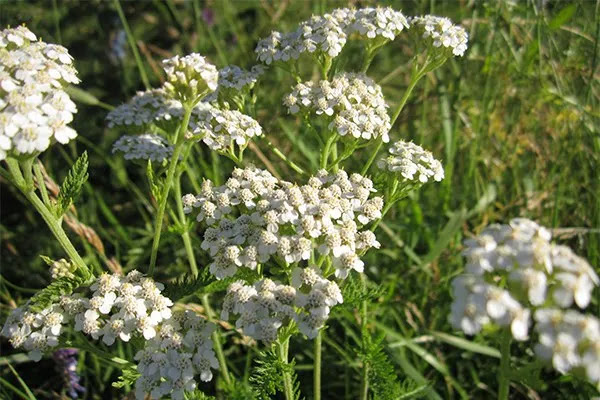
Experiment with Herbs you have never grown or never heard of. Look for a variety of thyme, sage or oregano that has a different color, texture or flavor, like lemon thyme, purple sage or golden oregano. They will break up the landscape as well as introduce new ideas. There is nothing more lovely than a vinegar made with purple basil and the taste is just as great as the regular sweet basil. Choose the herb of the year for 2024 Common Yarrow.
Common yarrow It will thrive in poor soil during dry periods and still produce blooms. It was introduced to America during colonial times and is considered a naturalized native plant.

White yarrow


Growing Tips 
Common yarrow is a perennial in USDA Hardiness Zones 3-9 and thrives in sun but can tolerate shaded areas. Growing upright 2-3 feet tall and spreading to 3 feet, it is best placed near the back of ornamental gardens and may need to be staked in windy areas. Cutting back plant stems before flowering in late spring can help control the height of the plant.

 You can grow it in pots as well. Check out these Yarrow posts. 5. Interplant Compatible Crops. Basil is said to make tomato plants ripen better and faster, so I always interplant a few basil with the tomatoes. Other plants can be added for color or companion planting to keep away bugs and other pests. Here is a link to a post on Companion Planting.
6. Succession Sow for Steady Harvests. Cilantro is a great herb for making salsa, but many people complain that it goes to seed long before the tomatoes are ripe. Solve this problem by sowing seed two weeks apart through the end of August. This will give you a constant crop of tasty leaves. You can do the same with Dill to provide dill weed to go with all your summer vegetables.

Cilantro

7. Create Many Mini-Gardens. Just because you do not have a large garden plot or a space that gets all the required sun, does not mean you cannot make a garden for yourself. If you have a small area to the south or west that will get the needed 6 hours of sunshine, place a small patch of herbs I that space and enjoy the wonders of a good harvest. Establish deep, fertile beds wherever the sun beckons, and use large containers to make use of sunny spaces on your deck or patio.

Kitchen herb garden at Chicago Botanic Gardens

8. Try Vertical Gardening. If you have a small patio or balcony use your upward space to make the most of what is available. Create terraces with stacked pots or cement blocks, or even recycle a wooden palate for vertical space. By adding 3 to 4 inches of compost at the beginning of each new season, you can grow herbs and vegetables I a tight spot. Nasturtiums look very nice spilling from a pallet.


9. Use Herbs for Free Fertilizer. Take advantage of free, nitrogen-rich fertilizers you can craft from herbs such as comfrey, parsley and chamomile. Make a fertilizer tea by steeping leaf cuttings in water or just add these to your compost bin to enrich your spreadable compost.
compost bin

10. Weed Early and Often. Most garden crops require weeding at least three times: Plan to weed five to seven days after sowing or transplanting, again seven to 10 days later, and a third time three to four weeks after the crop has been planted. By that time, the plants should be big enough to mulch and should have plenty of leaves to shade the soil’s surface cutting back on weed growth.
11. Preserve the Harvest. Much less garden produce will go to waste if you freeze the extra in small batches every few days. For example, add chopped chives diced tomatoes or squash and freeze for quick cooking later. Combine green beans with dill in a small zip seal bag and drop into the freezer when your garden gave you more than a meals worth. You can also create seasoning ice cubes by chopping herbs and measuring into an ice cube tray, top with water and freeze. Once frozen, pop the cubes into a zip seal bag and you have a winter worth of pre-measured herbs for soups and stews come winter.


12.
Drying is the easiest way to preserve your herbs. Cut the stems at the peak of flavor, generally early morning after the dew is lifted and bundle with a rubber band. Hang to dry out of the sun and use to create blends, season foods and decorate and scent your home.

So go try out a few herbs in your garden space and share with us how it went!  You can share thoughts and ideas here or on our Instagram page: www.instagram.com/backyardpatch43 

Tuesday, February 7, 2023

8 Herbs That Symbolize Love and Romance

Herbs and other plants have a centuries-long history of symbolizing love and devotion. In ancient Athens, people wove mint and marigolds into bridal garlands and wreaths, and in classical Rome, brides carried wheat for fertility and rosemary to ensure the groom's fertility. In medieval times, European brides carried pungent herbs such as garlic and chives to keep spirits from disrupting their happiness. The pinnacle of romantic use of herbs may have come during Victorian times, when roses, lavender, pansies, and marjoram were carefully combined with one another and with other herbs to create formulas for romantic success and contentment.

Here are eight modern herbs you can use to communicate your love and romantic intentions.

Purple Basil

Basil -- Basil became a symbol of love in Italy. In the folklore of Moldavia, a young man who accepts basil from a young woman is destined to fall in love with her.


Calendula 

Calendula -- Early Christians often brought these flowers to adorn statues of the Virgin Mary, which may be the origin of its use in love charms. According to the modern language of herbs, calendula means "joy." What a lovely thing to say to your beloved. You can add calendula to your teas, but even more romantic, add it to your romantic bath by candlelight. For young valentines, a sweet calendula-flavored soap is a gentle and loving gesture.


Thyme
-- Thyme has a long history during which it has symbolized many things. According to the modern language of herbs, thyme brings with it the meaning of affection, which is perfect for either young love or deep friendship. What better way to express your devotion to someone than to include a sprig of thyme in a bouquet.


patchouli

Patchouli -- The heady scent of patchouli is not surprisingly included in a list of romance herbs. According to the modern language of herbs, patchouli means "passion." To use patchouli to its fullest extent, tuck some dried patchouli into small sleep pillows or sachet. The rich, lusty scent can entice your love to feel romantic.

Yarrow -- In the modern language of herbs, yarrow means "everlasting love." Yarrow has a naturally spicy flavor, so use a light hand, and include it in your teas or baths.


upright vase of lavender flowers
                

               Lavender -- In the modern language of love,                                     Lavender means "devotion and undying love." It is                           no surprise that lavender has always been                                           considered a herb of love since its delicious and                                 romantic scent is adored by almost everyone. An                               increasingly popular modern tradition is to use 
               dried lavender petals as wedding confetti.

Oregano -- Although we think of oregano primarily as a cooking herb, the ancient Greeks believed that it was the herb of Aphrodite, goddess of love, who is said to have created it as the herb of joy for her garden.

Fennel -- With its soft, feathery, delicate growth habit, fennel seems perfect for a list of modern love herbs. In the language of herbs, this sweet, heady-scented herb means "flattery." Include its tall, shimmery fronds, in a bouquet of herbs and flowers to present to your loved one. Add fennel to your Valentine's Day meal, sprinkle it on your salad, or dessert dishes.


Friday, February 3, 2023

Southwest Scrub - Bath Blend of the Month

The main ingredients in this scrub is blue cornmeal.  Blue cornmeal is an ancient food that can also make a full-body treatment that is rejuvenating.  The Hopi Indians of New Mexico have used blue cornmeal ritually and to improve vitality and make their skin more youthful.  If you cannot find blue cornmeal you can substitute white or yellow.


Blue cornmeal in a white bowl


Southwest Scrub (makes 12 oz.)

  • ½ cup ground blue cornmeal
  • ½ cup grated castile soap
  • ¼ cup oatmeal
  • 1 tsp dried calendula petals
  • ½ tsp rosemary
  • 1 tsp lavender buds

Place corn meal and soap in a large bowl.  Finely grind the oatmeal and herbs together using a spice grinder of a coffee grinder.  Add this mixture to the cornmeal mixture, stir well. Pour into a clean airtight container.

TO USE: Combine 2 Tablespoons to ¼ cup of mixture with enough water to make a paste and apply to damp face. Gently scrub and rinse off with warm water, then moisturize skin with a natural oil rich body lotion.  If you have sensitive skin you should avoid using this on your face.


Related Posts Plugin for WordPress, Blogger...