Showing posts with label plants. Show all posts

Monday, April 6, 2026

Shopping Smart at the Garden Center

A small tutorial on how to prep for a trip to the garden center, spot healthy plants and slect the right tools.

Don't go without a Plan

Survey your garden site. Determine how much space is available, how much sun it gets and whether it is dry or moist.  

Take pictures.  Are you growing along the foundation? Bring a photo for reference that shows utility connections, window locations and existing plants.

Measure, take photos or even bring along any containers you want to fill.  Garden center staff can be helpful with choosing plants to go together and in the right size container.

Make a list of plants you want, use the internet catalogs to gaze at photos and get spread requirements.  Make your wish list based on space and don't let it get too long.

Plan your visit for a weekday if you can, staff will be less harried and better able to assist you.

What to Look at in Plants

Admire plants in full bloom, but buy those that are just budding.  They will last longer and give you the best show.

Grab a wagon, pick out the plants that catch your eye. You will see how they go together and begin to formulate a detailed plan.

    • ·         Generally plants are organized by style: Perennials, Annuals, shrubs, and trees.  Herbs can fall into multiple categories, so sometimes and Herb section, but also among the annuals and perennials, especially if they are pollinator friendly or have showy flowers.
    • ·         Be aware perennials may be organized by scientific name (like Echinacea for Purple Cone Flower) ask for help or use google to translate as needed.
    • ·         Annuals are usually separated by shade and sun, so look for shade plants to be kept in a separate area.  
    • ·         Pay attention to the tags provided look for details like "sunny/dry," "shade tolerant," and the climate zone so you can plan for their use and survival in your garden. 

Decide the size you wish to start with .  Individual plants in 4 inch pots are generally larger and have a headstart on seedlings in packs.  However seedling annuals will grow very fast and spread nicely so may be worth the savings when buying in pack multiples.

Pick Healthy Plants

The most important thing you can do to insure a great garden is pick healthy viable plants.  Take a moment and look at them. Scrutinize the leaves and stems.  Compare different pots of the same variety. Are the bushy?  Do they have any stems?  Are the stems green and firm?  Avoid any with dark spotting or a mushy feel or look.  Is the plant tall and spindly?  This is a sign of overcrowding and lack of care in the greenhouse.  Do not buy a pack with missing cells.  Look for lush green (unless the plant it purposefully variegated.)

Root bound vs. Good root growth

Check the roots. Roots are essential for successful transplant from nursery pot to your garden soil.  Gently tip the plant to one side and slide it out.  If the roots are cramped or curling around  and around the plant is root bound which can cause problems down the line.  However, if there is a large amount of soil and not many roots, the plant is underdeveloped and will probably not flourish.  If you have a great balance of soil and roots, grab that and put it in your wagon.


Never Buy Plants with --

    1. Brown, crispy leaf edges

    2. Yellowing leaves

    3. Papery, bleached leaves

    4. Holes or cut edges that can indicate insect damage

    5. Too many broken stems

    6. Dark scars or trails on the underside of leaves, indicates insect infestation

    7. Wilted, brown or spotted leaves, indicator of fungal disease that can spread

    8. Webbing or time dark spots on stems and leaves, indicates active insect infestation

Use the Right Tools

Where I live, I have enough room to make compost and we save food scraps, leaves and grass clippings to use in the compost piles and bins.  When I am filling containers or raised beds, I mix this compost with a healthy amount of topsoil and some other mulch.  I buy bags of topsoil or in some cases have a truck deliver unbagged soil to my garden.  

To calculate the cubic feet of soil needed for a project, use this formula -- 

  •  Measure the length, width, and depth of the area in feet.
  • Multiply the length by the width to find the area in square feet.
  • Multiply the area by the depth to find the volume in cubic feet.
  •  If the area is irregular, break it into smaller rectangles, calculate each volume, and sum them up.
  • Consider adding extra soil for settling or compaction, typically around 10-15%.
  • Use the formula: Volume (cubic feet) = Length (ft) × Width (ft) × Depth (ft).


You get what you pay for is true in garden tools. A hand-forged trowel may cost more, but it will outlive a more cheaply made one.  I have a cast aluminum hand trowel that will not bend and has an edge I can sharpen to help cut the soil nicely, even it the soil is not worked.

You will need your basic arsenal of long handled tools.  A spade (pointy shovel), a rake, a fork, a flat end shovel, are the basics.  You may need edging tools and others once you get involved.  I like a handled weeder too.  There are many kinds of these, so shop around for the best for you.  I have a Cobrahead https://www.cobrahead.com/ that I just love.  I can stand and weed and don't have to kneel as much.


You need watering cans and hoses.  Drip irrigation hoses help save water and do require some preplanning, so think about if you want to use them before you start planting. Get a watering can with a rose (the sprinkle head with the little holes.) You do not want to water a stream of water if the plants are young or if you planted seed, as it can dislodge everything from the soil.  The sprinkle effect of the rose helps spread the water and keep if from rutting the soil. You need a hose of the right length.  Measure the distance from the faucet to the garden area and purchase accordingly.  You may also want a hose attachment (trigger sprayer.) My favorite are the wands because they give me the versatility to water hanging baskets as well as fill watering cans or water beds and containers.

What about Containers

There is a great deal of information on containers and their uses and what works best. I will say that I choose based on an aesthetic of terra cotta, but I use a mixture of real clay pots and plastic painted terra cotta for those herbs that need more water during the day.

my scented geraniums near the door.

Here are two articles that I feel will help you choose the right containers for your garden.

Firs,t from just last year, on LivetoPlant.com help you choose. 

This article is from Epic gardening with lots of details. 

Choosing your container is just as important as selecting the plants themselves. It needs to be functional as well as beautiful. Consider all the pros and cons of each container before purchasing one. Take your time to decide.

So you have your plan, follow the steps and get ready for a great growing season, whether it is just a few pots or a grand garden bed.


Tuesday, March 14, 2017

Planning a garden in Four Squares

Some of my favorite days are spent when it is raining and dingy and I turn on all the lights in my workroom and drag out my favorite garden planning books and start to design gardens.  Sometimes they are gardens for my home, sometimes they are gardens for my patio and sometimes they are gardens for some imaginary house I will own with limitless garden space and someone else who will weed it.

Four Square Garden in Williamsburg
In the process of these imaginings I have come up with several great, reproducible ideas for gardens that I thought I could share.  These may help you with ideas for your own space so do not be afraid to borrow all the ideas you can use.

As will my Cottage Garden Plans there will be several different plans presented over several days so you can see the variety this style provides.  Unlike a Cottage Garden, a Four Square Garden is an organized and symmetrical plan.

This Four  Square garden is in Ohio
FOUR SQUARE

My husband and I believe the perfect home will be a four square style bungalow and we have been searching for one for years without much success.  However, in sympathy to this I created a garden space consisting of four even squares joined at the center with a decoration.  Although some days that center changes from a pain path into an elaborate container structure or a three dimensional abstract sculpture. Each of the Squares is its own individual theme garden. I like this design because I could call it my "Backyard Patches."


The squares each measure 9 feet by 9 feet this allows for easy reaching for 3 feet in from each side.  I run a path diagonally through each square to give access the to center spaces.  In one design of this garden I made a each square a different use for the herbs: Bath herbs, Tea herbs, Culinary herbs and Medicinal herbs.

Although many herbs cross over from one category to the other I was still able to fill each space with unique herbs.  And I could choose more unusual medicinal or tea herbs when the basic herbs seemed to end up in the culinary patch.  Here were the plants by section:

Culinary                                                               Tea
   Mustard                                                                     bergamot
   Cilantro                                                                      lemon balm
   Dill                                                                             lemon grass
   Nasturtiums                                                                lemon verbena
   Fennel                                                                        anise hyssop
   Chives                                                                        chamomile
   Marjoram                                                                   hyssop
   Oregano                                                                     mints              
   Parsley                                                                       scented geraniums
   Savory                                                                        catnip
   Tarragon                                                                     Meadowsweet
   Thyme                                                                        marigold, scented
   caraway
   lovage

Bath                                                                     Medicinal

   Comfrey                                                                      comfrey
   Chickweed                                                                  feverfew
   Nettles                                                                         penny royal
   Lavender                                                                     sage
   Rosemary                                                                    southernwood
   Sage                                                                            thyme
   Marjoram                                                                     borage
   Chamomile                                                                  valerian
   Roses                                                                           betony
   Aloe                                                                            marsh mallow
   Witch hazel                                                                 sage
   Lady’s mantle                                                             ginger
   Peppermint                                                                  St. John’s Wort
   Lemon balm                                                                Echinacea
   Calendula                                                                    primrose
   Clary sage                                                                   catnip
   Thyme                                                                         eyebright
   Yarrow                                                                        sweet cicely


The numbers match the layout in the photo above.

Another Four Square pattern I crafted was the single plant version.  This one has smaller squares within the squares each one containing multiple varieties of a single species, like Basil, Mint, Lemon, and Thyme (I'll use any excuse to plant a variety of thyme species.)

Here is the Plant arrangement list for the drawing above:

Lemon Herbs
Lemon basil
Sorrel
Lemon balm
Lemon thyme
Bergamot

Basils
tulsi basil (holy)
sweet basil spicy globe basil
purple basil
purple ruffled basil
lemon basil
lime basil
basil genovese

Garlic and Onion
onion chives
garlic chives
shallots

Sages
Common sage
Bergarten Sage
tri-color sage
purple sage
golden sage
pineapple sage (focal)
mint

Thyme varieties
lemon thyme
common thyme
silver thyme
golden thyme
wedgewood thyme
french thyme
english thyme

Mints
peppermint
spearmint
apple mint
variegated apple mint
pennyroyal
pineapple mint
curly mint
Corsican mint


Flowering Herbs
Although most herbs flower, as a dedicated herb grower I usually clip the flower heads off as soon as they arrive, but there are some herbs that you actually grow for the flowers.

Scented Marigold
Mexican mint marigold
bergamot
calendula (Pot marigod)
pineapple sage
Hyssop and anise hyssop

My favorite by far and the one that took me the most time to complete a design for was a color four square garden.  This one was designed with four complimentary colors and a color matching path.  Rather than put a path down the middle of of each square I made the squares only 6 by 6 feet so you could reach all the plants from the outside path.  Notice However that the colors were not placed in squares but in triangles to get the most attractive contrast when viewed from a distance or from above.

Silver
Peruvian sage
common sage
Bergarten sage
lavender
silver thyme / wedgewood thyme

Dark green to purple
peppermint
winter savory
purple sage
purple basil

Bright green
lemon balm
lemon basil
pineapple mint
lemon grass
variegated thyme
variegated mint

Golden
golden sage
golden thyme
calendula
lemon scented marigolds

With this garden I also planned a center diamond to accent the colors with a tiered raised bed
the bottom tier was dark green with rosemary and creeping thyme, the second tier silver with dusty miller and the third tier was purple and green with purple ruffled basil and red flowering thyme

Monday, March 17, 2014

Herb Plant Diseases

According to Rodale’s Illustrated Encyclopedia of Herbs (Rodale Press, 1988) there are several diseases you need to worry about with your herbs.  I tell you this now, because if you begin shopping in the nursery soon, you want to check plants for signs of these issues to avoid buying diseased plants.

  1. Damping-off (Rhlzoctonia solani and Pythium debaryanum). This disease kills seedling roots, leaving them water-soaked and looking shriveled. Provide warm, well drained seed beds to manage this issue.  May affect sweet marjoram and sweet basil, especially the hybrids like purple and lemon basil.

  2. Root rot (Rhizoctonia solani). This fungus causes rotted, yellowish brown to black roots and underground stems. Outer layers of the root will slough off, leaving a central core. Check new nursery plants by popping them put of the pot before purchase.  If you happen to have this in the garden, then control it by rotating plants every three years and provide with good drainage. Promptly remove the diseased plants. May affect lavender, oregano, rosemary and sage.

  3. Powdery mildew (Erysiphe cichoracearom). This fungus forms white, powdery mold on the upper surfaces of leaves and petioles; foliage then wilts and browns. Promptly remove the diseased plant. May affect bee balm, lemon balm and yarrow.

  4. Downy mildew (Phytophthora spp.). Leaves will wither and die after this fungus takes hold. It forms yellow spots on the upper surface of leaves and violet-gray mold on the undersides. To defend against it, don't crown plants; cultivate only when plants are dry; and rotate your plants every three years. May affect calendula, coriander. tarragon and basil.  

  5. Anthracnose (Leaf spot) (Colletotrichum spp.). You can see this fungus on mints and scented geraniums.  It looks like a water-soaked spot on leaves and stems of the plant.  Elongated tan cankers may also form on stems. Rotate plants every two years afterward and don't cultivate when wet. Promptly remove the diseased plants. May affect foxglove, mints and violets.


Monday, January 6, 2014

Herbal Anatomy -- winter blog series

I always choose something to do in the winter months that will take me to a deeper level of understanding of the plants I grow and love.  This year it is an exploration of plant  (herb) anatomy.  Over the next few weeks I will explore the parts of the plants the various descriptions of the parts and the uses of those parts.

I am going to begin with plant nature, like perennial vs. annual; then talk about roots, stems, leaves, flowers and fruit. I will include as many images as I can so when Spring comes you can go out and investigate your garden in a whole new way!


ANNUAL PLANTS spring from the seed, make their full growth and then die at the end of the growing season.  Many well know herbs are annual, like dill, cilantro and basil.

A BIENNIAL PLANT does not flower the first year, but produces leaves only. The second year of its growth it flowers, after which it dies. The carrot and parley are examples of biennials.  Many biennials are grown as annuals in the herb kingdom because the leaves are more important than the seed it will produce the second year.

A PERENNIAL PLANT lives for more than two years. If the plant retains its leaves during the winter, it is known as an EVERGREEN; if the leaves fall upon the approach of cold weather, it is said to be DECIDUOUS. Many herbs like sage, common thyme, tarragon and mints a,mong others are all perennial.
Lemon Verbena a Deciduous Tender Perennial
TENDER PERENNIAL - this is a perennial plant that cannot withstand most Zone 5 conditions, it will die if winder temps get below 10 to 0 degrees F.  These plants can be treated as annuals or brought indoors for winter.  Rosemary and Lemon verbena are both tender. 

AN HERB is a plant having a soft stem which dies down to the ground after the plant has reached it full growth.  This is the botanical definition.  The Herb Society definition is any plant beneficial to humankind through culinary or medicinal means (which includes, shrubs, trees and herbaceous plants.)

A SHRUB is a plant which has a woody stem, grows to a height of twenty-five to thirty feet or less, and branches near the ground. Sage is a shrub as is winter savory.

Burr Oak - Morton Arboretum
 TREE has a woody stem, is higher than a shrub and does NOT branch near the ground.

 STOLON is a form of a branch which curves or falls down to the ground, where they often produce roots.  Mint does this as it can propagate from root, seed and branch (that is why it tends to be invasive.)

A CLIMBING PLANT is any plant using an external support to raise itself above the ground. The term “vine” is used for certain climbing plants. Hops which is also an annual and passion flower are great vining herbs.

A PROSTRATE PLANT  – a plant growing flat on the soil surface with little or no upward growth.  There is a genus of Rosemary an, Corsican Mint and several thyme varieties which all are considered prostrate.

  SUCKER is a branch of subterraneous origin, which, after running horizontally and emitting roots in its course, at length rises out of  the ground and forms an erect stem, which soon becomes an independent plant.  Examples are roses, raspberries, mints.

A RUNNER is a prostrate, slender branch sent off from the base of the parent stem.

An OFFSET is a similar but shorter branch, with a tuft of leaves at the end, as in the house-leek or hen and chicks.

A SPINE  is a short and imperfectly developed branch of a woody plant, as exhibited in the honey-locust.

A TENDRIL is commonly a slender leafless branch, capable of coiling spirally, like grapevines.


INDETERMINATE GROWTH is the term used to refer to branches and leaves growing for an undetermined length of time to be stopped only by other factors such as frost.  Most herbs are described as indeterminate because the growing season end varies by the time of the first frost in the fall.

Tuesday, March 13, 2012

Chicago Flower and Garden Show

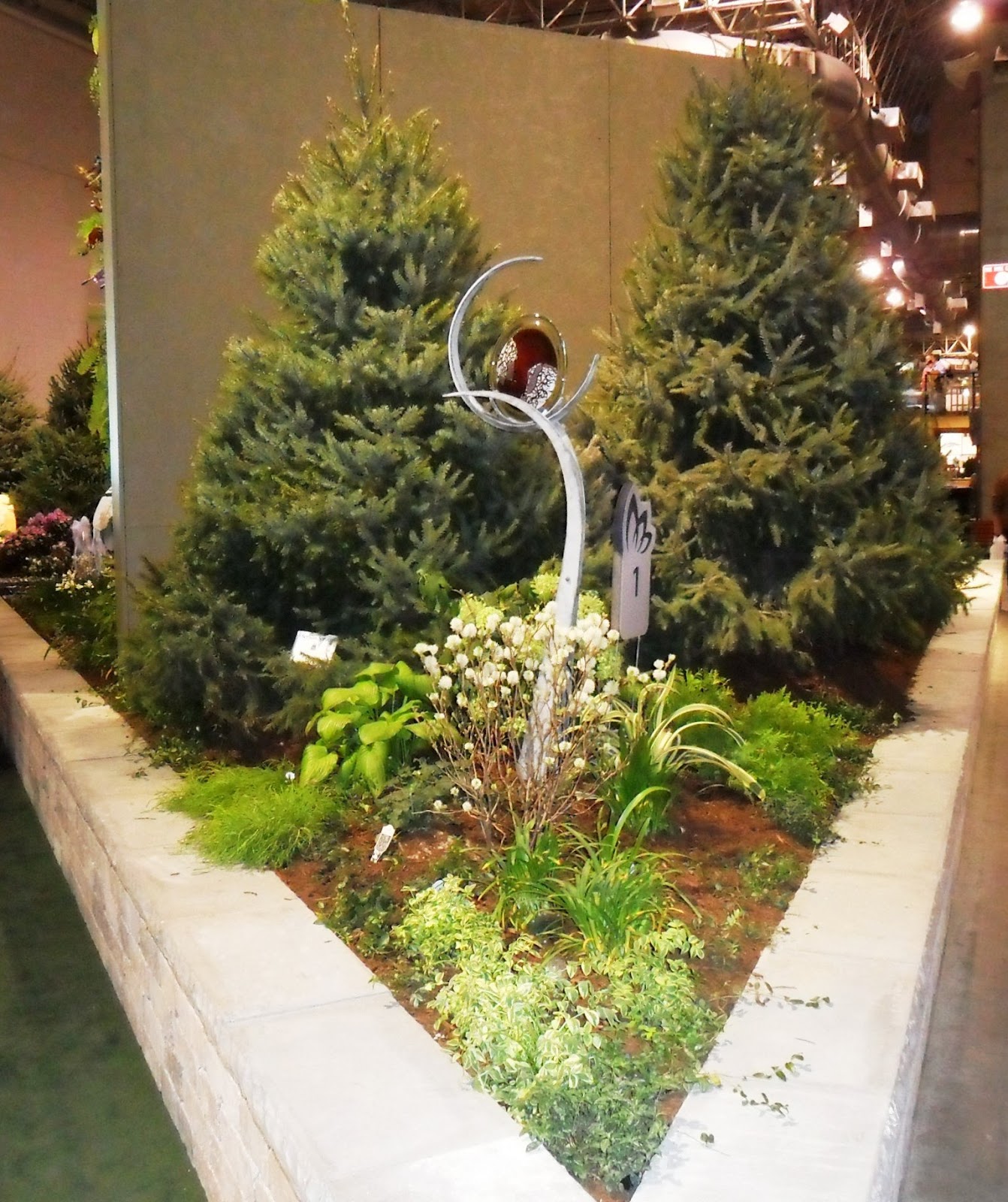
I took a boat load of photos at this year's Chicago Flower and Garden Show.  It was filled with ideas, especially if you are a patio gardener or container gardener.  This yearly show used the theme Hort Couture, this year for gardens as fashion.  I liked the theme, but the execution was a bit lacking in some places, while in others it was spot on perfect.


This was part of the fun and colorful entrance

There were many things to note and to my pleasure a great number of herb gardens and herb plants and edible flowers.  I have been to garden shows before where herbs were relegated to an afterthought and that was not the case here, in fact one whole garden focused on herbs and edibles with a French theme that I just adored.


I recommend you visit the Chicago Flower and Garden Show which is running through March 18 at Navy Pier, tickets on-line are cheaper and the parking in the desk is discounted this week.  And with the weather they are predicting this week, you need to get outside anyway!

Here are a smattering of images of things that caught my attention. The first thing I noticed as we rounded the entrance was the fragrance.  Tulips, lilacs and mixture of other floral scents wafted through the air, instantly lifting your spirits! 

This was part of the French Herb garden (# 11) "Front Yard Food a la Francais."   It was a nice use of a pallet for height and a base rather than wall planting it.  This would be perfect on a narrow patio!


There are also ideas that are not plants, like this clever design for patio lights made from Mason Jars!


There were beautiful tulips and a great rendition of the White House garden too!
White House Garden #5
There were water features galore and some were subtle and others were robust and filled with fish and bridges.  My favorites were this one you could put over a cistern in the path and another with a gentle cascade and Asian accents.

Notice the small Asian touch to the right?
There was much about urban gardening, including raising chickens and conservation of water and other resources and the teaching garden was very well done.  Our favorite garden was the Hope and Healing garden (#7) sponsored by Humana.  It was very pink but focused on a great theme of Surviving Cancer of a brave facade with a slicing path though the center that featured a thriving well rooted tree.  There were many aspects of this garden we enjoyed and I am sure my husband will speak of it as well when he guest writes later this week about the historical touches at the event.
Hope Garden Petunias struggling among the reeds
Overall the Chicago Flower and Garden show is worthy of attention and the little extras like culinary demonstrations, teaching garden lectures, the ability to plant a container garden, and enjoy a garden-centered market place are all worth the price of admission.

Here is the great staff member, Jeff  at Ted's Green House of Tinley Park that I played stump the staff with when I asked when the herb Unicorn Chives might bloom.  He was knowledgeable enough to recognize that it had a flat leaf like Garlic Chives so it would probably bloom at the same time of year, but he had to confirm that with someone else.  I did get the most amazing Rose-scented Thyme here.  What a great way to celebrate Rose the herb of the year!  I recommend checking out Ted's Greenhouse.  They even carry smallage and a number of other new and exotic herbs I have enver seen a nursery carry (check out the herb of the week on Lovage and Smallage if you want to know more about this herb.)

I leave you with the promise that there was a lot to see and do at the Chicago Flower and Garden Show which provided me with ideas for future blogs so stay posted to see more from this event.


Friday, May 20, 2011

Buying Herbs - A shopping experience

Saturday, May 7th on rather short notice, I went to the annual Freinds of the Oak Park Conservatory Herb Sale.  The sale is in its 23rd year and since I moved to Illinois about 22 years ago, I have been to this show almost as many years as it has existed.  When My freinds and I first started going one had to wait outside in a line for it to open.  We would bring herb tea and scones and have a picnic on the sidewalk.  Then they allowed members to come a day ahead and the line got much shorter.  Normally my friends and I shop on member day, but this year I was teaching so we went on Saturday.

The shopping is wonderful and the herbs, many of which are raised by volunteers, are very well cared for.  The variety was not as extensive as in years past for things out of the ordinary.  I remember this was the show where I bought my Pineapple Mint and Peruvian Sage in the past, but the most exotic herb I got this year was a Pineapple Sage and a new ornamental oregano that is also edible but had showy yellow green leaves which will make it look great in the patio boxes.

Here are some images of the shopping experience:


Everything is labeled above and lots of volunteers around to help.

Lavender!

Curly Parsley
Mint (forgot which one, might be chocolate mint)

This Scented geranium was so cute I had to buy it!

The checkout area (new two years ago)

My very helpful cashier Alice!
It was a great event, I had a good time and you cnd just see my purchases down in the left hand corner of this photo.  That tall thing being my lemon verbena!

Marcy Lautanen-Raleigh
Related Posts Plugin for WordPress, Blogger...