Showing posts with label Nasturtiums. Show all posts

Tuesday, May 2, 2017

Edibles in your Garden Landscape


Most gardens today are solely ornamental and many of the ones that are edible are tucked into hidden corners of back yards, valued solely for their contribution to the pantry. Before herb gardens and vegetable gardens were relegated to their own spaces, kitchen gardens, cottage gardens, and landscapes around homes were filled plants that were as beautiful as they were useful.

Fortunately, edible landscaping is making a comeback, with more home gardeners choosing to plant attractive edibles that are easy on the eye as well as the dinner plate. A productive, functional and beautiful landscape can be grown on any scale and is especially useful when gardening in a limited space. 

Consider adding a few edibles to your garden from the Garden Club of Villa Park Plant Sale (May 12 & 13, 2017 -  320 E Wildwood, Villa Park, IL)  You can get details and pre-order forms on their website: www.homegardening.org. 

Here are a few basic ideas to get your edibles mixed into your garden landscape:

Height and Depth: pairing together edibles of varying heights in one bed or area creates an interesting look similar to wilder-inclined flower beds. Most vegetables prefer a full day of sun, but some can tolerate 4 to 6 hours of sun.  Any greens and cool-weather loving edibles enjoy the relief of some shade in the hottest parts of the year, so consider interplanting them with taller sun-loving vegetables and edible flowers or herbs. For example, the handsome Spotted Trout Lettuce can be planted under Ping Pong Tomatoes for contrasting colors, depth, height, and a one-stop salad harvest. African Crackerjack Marigolds (a very tall variety) can serve as a backdrop for a row of alternating Red Russian Kale and Purple Vienna Kolhrabi, with Arugula or Spinach interplanted between the brassicas – for a rich landscape of orange, red, purple, and deep green.

In extra cramped quarters, the same effects can be achieved within one pot. For example, Nasturtiums (edible flowers with a peppery kick) can serve as a “groundcover,” draping over the side of a tall container, with one Rainbow Chard and Tom Thumb Pea plant growing up from the center of the pot.


Succession sowing is also a useful tool both for food production and for growing an edible landscape. For example, radishes – a quickly maturing crop -- can be interplanted with Red Express Cabbage – a pretty, petite cabbage that matures quickly, for a cabbage. Sunflowers can be added to complete the trio, which will eventually grow tall enough to shade out the entire area, but not before the radishes and cabbages are ready to be harvested.  You can also use succession planting to give a continuous crop for herbs like dill or cilantro which can form seed rather quickly eliminating the ability to harvest the tasty leaves.

Colorful Contrast: Simply planting your go-to vegetables in a new formation creates a beautiful, new landscape. Planting Purple Peacock Broccoli and Cauliflower in one block will make for a snow white and rich purple/green checkerboard. Grouping a variety of colorful flowers and vegetables in a cluster instead of a row will automatically bring aesthetic interest to a corner of your garden.


The easiest way to create colorful contrast is to let some of your edible plantings go to seed! Not only will you end season with your very own seed bank, but ordinary plants will assume beautiful, new forms: lettuces, for example, will grow tall and bloom like clusters of tiny dandelions; leeks will shoot out one long stalk with a giant, lavender-hued, globe-shaped blossom.

Choose unusual varieties of usual vegetables in the interest of color, nutrition, and flavor. Merlot Lettuce is merlot colored, Lemon Cucumbers are lemon colored, and Rainbow Chard, yes – also true to its name – comes with stalks in varying colors.
 
purple basil in the center pot,
 edible and color coordinated

Substitute: Another helpful way to think about edible landscapes is to substitute edible varieties for each role you want a plant to serve in the garden. Want a vine to climb up the back fence? How about peas, followed by pole beans: they have beautiful flowers and foliage and also produce delicious pods. Looking for a petite tuft of grass to edge your pathway? How about chives instead – a hardy, perennial with great flavor and attractive magenta blooms. Thyme works great not only as an indispensable seasoning, but as a groundcover too, especially in between a stone pathway. Purple Basil can substitute for a coleus and has the same burgundy foliage.  Adding edible flowers to the flower garden can give you double duty. Chamomile and feverfew look like small daisies; Borage, bachelor Buttons, Love-in-a-Mist can all be eaten; Nasturtiums are well known for the peppery flavor of the leaves and the flowers. And pansies and calendula are also edible.

Wednesday, February 1, 2017

Herb of the Week - Herb Seeds

This is the time of year to think about seeds and I wanted to turn your attention to seeds as a product of your garden, not just for saving to grow next year’s crop but for the benefit of those seeds in your tea and cooking.  So here is a look at Five Herbs to grow for the seeds:

Dill (Antheum graveolens)


Dill has medicinal properties including being a carminative (something that reduced flatulence) and a general intestinal aid against cramps and discomfort.  The name comes from the Old Norse word dilla which means to Lull.  In the Language of flowers this meaning of To Lull meant calming and soothing thought.  Dill is most famous for being used to make pickles.  You can save the entire heads and place in jars of pickled or fermented cucumbers.  The seed heads are also decorative and make great winter time dried arrangements.  You can also use them as a flavoring in breads and soups. I posted some great recipes using dill back in 2010

Pumpkin and Dill Soup
3 cups pie pumpkin cubes
1/2 tsp dill seeds
2 Tbls finely chopped onions
1/4 cup milk
2 Tbls butter
salt and freshly ground black pepper powder to taste

For The Garnish
fresh cream
chopped spring onion greens

Directions: 
Heat the butter in a deep non-stick skillet or Dutch oven, add the onions and sauté on a medium heat for 1 minute. Add the dill seeds and sauté for another 1 minute. Add the pumpkin pieces, salt and 3 cups of water and simmer over medium heat for 10 minutes. Allow it to cool completely.

Once cooled mash the pumpkin or blend with a hand or immersable blender until smooth.  Add the milk and cook for 2 more minutes.  Serve hot garnished with cream and spring onion greens.

Coriander – the seed of Cilantro (Coriandrum sativum)  

Cilantro is the herb of the year in 2017 and one thing I learned early about cilantro is you must embrace its habit of going to seed.  Cilantro is a wonderful spicy-flavored leaf used in Asian cooking and salsa, however heat makes this wonderful plant bolt and go to seed very fast in the hot months of summer. By the time the tomatoes are ready, the cilantro is long past its prime.  To avoid this issue plant cilantro at two week intervals by spreading a layer of seed right next to a planted crop.  You will have a constant selection of crisp cilantro and can also enjoy the seeds of coriander when they bolt.  Coriander is a common cough remedy and is seen to be an aphrodisiac.  The seeds are used to flavor beans, onions, potatoes, sausage, stews, wine and even baked goods.  It is a regular ingredient in curry and chili powders. I love coriander in my Do-It-All seasoning.

Here are two recipes for Coriander the first is a meat rub and the second is a crescent cookie

Lemon Coriander Cookies 

The lemony flavor of coriander enhances the fresh lemon taste of these tender cookies.

3/4 cup Butter
1/3 cup Sifted powdered sugar
1 Tbls Lemon juice
1/4 tsp Lemon peel; grated fine
1 tsp Coriander, ground
2 cup Flour
1/3 cup Powdered sugar (for dusting)

Directions:
In a large mixer bowl, beat butter until softened. Add sifted powdered sugar and beat until fluffy. Add lemon peel, lemon juice and coriander; beat well. Add flour; beat until well mixed. Preheat oven to 325 degrees. 

Shape the dough into 1 1/2" long by 1/2" wide logs. Curve each log into a crescent shape, tapering the ends. Place on ungreased cookie sheets and bake 18-20 minutes or until done. Remove and cool. In a plastic bag, gently shake a few cookies at a time in 1/3 Cup powdered sugar.   These will keep for 1 week in an airtight container and up to 3 months in the freezer. 

Coriander Meat Rub
Homemade rubs are a quick way to transform roasted meat, poultry, and vegetables into something special. Use this one on both steak and potatoes. 

2 Tbls coriander seeds
2 Tbls whole peppercorns
1 Tbls dried thyme, chopped
1 Tbls dried rosemary
1 Tbls plus 1 tsp coarse kosher salt

Toast coriander seeds in a heavy small skillet over medium heat until aromatic, about 2 minutes. Transfer to a mortar or spice mill. Add peppercorns and crush until broken into coarse pieces. Mix crushed spices with herbs and salt. Store in an airtight container for up to 18 months.

Nasturtium (Tropaeolum majus)  


These lovely summer edible flowers make great seed pods that you can turn into a substitute for capers.  You do this by pickling them.

Pickled Nasturtium Seeds
1 quart white vinegar
2 Tsp pickling salt
1 thinly sliced medium onion
2 cloves garlic
2 peppercorns
½ tsp each allspice, mace, and celery seed

Combine all ingredients in a glass quart wide mouth canning jar.  Pick the green seeds pods as the nasturtium blossoms fall.  Wash seeds and drop into pickling mixture.  Keep the jar in the refrigerator and continue to add washed seed pods though out the fall, being sure to stir well each time you add more.  You can begin using them once you have collected at least a cup.  Any place a recipe calls for capers you can substitute these pickled beauties.

Anise – Pimpinella anisum

Not to be confused with Anise Hyssop or Star Anise the spice, this herb, also called aniseed, is a flowering plant in the family Apiaceae native to the eastern Mediterranean region and Southwest Asia. Its flavor has similarities with some other plants, such as star anise, fennel, and licorice.  Because it is an annual plant you can grow it here in the Midwest and harvest the amazing seeds.


Sprinkle them where you want them to grow in sunny loose soil, as they dislike transplanting.  The seeds have been used since Biblical times.  Back then it was so precious it became a form of currency.  Today we prize it for the amazing scent and the ability to help with digestive issues as well as the sweet flavor for use in pickles, salads, cookies and candies.  I did an entire Herb of the Week post on Anise in February 2011 and another in March 2013 so it is well represented with numerous recipes. 

And finally I have Caraway (Carum carvi).  


This dill-looking plant has seeds that are a popular spice, especially in central Europe.  They enhance pork, goulash, sauerkraut, cheese and pickles.  When added to cooking cabbage they reduce the smell. The seed can also be used to flavor bread and cakes.  Chewing on the fresh seed will settle the stomach and increase alertness, especially after a meal.  Chopped leaves are added to soups and salad, and the roots can be cooked as a vegetable.  The seeds are considered an antiseptic. This seed is used not only to flavor rye bread, but also in cakes, biscuits, cheese, carrot, potatoes cabbage dishes and sausage. Caraway is the main ingredient in my Savory Herb Bread. I shared a Cool Caraway Coleslaw recipe back in 2013. We did an entire herb of the week post on this herb too back in Feb 2011. I found an old reference that originated in colonial times, which used the seed tied into the corner of a handkerchief and chewed to help folks stay awake during long winded sermons.


Tuesday, July 26, 2016

Backyard Garden Update July

July was a whole lot of let it grow.

These are some of the plants in bloom


 Mabel Grey Scented Geranium

 
 Calendula just before it began to bloom.
 Nasturtiums
 Swamp Milkweed


 Gazania
 Anise Hyssop

 Yarrow

 Artemesia

The back yard enjoying growth and decoration.  We added a third trellis back by the fence for Hyacinth Bean.  I got some seed from the Garden Club and planted them along the bottom.  The trellis is to keep Chas from trimming them down before they get big enough to grow on the trellis.  Hyacinth bean can grow inches in a day, so although an annual it can cover the trellis by the end of the season with no problem.


 The peas have taken over the string.  I am not sure what to do now that they are higher than the posts.


 Scented geraniums by the back door.


 The vegetable garden is getting tall and full with much potential by the end of the month.


The herbs seemed to be growing more slowly than I expected so I started a program of adding compost tea and new rich soil and compost to the garden in 2 week intervals to see if there is improvement.  By month end they are beginning to get better.


 The rain garden in mid summer


 By month end the calendula and Nasturtiums joined the rest of the flowers in bloom!


Wednesday, July 2, 2014

Herb of the Week - Companion Plants

I've written on companion planting before, but I came across several new articles and resources on the subject, that I thought some updated info would serve everyone.

For a while it was believed that Companion Planting was only folklore and had no basis in science, however experts now call the interaction of plants allelopathy or "growth inhibition as the consequence of the influence of one organism on another."  The scents or air interactions as well as root excretions of certain plants will effect others.  Here are some examples of what I mean:
  1. Legumes, such as peas and beans take nitrogen from the air and fix it for their own use, which will in turn benefit neighboring plants.
  2. Some plants exude chemical from the root that repel insects, like the African marigold. This plant will give off a chemical called thiopene which repels soil nematodes.
  3. Other plants may attract beneficial insects which in turn keep pests in check, like mint that attracts hoverflies.
Herb Companions

I have always known that tomatoes and basil enhance each other, so this year in my community garden I planted three varieties in the tomato bed to see which one has the best effect.

basil planted between the two rows of tomatoes
Chamomile, German variety (Matricaria chamomilla) improves the flavor of cabbages, cucumbers and onions.  The plant also accumulates calcium, potassium and sulfur which it returns to the soil.  These minerals are good for lowering the pH of the soil (making it more acidic) which vegetables like.

chervil
Chervil improves the growth and flavor of radishes and keeps aphids off lettuce.  Good to plant near dill and cilantro too.
chives 2014
Chives will improve the flavor and growth of carrots and a tea made from chives can be used to treat downy mildew on cucumbers.  I tried it on my rosemary for the same issue and it worked!

Geraniums will repel Japanese beetles and are a nice low growing addition to a rose garden.

Mint deters white cabbage moths, aphids and ant.  It improves the health of tomatoes and cabbages when grown near them.  It also attracts hoverflies and predatory wasps, but keep it away from your parsley.

Nasturtiums by tomatoes in cages.
Nasturtiums with work on wooly aphids, whiteflies and cucumber beetles.  Whitefly is a bug that likes lemon verbena, so I often plant nasturtiums in my lemon verbena pots. If I had known about the cucumber beetle thing, I think I would have ringed my community garden with nasturtiums before I planted anything.  As it is, I set in some seed only after the cucumber beetles ate alot!

purple sage
Sage is used as a companion for broccoli, cauliflower, rosemary and cabbage and carrots as it will deter moths and beetles because of its strong scent, but don't place it too close to the cucumbers.

marigolds encircling tomatoes
Scented marigolds (sometimes called Mexican or French marigolds) are the best at repelling soil nematodes, but remember a dense planting is needed, not a random plant here and there.
scented marigolds
Stinging Nettle helps neighboring plants to grow more resistant to spoiling. It also increases the essential oil in other herbs.  And a tea made with the leaves can be sprayed on plants to help them grow strong stems.

nettle
Summer Savory should be placed near the beans and onions to improve the flavor. I just discovered a midget variety that I think will work great around these plants.
Midget Summer Savory (Saturejus hortensis 'midget')
Tansy will keep away leaf borers and is very good companion in the fruit orchard or among the grape vines.


Resources: 
The Practical Organic Gardener by Brenda Little
How to Grow More Vegetables by John Jeavons

The Essential Herbal magazine - several recent editions from 2013 and 2014

Wednesday, March 12, 2014

Herb of the Week - Short herbs for a border

A garden blogging friend of mine just pointed out the importance of smaller shorter plants in the edge of your landscape border.  You can read her entire blog post here.

Her post got me to thinking, in this year of garden planning (since it is snowing here again!!!) what small attractive herbal border plants do I know.


Here are a few suggestions for the herbal border (your Herbs of the WEEK!):

Chives are a cluster and clumping plant and they ere are varieties that grow less than 12 inches high.  If spread along a border they actually make a great break between larger plants and the pathway.

Lambs ear is a popular border plant.  With large show and snowy colored leaves it is a perfect border plant.  They do get taller when the flower, but that is not until late fall.


Another plant that is short and colorful is calendula.  As a border plant you can grow them closer together to get the foliage effect and once they are blooming keep them trimmed and they will bloom all season.
Here is calendula along a brick border, nice contrast
Speaking of flowers Nasturtiums make a nice cascading border and they cam be grown from seed making them an inexpensive choice if you have many linear feet.


Curly Parsley is not my favorite herb to grow for culinary reasons, but as an attractive plant, it does win some praise.  Using the bright green as a border is perfect and then at the end of the season remove it because although it is a biennial, it gets a very tall stalk the second year and will be out of place in the border.

Corsican Mint is a very low growing herb that you can use as a border, or right in the path.  Because it is a mint, you can walk on it without damage so allowing it to encroach on the path is not an issue.

Thyme is my favorite for a border plant.  I grew 17 feet of thyme plants just at the grassy edge of my first herb garden for many years.  I learned that a hard border is better near thyme, though otherwise you end up pulling blades of grass from the thyme, which is very tedious.

So think creatively about what you place along your border and use this short edge to create a great contrast to taller, leafier or just plain different plants in the main beds of your herb garden.

Seriously, I am sure we will be able to plant this year... really...

This is what the herb garden looked like last week and will again tomorrow.

Thursday, August 29, 2013

Art in the Herb Garden

Some days I go to the garden intent on photographing something I or my plants are doing.  Other days I am documenting the garden as it moves through seasons or a plant thought its life cycle.  And sometimes I just take pictures for the sake of taking pictures.  I do not have the most presition camera.  I am working onit, but darn if I spend my earnings on somthing to read or something to grow and neverhave enough left to upgrade my camera.

However, sometimes my camera surprises me and gives me a great image.  Today was one of those days.  I was documenting seeds for an upcoming blog on seed gathering.  While I was doing this I realized the zinnias and the black eyed susan's were still blooming so I snapped a few images.

I thought you might like to see them....

Coneflower with unique red kissed petals


End of season Nasturtiums still have it!


Marigolds


Purple Zinnia


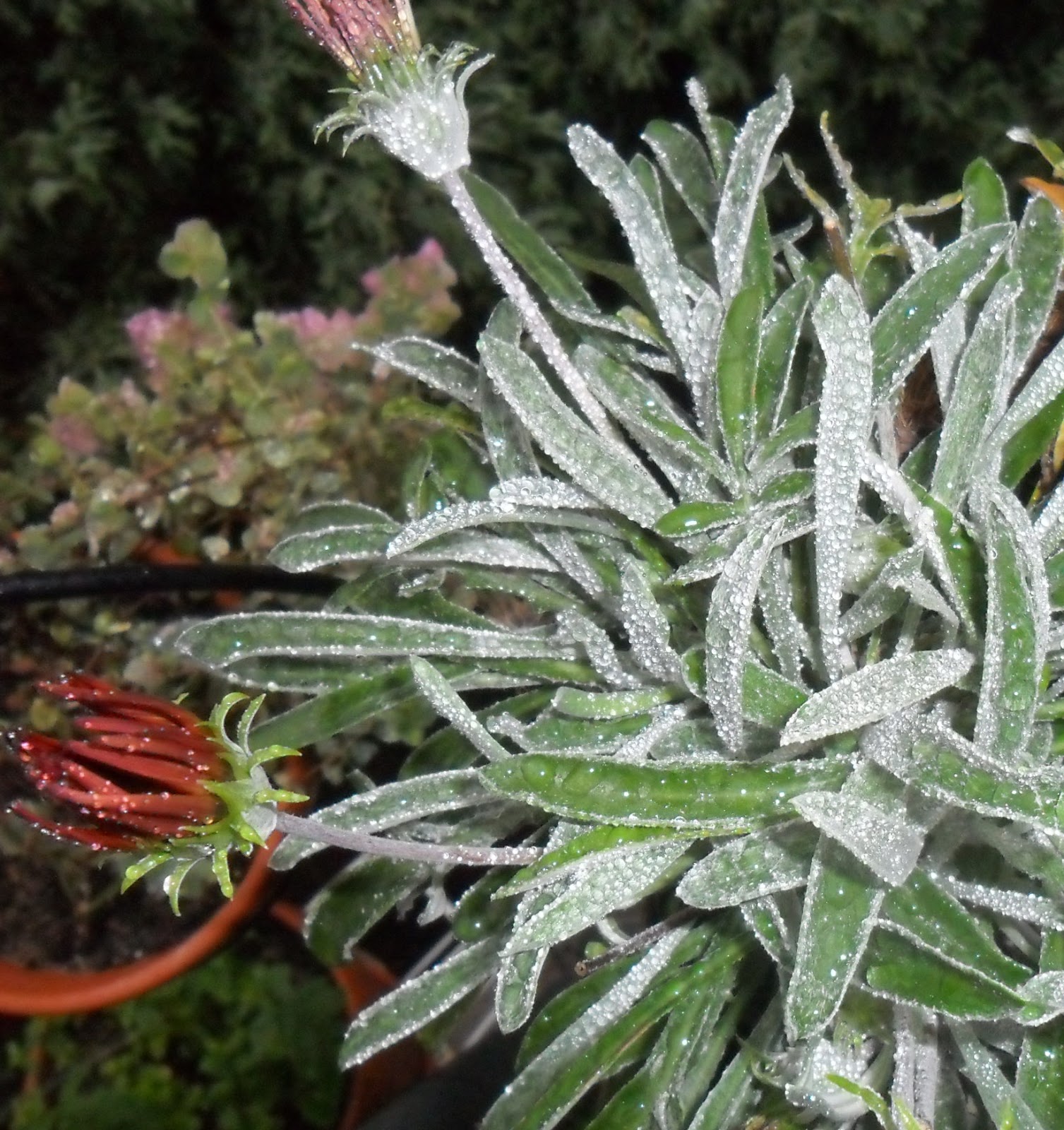
Dew on the leaves
This coneflower even has a cucumber beetle. 
 Back to business tomorrow maybe!  Have a great Labor Day weekend!
Related Posts Plugin for WordPress, Blogger...