Showing posts with label herbs. Show all posts

Thursday, May 7, 2026

Four Season Herb Gardening

The key to a garden enjoyable through all four seasons is not just what you plant, but how you plant and care for it according to Janet Mancunovich.

At a garden expo I attended a few years ago, Janet presented a 4 season garden with the following details for creating a 4-season garden.


1. Begin planning in winter - read up the plants, plan bloom structures, place plant in the landscape plan expensively, choose bed sizes and be realistic about size and location. Remember that in a perennial garden only 6 to 10% of plants are in bloom at any one time.  Think about the art features you want to include and remember to leave them out all year, they should be waterproof. Order seeds and exotic plants for best selection.


2. Consider viewer angle and background.  Spots of color should be sized and positioned throughout the scene, Use long-interest plants in spotlight positions.  Those with an extended bloom, those that thrive in your growing conditions, look into texture and size as well as blooms. Use winter to thin shrubs and prune back stubble from last year.


3. Drop in some Spring bulbs in massed irregular groups. Double plant early bloom bulbs with late emerging bulbs to give continuous flowering.  Remove brown leaves but remember to save those persistent seed heads not only for interest, but for foragers. Plant your summer perennial herbs. Place mint plants in containers to keep them controlled and add focus plants. For late spring root some stem cuttings to fill in the landscape come summer.

4. Blend in the summer plants. Choose texture, shape and then color.  Use annuals and garden art to add to the landscape. Monitor the peak bloom times. Visit other gardens to  know what is blooming, don't trust the garden center show. Work in the landscape to cut back certain plants, like mums to adjust or delay blooms. Dead head and cut back plants after bloom, plant TLC. Plant basil plants later once the weather has warmed.  work on keeping the garden weeds under control which will increase the harvest.


5. Come fall, think foliage color. Seed bod shapes and forms as well as tall plant form and motion, then consider fall blooms. Take time to divide and redesign come fall.  Lift and divide and move plants in this ideal season. Make sure you have added in long-lived species and match plant energy level with the urgency of division. Plant garlic or shallots where they can remain for next summer harvest. Edge the herb garden so it looks neater through winter. Sprinkle seed for dill and cilantro to gather a fall harvest. Add a Fall/winter season art piece for visual interest. You can even try to extend your harvest with a row cover depending on the size of your garden.

Make a chart of focal group seasonal interest and make it a priority to fill in gaps with subsequent focal groups.

It is okay to draw the eye front for spring, left for summer and right for fall in the same landscape.

Four Seasons in the Herb Garden

With good planning and a palette of plants you can create an herb garden that has flowers and fragrances from early spring to late fall.  And it can also provide a selection of cuttings to bring indoors for use through the winter.

According to Barbar Pleasant in the Herb Companion Magazine in 2008, You should include these things to give your garden a year-round presence.

1. Include structure plants. Shrubs, narrow upright trees, but a trellis with berry bearing plants or an arbor at the entrance can lend height without causing shade to sun-loving herbs.


2. Use vibrant verticals. Too many rounded mounds are going to create a fuzzy indistinct landscape. A nice late flowering anise hyssop with tall flower spikes is perfect addition.  As in a spring flowering herb like Chives.  For summer the sage, basil and thyme will begin to bloom and each have a variety of heights that can add drama and color and pollinator activity. Try a blooming edible flower like hollyhocks or zinnas to bring out the summer glamor.


3. Unify with neutrals.  It will matter less if colors and textures don’t connect if you include plenty of grayish foliage. This has a cooling effect on the garden and help illuminate their neighbors. Silvery plants like lambs’ ear, and culinary sage, germander or santolina work well.  If you have large spaces to fill tray Russian sage or other Artemesia.

artemesia


wormwood

4. Plan for easy access. Don’t let anything get in the way of you and the herbs you use the most.  Put plants you love near edges, and use well-placed stepping stones. keep aromatics like lavender in a pace where they can be brushed against and enjoyed.


5. Celebrate small details. Give your garden an exciting edge by featuring the exotic textures and colors of unique culinary herbs, like purple or large leaf basils, variegated mints, tri-color or golden sage, especially in a container that highlights the colorful foliage is a must.  For winter choose mulch materials that please your tastes like pine needles on black compost. 


Varigated Basil perpetua

A Garden for Every Season

A true four-season garden is not created in a single burst of spring enthusiasm—it is shaped through thoughtful planning, observation, and gentle stewardship throughout the entire year. By designing with structure, texture, bloom timing, and seasonal interest in mind, the garden becomes more than a collection of plants; it becomes a living landscape that evolves month by month. Winter offers reflection and planning, spring awakens possibility, summer celebrates abundance, and fall provides renewal and preparation for what comes next.


Whether growing ornamentals or herbs, success lies in layering beauty with purpose—combining form and fragrance, harvest and habitat, artistry and practicality. Persistent seed heads feed wildlife, silvery foliage ties plantings together, and well-placed paths invite daily interaction with the garden. The goal is not constant bloom, but continuous interest: something to see, smell, harvest, or admire in every season.

When approached this way, the garden becomes a year-round companion. Even in the quiet months, it holds structure, memory, and promise—reminding us that gardening is less about chasing perfection and more about participating in the rhythms of nature. With planning, creativity, and care, your garden can truly live through all four seasons, offering beauty, flavor, and inspiration every day of the year. 


Wednesday, April 29, 2026

Deer Proof Your Garden with these 10 Herbs - Herb of the Week

Gardening in Deer Country depends on a number of factors including weather, attitudes of neighbors, and the season.  If your neighbors feed the deer in winter, you will have more deer closer to your home.  They are creatures of habit and once they find someplace they like, they will keep returning. But having a fragrant herb garden is a confusing place for deer. They use scent to keep track of predators, so the scents in the garden can overpower that making them shy away.


Having a dog in the yard, even a small one can also deter deer.  Solutions with blood meal, urine, peppers, garlic, eggs and mint also keep away unwanted animals.  Applying these products around your property edge can work wonders.  However, they will need to be reapplied after rain or heavy watering.


If you have a floral landscape you many want to incorporate some of the plants in the following list to add the kinds of scents deer tend to avoid. Here is a list of 10:

  1. Horehound (Marrubium vulgare) - A hardy perennial that grows to about 2 1/2 feet; deer generally dislike the foliage because of its bitter menthol-like flavor.  It will self-seed, so dead head the blooms.
2. Goldenrod (Solidago spp.) - This native plant comes in many varieties and any will work.  Blooming in the fall it will send out 3 foot panicles in late summer.  You can start form seed or plants.


3. Rosemary (Rosmarinus officinalis) - Grow this in a container so you can bring it inside for winter.  You want an upright variety that will be a deer nose level, as they dislike the scent.


4. Anise Hyssop (Agastache foeniculum) Another Native perennial in the mint family, the dense spikes of purple flowers are very fragrant on 3-to-4-foot stems.  Not only will it attract bees and other pollinators, the scent keep deer at bay.


5. French Tarragon (Artemesia dracunculus) This perennial can get to 2 to 3 feet in the second year it has bittersweet leaves with an anise scent deer dislike.

6. Poppy (Papaver orientale) - This reseeding annual has pretty blooms in a myriad of colors and forms.  It is easy to grow, just scatter the seed throughout the garden.

7. Lavender (Lavendula spp) - Many varieties and species to pick from choose the stronger scented ones for deer resistance and the lighter scented ones to cook with.  Start them from plants and stick to the ones hardiest in your area.

8, Santolina (Santolina spp) comes in both gray and green leaf forms, it is a small shrub with strongly scented leaves.  Only 12 to 16 inches tall is makes a nice evergreen edging that can create a nice barrier.

9. Barberry (Berberis vulgaris) another hearty shrub, it has bright red berries and sharp spines.  It is easy to grow as a hedge  and can reach 8 feet tall in ideal conditions.  Place it in the back of the garden where deer like to slip in and they will think twice.

10. Butterfly Weed (Asclepias tuberosa) a hearty native milkweed, it has yellow, red and orange blooms that butterflies adore.

The key to making these plants work for you is allowing them to get to a mature size, so protect the young seedlings from rabbits and deer with small cages.


Thursday, April 22, 2021

Earth Day 2021

When I started this list I was listening to the wind wildly howling outside of my home. Although we had no snow yet, Winter was definitely knocking at the door.  I dislike not having a blanket of snow on the ground when the wind howls, I worry about my lavender which can dry out in strong wind. I worry about my thyme whose tiny roots can freeze without a winter blanket.  And I get concerned that the water table will not be properly replenished without the moisture of snow.

Wind can be an inconvenience to me when it blows my mulch around the backyard, and can be a threat to me when it becomes a destructive force during weather events. But I remind myself that this wind is a gift. This is the wind that blows fresh air into my lungs. This is the wind that disperses the seeds that will be this summer’s bounty. This is the wind that will bring in the warmer weather to come. This is the wind that shapes the landscapes that shape my life.  


Every minute of every day in every season we receive gifts from the earth.  That’s why, to celebrate Earth Day this year, I decided to give myself an Earth Day Challenge:

List 51 reasons why I am grateful for the earth. (It is the 51st Earth Day this year and we so did not celebrate last year!)

At first it seemed like a tedious task, but about halfway through I noticed that the more gratitude I listed, the more gratitude I felt, and the rest of the list was done in a flash. That’s the way these things work. Fear leads to more fear. Gratitude leads to more gratitude. And more gratitude leads to more gifts. So this year for Earth Day, I have decided to focus on the gifts I receive from the earth.

By the time I reached the end, I had renewed my appreciation and commitment to giving back to the earth as best I can. Isn’t that what Earth Day is all about? Good luck, and remember to share your lists to spread the gratitude!

This Earth Day, I Am Grateful For:

  1. The wind’s power and presence.
  2. The beautiful sunset today.
  3. The fresh drinking water that comes into my faucet from an underground well.
  4. The trees around me. I always feel sheltered. Not to mention their gift of oxygen!
  5. The seasons. They encourage me to remember that change is good and necessary. 
  6. The smell of lavender, which is very calming to me.
  7. Bees. Besides the gifts of honey and wax, they pollinate plants so that humans can enjoy the fruits.
  8. Rocks. Many indigenous people call rocks the grandfathers of the earth. They hold the wisdom of the earth as they humbly hold up my home.
  9. The knowledge and wisdom that I have gained from watching my herbs grow.

  10. The reliability of earth’s cycles (daily, monthly, yearly, etc.) is very grounding.
  11. The song of frogs in the spring. It makes me want to sing, too!
  12. The few inches that my shoulders drop when I go into nature.
  13. Turtles. They teach me patience and persistence.
  14. The satisfaction of planting a seed in the spring and watching it grow all summer.
  15. Spring flowers, which bring hope after a long winter.
  16. The experience of absolute stillness and peace that can be found in certain places on this earth. It reminds me to slow down and listen.
  17. Medicines I have created that have come directly from the earth.
  18. The feeling of my bare feet in grass. Aaahhhh!
  19. The freshness of the air in wintertime, especially after a snow.
  20. The smell of fallen pine needles in the sunshine
  21. The changeability of nature. It’s very rare to see the same exact thing twice.
  22. The extremes in nature that collectively create balance. Our earth has darkest and lightest, highest and lowest, biggest and smallest, hottest and coldest.
  23. Eagles that amaze me in their strength and power.
  24. The clouds in the sky that warn of upcoming weather and amuse me with their designs.
  25. The ocean. It can be a very relaxing place, but also exhilarating!
  26. The end of a hot summer day when the cicadas start calling, the fireflies come out, and the relief of coolness is finally felt.
  27. Resources from the earth such as sun, coal, oil and wind that provide me with heat and power.
  28. The times I have seen the earth physically, mentally, emotionally and spiritually heal people.
  29. Human beings. We are as much a part of the earth as the crow that calls and the leaves that fall.
  30. The diversity on this planet in people, plants and animals. This keeps our ecosystems strong and resilient.
  31.  The yearly emergence of butterflies reminds me to live within the natural stages of my life.
  32.  The adaptability of nature and people.  
  33. The dead squirrel in the road, it reminds me to slow down.
  34. The song of the chickadee.
  35. Water. It can take any form, can serve any purpose, and keeps us all alive.
  36. The light of sun and moon that brightens the dark reaches.

  37. Zinnias, an explosion of color that can last all summer.
  38. Comfrey – purple flowers and large leaves that enhance the growing of other plants
  39. The change of flowers as spring blooms give way to summer flowers and changes the atmosphere.
  40. The smell of lemon herbs as I harvest them and the brightening of my mood as a result.
  41. Rain as it nourishes the earth, feeds the plants and cleans the air.
  42. Sunshine as it sparkles of the dew in the early morning when I rise.
  43. Birds who take a bath in my rain garden after a large summer rain.
  44. Skipper butterflies playing games in the afternoon glow of my front yard.
  45. The blooming of the perennial herbs in late summer to bring delight to the cooling weather.
  46. The flowering of shade plants the brighten the gloom.
  47. The crack of thunder in a summer storm.
  48. The texture of bark on the trees as one strolls through the woods.
  49. The smell of lilacs on the fence line.
  50. The electricity of a summer rain when everything is that much greener.
  51. The sudden release of scent when I brush against scented geraniums on my steps, it reminds me to pause and experience my day.

So do you have things to be greatful for from the earth?  Share them with me!

Tuesday, February 2, 2021

Happy Groundhog Day!

You know that tongue twister –

How much wood could a woodchuck chuck, if a woodchuck could chuck wood?


Groundhogs are also known as Woodchucks.  The groundhog is a member of a group of large ground squirrels called marmots, but they’re also called land beavers and woodchucks. Surprisingly, the name woodchuck has nothing to do with wood, It’s believed to be taken from the Algonquian name for the same animal: wuchak.

The groundhog is a vegetarian with a diet consisting mainly of grass, herbs, and plants like dandelions, daisies, and goldenrods. They also have an eye for human crops, like carrots and corn, which puts them on farmers’ list of Most Wanted. And yes, they do occasionally eat tree bark, as we all hoped woodchucks would.

Groundhogs are a uniquely North American native so our special Groundhog holiday is very American.  Most groundhogs live in eastern and central United States, although you can find them in Canada and even Alaska. They tend to settle down on the edge of a forest or woodland near an open field, where they’ll likely construct their underground burrows. 

They are big burrowers and make dens underground sometimes along building foundations. These are pretty impressive homes. Their underground burrows include multiple “rooms” with different purposes, including a sleeping chamber, a nursery chamber, and a waste chamber (what we would call a bathroom). The entire burrow can stretch anywhere from eight to 66 feet long.


So how did they become the symbol of coming Spring?  It is because they are true hibernators.  They hibernate from late fall to late winter or early spring, which can add up to as many as six months of deep sleep, depending on their climate. During this time, their body temperatures can drop below 68 degrees Fahrenheit, and their heart rates slow from 80 beats per minute to just five. So when they wake up it really is Spring!

Sunday, September 13, 2020

Improvements and Changes to Backyard Patch Herbs

Covid has taken a lot out of me.  I am sure you can relate.  I did not realize how much I need to interact with others to boost my own creativity.  I miss just talking randomly about herbs.  Comments on my blog aren’t doing it, discussions on Facebook aren’t doing it.  I just need to have spontaneous questions. Everything seems to take me longer to do: Making herb blends, printing labels, packing items.  I can spend hours and lose track of time.

I have tried in this down time of quarantine to learn how to edit videos, so far I have not finished one of them.

I did clean and organize the cabinets in the herb room, scanned a pile of recipes (still not much of a dent in the collection.) I organized my craft room and cleaned out my part of the garage. Seriously, I never do these things, much to my husband’s chagrin.

Working during Quarantine

I am working from home, all of my jobs are now in one building.  This could be part of my problem I never escape.  My living room is now my office, my dining room was for teaching via zoom, my basement is for blending herbs.  The only escape I have is the garden. Which is probably why I have been spending so much time there.  Neglecting things I should be doing, like writing my monthly newsletter.


The weeds have never been more tamed.  But I have not grown one herb or flower that was new, except those two biennials I planted last year.

The Silver Dollar Plant flowered wonderfully and made these great branches when I harvested the seed.


The hollyhocks turned out to be black (I had no idea from the gift seeds I got.) When the sun shown on the plants they actually looked deep purple.  I liked the color difference from morning to evening.


But beyond this I have not been very creative in the garden. 

We do have cats again.  It was hard being on lockdown with no pets so we contacted a fostering agency called Mutts and Meows and got a pair of young cats.  Aren’t they adorable?


I have not written an email to my membership in months, mostly because even finding the energy to post to the blog has been hard, a newsletter is time consuming and I have had ½ a dozen false starts.

There are few events to promote, no talks to support with info and no new herbs to share.  And since we are not traveling, I do not have any cool places for you to visit right now.  That makes finding newsletter topics difficult.  So finally when the weather turned cooler this week I sat down with my journal and a pen and a view of these….


Zinnia, Cosmos, calendula and on the arbor is hops, just about to ripen.  All I need is a couple days of sun and I will have a huge hops harvest.  Might need to learn to brew beer!

In my journal I wrote down product ideas, garden ideas, newsletter topics, recipe ideas and finally after all that writing I decided a few things.


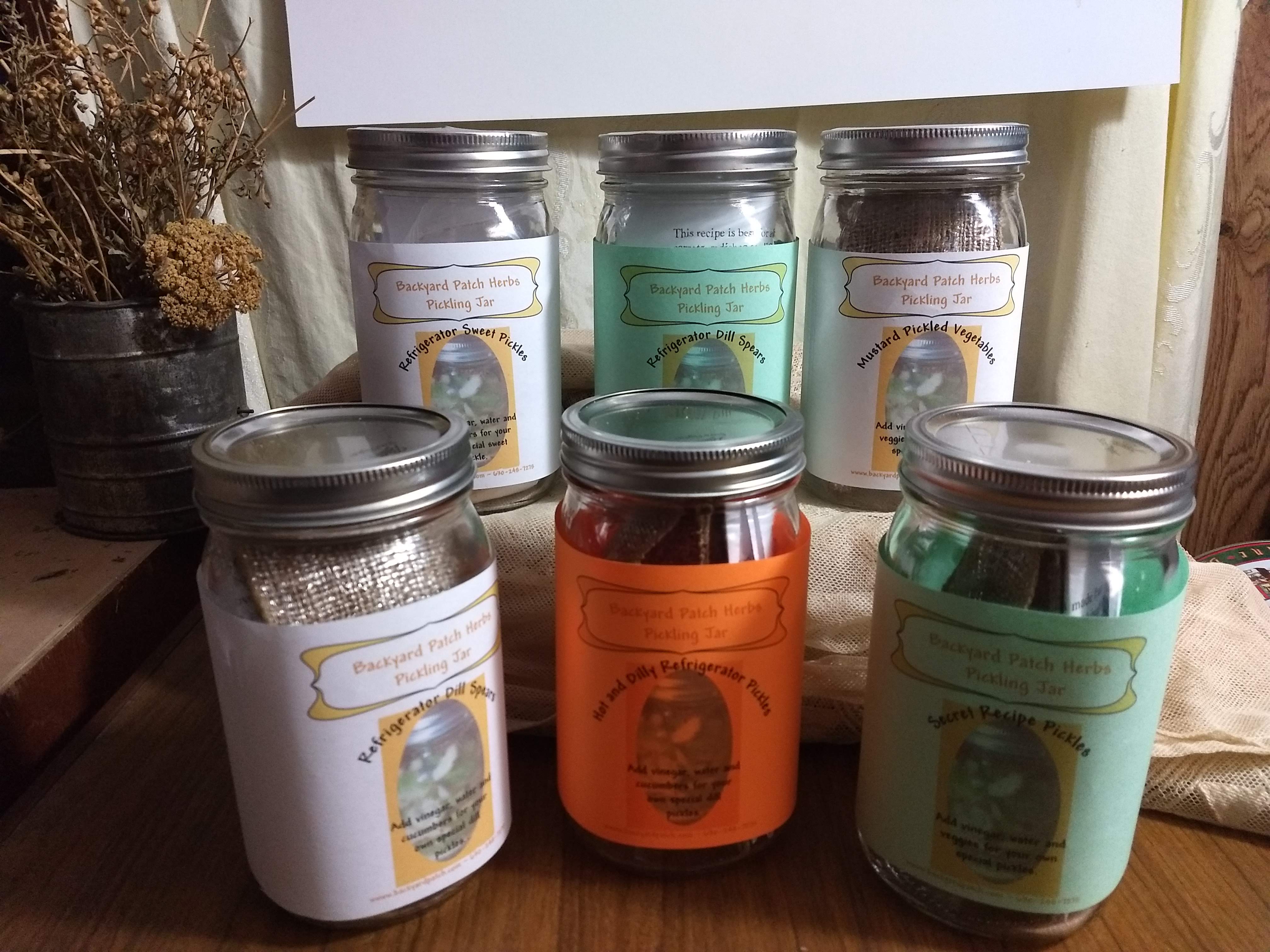
I created a DIY product - DIY Refrigerator Pickles. Doing things at home being popular these days made it fun to make kits for making refrigerator pickles. They have everything needed except vinegar, water and the veggies.  And as long as the veggies are fresh, they can come from a garden or from the store or farmers market.  In 24 hours one can have pickles without having to know how to can.  

If one wanted to know how to can, my Canning Basics class is coming up in October with District 214.  It will be virtual, so you don't need to leave home.  I am also showing how to make vinegar, sugar, honey and other items infused with herbs in a special three-part class called INFUSION which is happening starting September 16th at 7 PM via Zoom.

Time for Change

I have decided after making all my notes and watching YouTube videos on growing my business that things need to change. Don’t get me wrong.  I have nothing to complain about.  I still have my part time day job, I am still teaching in a limited capacity and Backyard Patch Herbs did very well during lock down, so I unlike many I could still pay the rent and pay bills.  My soup mixes and baking products were a big hit as were my gift baskets.  But I realized I need to simplify. The wide variety of products available all the time is terribly time consuming to make, even if I don’t make things ahead and only do on-demand crafting, it is still a lot of work. 

·        So I have decided to rework my product line and my email strategy, as well as what I do on Social Media. Here is the short list: 

  • My newsletter will be once every three weeks.  Not quite twice a month, but not once a month either. I will add more fun to the newsletter and cover more things, but in different ways, this way I can create useful content more often than before in less time.  
    • I will share garden images; 
    • easy and challenging recipes for the beginner and the adventuresome cooks; 
    • share more information of what I enjoy from my herb and gardening friends with links to websites you may have overlooked; 
    • book reviews on garden and herb topics; 
    • sharing the herb and gardening wisdom of my herby friends. 
    • If you want to join the newsletter visit this link.
  • I have enjoyed choosing recipes on a theme to post each month on the blog (this month the theme is quiche), so I will be doing more of that, expanding to include recipes with photos on Instagram. In other words, you get to see some of my hubby’s tasty creations.
  • I will also be changing my product line.  I plan to add some special items that will be DIY type creations that are available seasonally and will allow folks to enjoy herbs in new and different ways.
  • I will reduce my herb blends to those that are most popular and with the exception of my Italian Dressing and Marinade I will be retiring all blends that have salt. Stock up now they will be gone on December 31, 2020. If you want to vote on your favorite herb mixes, as there are 45 - I will be holding a vote of some sort in the newsletter and on Facebook in the coming weeks.
  • Although I love to experiment with Herb teas, I am going to reduce the offerings to 10 - 12 teas, those being my most popular. Other teas will come and go seasonally in much the way I have begun offering Holiday only teas for Halloween and the Winter Holidays.  Those of you who love a tea will always be able to order it, just remember the name and email and can send it.
  • I am going to offer subscription services, like a CSA style box as well as tea of the month and herb blends of the month. This is where I will share my new experiments rather than adding them instantly to my product line as I have in the past.
  • I will continue to offer remote programs on Zoom as well as in-person programs, but will work to add programs to a Youtube channel (I think I will trade herbs for editing assistance.) And eventually create an herb cooking class on a platform like Teachable where folks can learn at their own speed.
If there is anything you think I should or should not do in the coming times?  Any products you might like to see?  All suggestions will be considered.


Thursday, August 13, 2020

August in the Backyard Patch Garden

The weather has been a bit weird.  We had a Derecho and a Tornado in our neighborhood this past Monday, causing lost electricity for 21 hours.  I have been picking up sticks and branches for days.  We were out at the herb garden and found that branches from the forest preserve ended up breaking off the tops of a few plants, but no major damage.  The joy of herbs, they are very resilient.  

At home we were blocks from the Tornado that came from Wheaton into Lombard and ended in Villa Park.  The park at Grace and St. Charles lost the tops out of every tree.  The tornado jogged across the railroad tracks and ended up in Villa Park where it took out every tree in a baseball field and decimated the trees in the neighborhood.  I am pretty sure my neighbors in that area do not have electricity yet. We were very lucky, because if that powerful wind ended up in our yard, the old elm in our backyard might not have survived. If you want to get some info, read the Patch article 

Green hops branches growing on an arbor

Green hops draping from the arbor

My hops were the most injured, with a branch falling on the arbor and side branches being blown off the arbor.  The hops are just maturing, so I do not want to move the branches back into place and risk breaking them and loosing the hops that are almost ready for picking.  But you can see that the arbor is no longer thickly covered with branches like it was earlier this summer.

Hops flowers

Don't the hops look wonderful?  I think the harvest this year will be twice that of last year. I might be able to make a ferment this year.  I am going to prune the hops this year because I do not ant them to overwhelm the arbor which cannot support a huge amount of weight.

The herb harvest is a bit delayed this year, but the fruits of the garden are abundant.  This week I cut lemon balm, lemon verbena, stevia, scented geranium, lavender buds, apple mint, chamomile, which to my surprise bloomed a second time, tarragon, basil and others.

Cut herb examples on table

I made some honey and flavored sugar, and will be working on herb vinegar in the next day or two.


tarragon wreaths

My tarragon at home has flowered, so I harvested it to make into wreaths.  Some are formed on wire, others are only herb.  Those on wire will  be ornaments and those with no wire will become soup wreaths and used with my soup mixes this fall and winter.

purple basil

I learned that a spot at home I thought got enough sun did not actually get that much.  This purple basil you can see is dark purple on the top which grew after I moved it and the green leaves at bottom are what grew in it former location.  Purple basil will turn greenish purple if not given enough sun.  So now it is going back the the rich purple I like to see!  And it should do so just in time for me to make herb vinegar with it!

The most exciting thing I did this week was make flower arrangements.  The zinnias are great for cutting and the cosmos, phlox and coxcomb are all ready and the sunflowers are getting there, being a bit behind the rest.  I made more arrangements than my hose is used to.  Here are examples.


Yes, my desk is a mess.  It keeps the cats off, allowing me to actually work!

Happy Gardening!

Related Posts Plugin for WordPress, Blogger...