Showing posts with label herb plants. Show all posts

Tuesday, May 12, 2026

Create a Scent Garden

Aromatic garden plants is the best benefit of an herb garden.  And you can grow an herb garden just for this purpose, never planning to harvest anything, but rather to sit and enjoy the glorious smells.


Karen Creel of GardenChick.com, gave a great list of aroatic plants in an article in The Essential Herbal Magazine.  That article got me thinking about a theme garden based on this idea.  Rather than worrying about what to do with this or that plant, just grow a garden that asks you to rest, take a seat with a good book, and enjoy the fragrance.


alternative garden - scented container with oregano, lavender, catmint, aromatic mint, geranium (in the back), rosemary, mini petunia 

What is Needed

You always need six hours of direct sunlight for an herbs garden, as well as well-drained soil that you amend with rich compost to give the herbs what they need to get lush and fragrant.  Always choose plants for your hardiness zone.  A smaller number can do well, but larger number zones will struggle in cooler weather or harsh winters.  Always plant taller varieties in the back and give the plants proper space to get larger over time.  Place the invasive plants, like lemon balm, mints or woodruff in a container to stop the spread.

Design Ideas

The Border

Create a deep border (8–12 ft deep) along a fence, path, or lawn edge.

Back Layer (Tall Structure)

  • Climbing rose
  • Lilac
  • Bee Balm
  • Pineapple sage
  • Lemon verbena

Middle Layer (Color + Fragrance)

  • Lavender
  • Calendula
  • Scented geraniums
  • Lemon balm
  • Chamomile
  • Catmint

Front Edge (Touch & Scent Zone)

  • Corsican mint
  • Sweet woodruff
  • Lemon thyme
  • Chocolate mint
  • Spearmint (contained!)

The Circle Garden

Divide garden into four beds around a center feature (bench, sundial, birdbath).

Center Feature

  • Rosemary shrub or lavender mound

Bed 1 — Mediterranean Herbs

  • Rosemary
  • Lavender
  • Lemon thyme
  • Curry leaf (container if needed)

Bed 2 — Tea & Lemon Garden

  • Lemon balm
  • Lemon verbena
  • Chamomile
  • Sweet cicely

Bed 3 — Mint Collection

  • Chocolate mint
  • Spearmint
  • Corsican mint
    (sink pots to control spread)

Bed 4 — Flowering Pollinator Herbs

  • Bee balm
  • Calendula
  • Catmint
  • Pineapple sage
The Wandering Path

Create a curving walking path with herbs brushed as people pass.

Along Path Edges

  • Corsican mint
  • Sweet woodruff
  • Lemon thyme

Waist Height

  • Scented geraniums
  • Lavender
  • Catmint
  • Chamomile

Fragrance Stations

  • Chocolate mint corner
  • Lemon garden (lemon balm + verbena)
  • Pineapple sage surprise scent

Vertical Moments

  • Climbing rose archway
  • Lilac anchor shrub

Plant List

Here is a list of fragrant herbs to include in your plans:

  • Bee Balm
  • Cinnamon basil
  • Calendula
  • Chamomile
  • Chocolate Mint
  • Catmint
  • Corsican mint
  • Curry leaf
  • Lavender
  • Lemon balm
  • Lemon thyme
  • Lemon Verbena
  • Lemon Balm
  • Lilac
  • Patchouli
  • Pineapple sage
  • Rose, climbing
  • Rosemary
  • Scented geraniums
  • Spearmint
  • Sweet Cicely 
  • Sweet woodruff


Monday, April 6, 2026

Shopping Smart at the Garden Center

A small tutorial on how to prep for a trip to the garden center, spot healthy plants and slect the right tools.

Don't go without a Plan

Survey your garden site. Determine how much space is available, how much sun it gets and whether it is dry or moist.  

Take pictures.  Are you growing along the foundation? Bring a photo for reference that shows utility connections, window locations and existing plants.

Measure, take photos or even bring along any containers you want to fill.  Garden center staff can be helpful with choosing plants to go together and in the right size container.

Make a list of plants you want, use the internet catalogs to gaze at photos and get spread requirements.  Make your wish list based on space and don't let it get too long.

Plan your visit for a weekday if you can, staff will be less harried and better able to assist you.

What to Look at in Plants

Admire plants in full bloom, but buy those that are just budding.  They will last longer and give you the best show.

Grab a wagon, pick out the plants that catch your eye. You will see how they go together and begin to formulate a detailed plan.

    • ·         Generally plants are organized by style: Perennials, Annuals, shrubs, and trees.  Herbs can fall into multiple categories, so sometimes and Herb section, but also among the annuals and perennials, especially if they are pollinator friendly or have showy flowers.
    • ·         Be aware perennials may be organized by scientific name (like Echinacea for Purple Cone Flower) ask for help or use google to translate as needed.
    • ·         Annuals are usually separated by shade and sun, so look for shade plants to be kept in a separate area.  
    • ·         Pay attention to the tags provided look for details like "sunny/dry," "shade tolerant," and the climate zone so you can plan for their use and survival in your garden. 

Decide the size you wish to start with .  Individual plants in 4 inch pots are generally larger and have a headstart on seedlings in packs.  However seedling annuals will grow very fast and spread nicely so may be worth the savings when buying in pack multiples.

Pick Healthy Plants

The most important thing you can do to insure a great garden is pick healthy viable plants.  Take a moment and look at them. Scrutinize the leaves and stems.  Compare different pots of the same variety. Are the bushy?  Do they have any stems?  Are the stems green and firm?  Avoid any with dark spotting or a mushy feel or look.  Is the plant tall and spindly?  This is a sign of overcrowding and lack of care in the greenhouse.  Do not buy a pack with missing cells.  Look for lush green (unless the plant it purposefully variegated.)

Root bound vs. Good root growth

Check the roots. Roots are essential for successful transplant from nursery pot to your garden soil.  Gently tip the plant to one side and slide it out.  If the roots are cramped or curling around  and around the plant is root bound which can cause problems down the line.  However, if there is a large amount of soil and not many roots, the plant is underdeveloped and will probably not flourish.  If you have a great balance of soil and roots, grab that and put it in your wagon.


Never Buy Plants with --

    1. Brown, crispy leaf edges

    2. Yellowing leaves

    3. Papery, bleached leaves

    4. Holes or cut edges that can indicate insect damage

    5. Too many broken stems

    6. Dark scars or trails on the underside of leaves, indicates insect infestation

    7. Wilted, brown or spotted leaves, indicator of fungal disease that can spread

    8. Webbing or time dark spots on stems and leaves, indicates active insect infestation

Use the Right Tools

Where I live, I have enough room to make compost and we save food scraps, leaves and grass clippings to use in the compost piles and bins.  When I am filling containers or raised beds, I mix this compost with a healthy amount of topsoil and some other mulch.  I buy bags of topsoil or in some cases have a truck deliver unbagged soil to my garden.  

To calculate the cubic feet of soil needed for a project, use this formula -- 

  •  Measure the length, width, and depth of the area in feet.
  • Multiply the length by the width to find the area in square feet.
  • Multiply the area by the depth to find the volume in cubic feet.
  •  If the area is irregular, break it into smaller rectangles, calculate each volume, and sum them up.
  • Consider adding extra soil for settling or compaction, typically around 10-15%.
  • Use the formula: Volume (cubic feet) = Length (ft) × Width (ft) × Depth (ft).


You get what you pay for is true in garden tools. A hand-forged trowel may cost more, but it will outlive a more cheaply made one.  I have a cast aluminum hand trowel that will not bend and has an edge I can sharpen to help cut the soil nicely, even it the soil is not worked.

You will need your basic arsenal of long handled tools.  A spade (pointy shovel), a rake, a fork, a flat end shovel, are the basics.  You may need edging tools and others once you get involved.  I like a handled weeder too.  There are many kinds of these, so shop around for the best for you.  I have a Cobrahead https://www.cobrahead.com/ that I just love.  I can stand and weed and don't have to kneel as much.


You need watering cans and hoses.  Drip irrigation hoses help save water and do require some preplanning, so think about if you want to use them before you start planting. Get a watering can with a rose (the sprinkle head with the little holes.) You do not want to water a stream of water if the plants are young or if you planted seed, as it can dislodge everything from the soil.  The sprinkle effect of the rose helps spread the water and keep if from rutting the soil. You need a hose of the right length.  Measure the distance from the faucet to the garden area and purchase accordingly.  You may also want a hose attachment (trigger sprayer.) My favorite are the wands because they give me the versatility to water hanging baskets as well as fill watering cans or water beds and containers.

What about Containers

There is a great deal of information on containers and their uses and what works best. I will say that I choose based on an aesthetic of terra cotta, but I use a mixture of real clay pots and plastic painted terra cotta for those herbs that need more water during the day.

my scented geraniums near the door.

Here are two articles that I feel will help you choose the right containers for your garden.

Firs,t from just last year, on LivetoPlant.com help you choose. 

This article is from Epic gardening with lots of details. 

Choosing your container is just as important as selecting the plants themselves. It needs to be functional as well as beautiful. Consider all the pros and cons of each container before purchasing one. Take your time to decide.

So you have your plan, follow the steps and get ready for a great growing season, whether it is just a few pots or a grand garden bed.


Sunday, May 1, 2022

Plant Theater for May Day

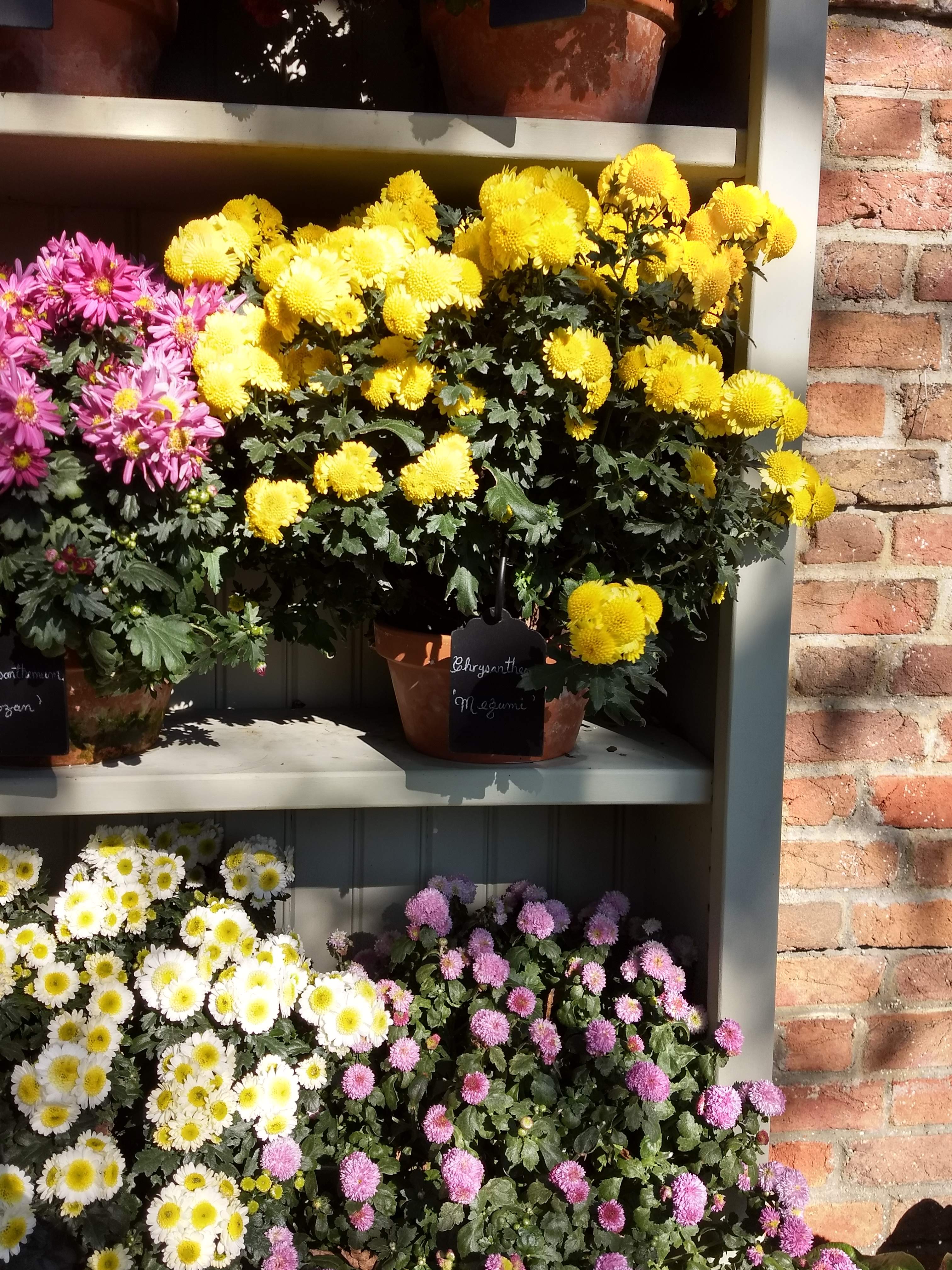
Plant Theater painted gray filled with flowering plants


 A Plant Theater, according to the Chicago Botanic Garden is a traditional English presentation of exceptional plants. The plants are potted and placed on tiers of shelves to highlight a collection of the same plant.  They can have 3 to 5 shelves and are ususally decoratively framed. Herbs, flowers, succulents can all be part of these seasonal display areas. 

I like the more traditional shape and design of a Plant Theater with crown molding and an almost inside the house look, but any set of shelves on which you display plants will work.

Here area few different images of the Plant Theater at the Chicago Botanic Garden.  For those familiar with the garden, the Plant Theater is located by one of the entrances to the English Walled Garden.  As it is one of the places at the Botanic Garden with a number of herbs as well as a relaxing formal organization, I enjoy stopping there every time I visit the Botanic Garden.


These are all Mums taken in October 2020.  During lock down in 2020 we visited the botanic garden every month during the season when it was open to the public to enjoy an excursion outdoors.  We picked different areas to explore, but came back often to the English Walled Garden.

It has other attributes besides the Plant Theater, There is a a stairway filled with scented geraniums.

scented geranium plants in terracotta pots on steps with a decorative balustrade in the background

There are sculpted garden shrubs surrounded by seasonal plants

Pyramid-shape trimmed hedge with low growing red and yellow plants surrounding it in a  geometric pattern

I love to walk between plants, reach down and touch them with the tips of my fingers.  Besides my raised hill garden where I do that all the time, this public garden is a place I can do it as well.  They have brick paths lined on each side with a selection of scented herbs. Some have great texture like soft fuzz lambs ear varieties, or strong scent like garlic chives. And of course there are a number of different thyme plants.

Brick walkway with garlic chives and chervil alongside.

brick walkway with fuzzy leaf plants, thyme and other scented herbs

The Plant Theater was originally installed in 2019 and is changed regularly by the horticultural staff. so I have a number of images of it. You can see the spring bulbs, like these grape Hyacinth in Spring and succulents in late fall. Last summer they had Mini Hostas.

Grape Hyacinth in terracotta pots on shelves painted white


The Walled Garden is a must see and here is why I started visiting. They have a Sundial.  I am obsessed with Sundials, I want more than one in my garden, so I collect images to decide what style I want.
For details on my Sundial search, check out my previous posts.

The Sundial in the Walled English Garden is a horizontal sundial with an equatorial spike, rather than a wedge which allows you to read the time in simmer and winter.


Enjoy this May Day with a trip through the garden, real or virtual!


Related Posts Plugin for WordPress, Blogger...