Showing posts with label oil. Show all posts

Tuesday, November 12, 2013

How Tuesday - Making Rosemary Oil


Rosemary is a symbol of friendship, loyalty, and remembrance, which makes it a very special gift for a friend, especially those close to your heart.  This is a great housewarming gift but it must be kept in the refrigerator.  Although there are those that say this can be kept for up to 3 months.  I recommend keeping it only for 3 weeks. I've given you some recipes so you will have not trouble using it up!

You'll need:
  • 1 cup fresh rosemary leaves
  • 1 cup or so of good quality olive oil or grape seed oil
  • A sterilized wide mouth pint jar
How to make it:
  1. Let the fresh rosemary leaves wilt slightly, then strip from the stems and crush them with a rolling pin.
  2. Then crush them with a rolling pin.
  3. Put the leaves in a saucepan with oil and cook over medium heat for about 5 minutes.
  4. Remove from heat and pour into a canning jar or other heat resistant glass container and let cool to room temperature. Top off with any extra olive oil if needed.
  5. Taste the oil and if the flavor is not strong enough repeat the process with fresh herbs.
  6. If the flavor is strong enough you can strain the oil though a paper or muslin filter and press the herbs to extract all the liquid.
  7. Pour in a sterilized bottle, seal, label and decorate.
Keep refrigerated. 

Use your Oil

Serve with sliced baguette for dipping. or use in these great recipes. It is great in an Italian dressing and used with vinegar as a beef marinade.  Experiment to discover other uses of the tasty oil. Rosemary is a good treatment for arthritis too, so put a few Tablespoons in a bath and soak.
 
Rosemary Bread
2 eggs
½ cup walnuts
¾ cup white wine or apple juice
Vegetable cooking spray
1 Tbls. lemon zest
¾ cup sugar
2 ½ cups all purpose flour
½ cup rosemary oil
¼ tsp. salt
2 tsp. baking powder

Heat oven to 350 degrees Fahrenheit. Lightly coat a loaf pan with vegetable cooking spray. Stir together flour, sugar, walnuts, baking powder, salt and lemon zest in bowl. In a separate bowl, mix eggs, wine, and rosemary oil, then stir into dry ingredients. Transfer the batter into pan and smooth the surface. Bake 55 minutes or until a toothpick inserted into the center comes out clean.

Rosemary Roasted Potatoes
10 to 20 small red skin or yukon gold potatoes
10 cloves garlic minced (we love garlic so feel free to use less)
2 tablespoons rosemary oil
1 sprig fresh rosemary
1 tablespoon balsamic vinegar
freshly ground black pepper
salt

Scrub potatoes well, and toss into a baking dish with the garlic and the oil. Roll them around so they are well coated. Season generously with salt and pepper and sprinkle on the rosemary and vinegar. Roast in oven 450 degrees F for at least one hour until potatoes are golden and cooked through.

Tuesday, September 4, 2012

How Tuesday - Making an herb infused oil

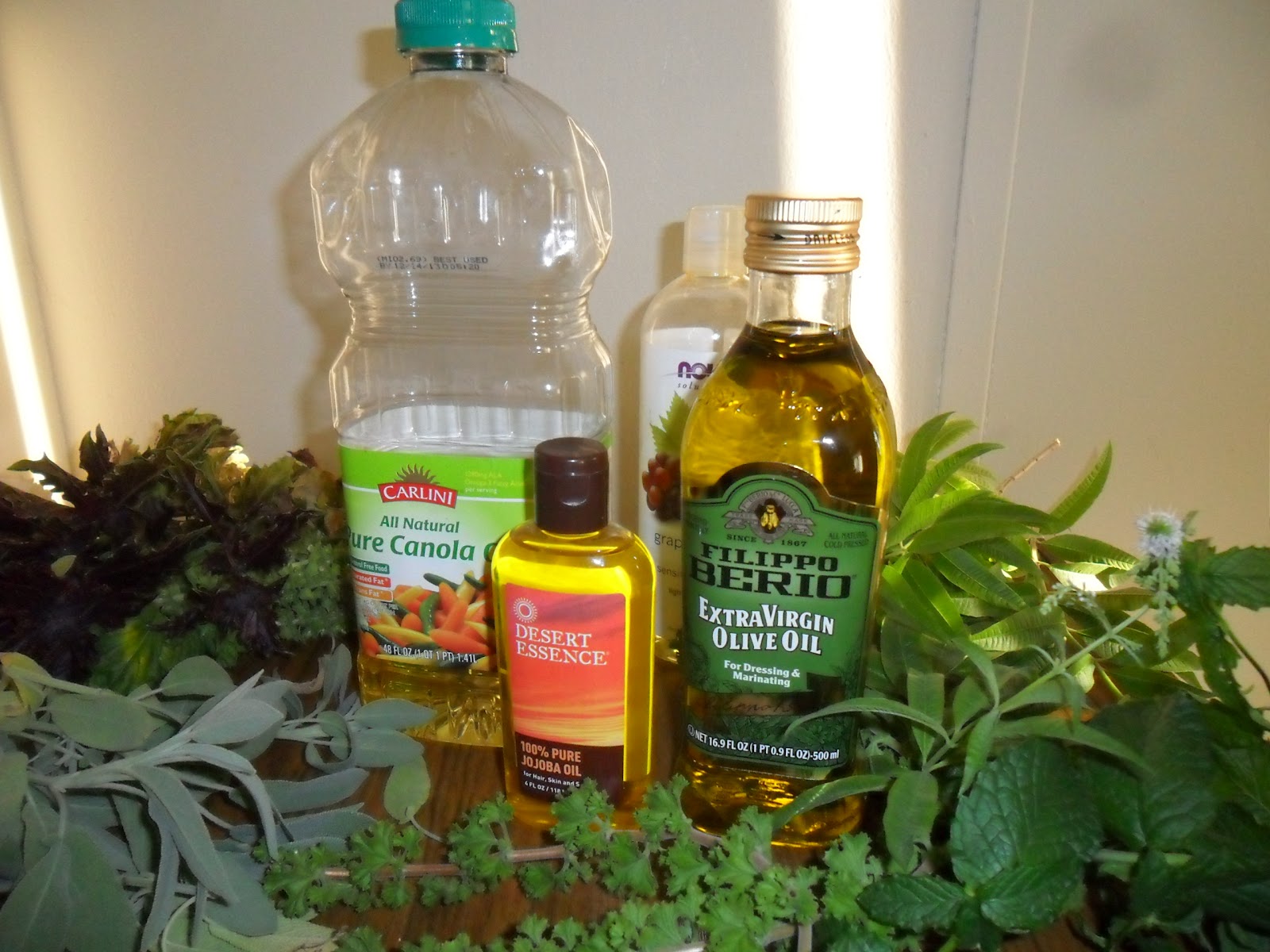
Herb infused oils are used to make scented salves and beauty products and sometimes to cook with.  I have shared making Lemon Cooking oil on the blog previously.  This time I want to explain how to make an herb infused oil for making a salve.  I share this now because we are entering the gift making season and I will be sharing a few recipes for salves and toners and creams and other beauty gifts in the coming months.  I wanted you to have this base of information to work with.

Oils, unlike vinegar will not keep indefinitely, so you must use a preservative, like alcohol or another stabilizer to keep the oil from going rancid.

To Make Herb-infused oil for a salve


Infused-Herb Oil
What you’ll need: oil of your choice (almond, jojoba, grape seed, olive oil can all be used), wide-mouth jar, herbs of your choice, 190-proof alcohol

Use a ½ pint wide-mouth jar for this size recipe.  Add about ¾ cup herb of your choice (washed, chopped and air dried until they are wilty), to that add about ¾ cup oil, ore more as needed to cover the herbs entirely, but leave about 1 to 2 inches of headroom at the top of the jar.  Insert a butter knife into the jar and run it around the edge to dislodge any air bubbles.  Make sure the oil covers the herbs completely.  Then to prevent mold float about a ½ inch of 190-proof alcohol on top.  Put a tight fitting lid on top and shake the alcohol into the oil.  Remove the lid and replace with four layers of cheese cloth, help in place with a rubber band or jar lid rim.  Place in a warm dry spot for about 2 weeks or until oil has taken the color of the herbs and the oil has evaporated.  Then strain the oil from the jar pressing as much of it out of the herbs as possible.  Let the oil sit overnight.  Decant it to separate it from any sediment or water that will settle to the bottom.  A turkey baster can be helpful in doing this.

Salve from herb-infused oil
What you’ll need: a double boiler, beeswax, 8 liquid ounces of herb oil, enrichers of your choice can also be added like vitamin E, lanolin, cocoa butter, coconut oil, etc. depending on your skin type. 

Gently warm 8 ounces of herb oil ion a glass or stainless double boiler.  Add 1 Tablespoon of beeswax; add small amounts of other enriching ingredients about ½ teaspoon at a time.  When the ingredients are all melt together, you check the consistency by dropping a few drops in ice water.  If the salve is thick in will form a little ball, if thin it will spread out over the top of the water.  Simply add ¼ teaspoon of beeswax at a time to firm it up or a bit more herb oil to thin it down.  While liquid pour it into a container.  Let it sit to cool.  If when it sets it is not the firmness you like, you can reheat it and add materials until you adjust it to your desires.


Friday, February 10, 2012

Savvy Cooking with Herbs

Want to boost a meal’s flavor while reducing your salt intake? One healthful option is adding herbs to meals for some sodium-free flavor.
§  Use 1 tablespoon of fresh herbs or 1 teaspoon dried.
§  Cut fresh herbs finely to maximize aroma and flavor.
§  Add fresh herbs near the end of cooking so that flavors aren’t cooked out.
Here are a few examples of ways to add herbs to your meal plan today:
Olive oil: Increase the flavor of olive oil by simmering gently with rosemary, garlic or chilies for 15 minutes.  Then use immediately in a recipe.  (Do not bottle this or save it more than a week.)

Meat: Add flavor by pressing an herb rub on meat, poultry or fish before cooking. Try this combination: chopped parsley, garlic, pepper, and mustard. Or try one of the Meat Rubs from the Backyard Patch.
Another similar option is to stuff fresh herbs—sage, tarragon, savory—between poultry skin and poultry meat or inside the cavity before roasting.

 Greens: Add chopped fresh herbs to a salad.
Breads: Mix chives, garlic, rosemary or other herbs into dough or batter.
If you don’t make bread, blend up an herbal butter to add to your bread or rolls.  A great combination is chives, parsley and tarragon in equal proportions to make a Tablespoon added to two sticks (1/2 cup) of butter or margarine.  It will keep almost indefinitely and can be frozen too.
Fruit: Sweeten your fruit by adding mint, lavender or rosemary to fruit salads, cobblers and smoothies.
Water: Flavor your water with mint or lemongrass.
RECIPE EXTRA --
Lemon Herb Oil

Lemon Oil is also great to cook with and you can infuse the oil overnight and use it for a couple of weeks before needing a new batch.

2 Tbls. freshly squeezed lemon juice
1 tsp lemon zest
1 tsp lime zest
1 handful of lemon herbs (lemon verbena, lemon basil, lemon thyme, lemon balm or a combination is perfect)

Place herbs and zest in jar and bruise the herbs lightly.  Add lemon juice and shake to spread it throughout the herbs.  Add 1 to 2 cups of olive oil over the herbs until they are covered.  Place in the refrigerator and meld overnight.  By the next day you are ready to cook with it.  Because of the juice the water content is higher so do not keep this oil longer than 2 weeks and always in the refrigerator.

Fettuccini with Lemon Sauce
2 Tbls. butter
1 cup heavy Cream
1 cup beef broth or bouillon
2 Tbls lemon infused herbal oil
Fettuccine, linguini or angel hair pasta to serve 4 to 6

In a sauce pan large enough to hold pasta when it is done, combine butter, cream, and beef broth and simmer over medium heat until reduced by about half.  Add 2 Tbls. lemon oil, and set aside.  Cook the pasta according to package directions.  When cooked al dente (firm to the tooth) drain it and add to the pan containing the sauce.  Toss over medium heat for 20 to 30 seconds until most of the sauce is absorbed.

I like to serve them by twirling the noodles around on a fork to create a "nest" and sliding it onto a plate.  Then you can top the noodles with anything else you like, cooked chicken, bits of bacon or ham, steamed vegetables or even caviar.


Friday, September 24, 2010

Making Parsley Oil

Parsley is a biennial herb.  The second year it really just focuses its energy on making seed, so the quality of the leaves are greatly diminished.  For that reason I generally treat it as an annual and at the end of the season, I cut the plant off at the ground, or yank it out by the roots. 

Drying parsley is often not the easiest thing to do (it is one of those herbs that turns brown if drying conditions are not perfect.)  As a result I try to preserve it different ways.  One of the best for preserving that bright, green flavor of both curly and flat parsley is to make parsley oil.


Making Parsley Oil

2 cups (500 ml) parsley leaves
½ cup (140 ml) vegetable oil

1.                  Bring a pot of water to boil and season with salt.
2.                  Blanch the parsley. (Allow parsley to remain in boiling water for only 2 minutes, then remove.)
3.                  Place the blanched parsley on a tea towel.  Ball up the edges of the tea towel and twist them into a knot to squeeze all the water from the herbs.
4.                  Place the squeezed parsley into the blender and add half the oil.  Puree for a few seconds and then add the other half of the oil.  Pulse the blender rather than letting it run continuously as the heat generated will darken the oil.  Continue to purée until the oil becomes bright green.
5.                  When green, empty the oil into a bowl and cover with plastic wrap.  Refrigerate overnight.
6.                  The following day, place cheesecloth in a strainer placed over a bowl and pour the oil into the cheesecloth.  Allow it to drip until the oil is strained.  Do not force the oil through the cheesecloth or this will make the final oil cloudy.
7.                  Bottle the oil for use.  Keep it in the refrigerator.  It will only hold for a few days, but can be frozen for slightly longer storage.
8.                  Now you can have some fun. 
a.       Use the oil to decorate serving plates with a few drizzles; you can be like Martha Stewart!
b.   You can make an excellent dish with tomatoes, see this recipe.
c.       It can now be used in any dish where you would use plain oil.
d.       It is good tossed with spaghetti or shaped pasta and blanched vegetables.
e.      Make a vinaigrette salad dressing with 2/3 cup oil and 1/3 cup vinegar. You can really play with the flavor by mixing it with herbal vinegar, like basil or lemon. 

The Backyard Patch does not make oils for commercial sale, however we do have herb blends that mix with your own canola, olive or vegetable oil.  Check them out at on our Webpage 
Related Posts Plugin for WordPress, Blogger...