Showing posts with label cooking. Show all posts

Wednesday, January 4, 2017

Herb of the week Cooking with Herbs

I posted a resolution about sharing more recipes in 2017, but I thought I should make it easier for others to use herbal recipes.  Adding herbs to dishes provide a big punch of flavor to your food. But more than just flavor enhancers, herbs were pre-pharmaceutical medicine: They provide some serious health benefits.
So today’s Herb of the Week are the seven herbs you should keep on hand

Try them yourself and see if they don’t give your dishes some serious flavor:
   1.   Sage.  This vibrant grey-green herb provides a unique earthy flavor that’s simultaneously sweet and bitter.  Sage pairs perfectly with pork, legumes, and poultry.  Try cooking a boneless chicken breast in parchment paper with a few sage leaves, salt, pepper, and a drizzle of olive oil. Talk about warm, succulent flavor!  Sage helps lower blood sugar, prevent excessive perspiration, and provides antimicrobial properties (inhibits disease-causing microorganisms).
2.   Tarragon.  A sweet herb with slightly peppery flavor and hints of licorice, antioxidant-rich tarragon helps reduce free radical damage.  You often find it in French cuisine like omelets, fish and chicken.   Tarragon doesn’t play well with other herbs, so avoid combining with other strong herbs like rosemary, basil, and oregano.

3.   Thyme.  This delicate herb has many different varieties, such as, lemon, orange, and the classic French thyme.  Each adds its own distinct flavor. While it pairs well with any meat or fish, thyme seems destined for roasted chicken and tomatoes.  Research suggests antioxidant-rich thyme helps improve brain function. Don’t know about you, but I could use that boost!
   4.   Basil.  If you’ve dined at an Italian restaurant, you’ve probably tried basil. Think pesto, pasta, and caprese salad.  Basil is actually native to Asia, India, and Africa, so try adding it to some of your other ethnic dishes like curry.   Basil works as a sedative and helps sooth digestive issues as well as headaches.


5.   Rosemary. This hearty, pungent herb is fast friends with grilled meat and roasted fish, but also works well with lamb.  Rosemary’s flavor becomes milder in winter, so you may need to add more to winter stews.  Its powerful anti-inflammatory properties make rosemary a good choice for people with asthma and rheumatoid arthritis.  Among its other benefits, rosemary aids in digestion, improves blood flow to the brain, and stimulates your immune system. Talk about a workhorse herb!
6.   Dill.  A relative of carrot and celery, this wispy herb traditionally helped treat gut issues. Dill aids in digestion, combats gas, and detoxifies the liver.  I can’t imagine salmon or crab cakes without a good hit of dill:  It brightens up seafood like no other herb.  Try baking salmon in parchment paper with some dill, lemon, and capers. See what I mean?
   7.   Marjoram.  An under-utilized herb related to oregano that provides a milder, sweet, spicy flavor.  Use it wherever you’d use oregano for a new spin on old favorites like marinara sauce or grilled chicken and lemon.  Besides being anti-microbial, both oregano and marjoram contain more antioxidants than many fruits and vegetables.

Remember dried herbs are more concentrated. If you’re subbing fresh, you’ll usually need to double or triple the amount. One teaspoon of dried rosemary would be two to three teaspoons of fresh rosemary.
One more tip: Tender herbs like, thyme, and dill should be added toward the end of cooking. Heartier herbs like rosemary can be added earlier in the cooking process.
If you need to restock your Herb Cabinet this season, check out our loose herbs here.

Thursday, May 22, 2014

What is a Meat Rub?

What really makes a rub a rub is how it is applied. I suppose that you could say sprinkling salt and pepper over a steak was like adding a rub, but this really isn't what we mean when we talk about rubs, particularly a traditional barbecue rub. A rub should coat the surface of the meat. You should work a rub evenly into to the meat to get the flavor inside as much as possible.    


Rubs come in two varieties, wet rubs and dry rubs. A dry rub is made of herbs and spices and can be either sprinkled over meat or actually rubbed in. A wet rub contains a liquid ingredient, usually oil and is coated over the surface of the meat. Beyond this, practically anything goes. What you want in your rub is really a matter of personal taste. You want a good rub to add flavor and color but you don't want it to overpower the flavor of the meats you are rubbing.   

Most dry rubs contain such things as paprika, chili powder, granulated garlic, cayenne, etc. To get these dry ingredients to stay on requires the natural moisture of the meat.  You want to enhance the flavor of the meat without over shadowing it, so a good rub will be a mixing of strong spices with mild, complimentary ones to create an even distribution. If you're going for a hot spice combination, chose a blend with chili powder, cayenne or paprika. It will give the meat a good color and add the level of heat you want without making the meat too hot to eat.

This example is a Sweet / Hot blend with a combination of sugar and spices.  It will get you started on a journey to create some rubs of your own.


Spicy Barbecue Rub

2 tablespoons salt
2 tablespoons brown sugar
2 tablespoons ground cumin
2 tablespoons chili powder
2 tablespoons freshly ground black pepper
1 tablespoon cayenne pepper
3 tablespoons paprika


Combine all ingredients. Use on a large piece of beef, chicken, lamb or pork when barbecuing or spit-roasting. Store in an airtight container in the refrigerator up to 1 month.

If you want to try out the sugar and salt-free rubs of the Backyard Patch, see this Etsy listing.

Monday, June 24, 2013

Tips for Making Marinades


      Marinades are particularly well suited to beef and game, but can be used to liven up the mild flavor of chicken and all its relatives.  Marinades are created using a blend of oil, vinegar and seasonings that is then used as a soak for the item before it is cooked.  The ratio is generally 2/3 cup oil to 1/4 cup vinegar (or lemon juice) and herbs to taste; usually around 2 tablespoons of dry herbs, more if you are using fresh.
       The high acid content of a marinade (from vinegar) helps tenderize meat as well as impart wonderful flavors.  You can use an herbal vinegar to craft your marinades for an even more special depth of flavor.  See our post on herbal vinegar making for more details.
mustard marinade (see recipe below)

            Always prepare your marinade in a shallow non-reactive dish or pan just large enough to hold the meat comfortably.  Be sure to turn the meat so the flavor will permeate all surfaces evenly.  Very thin cuts of meat can be marinated an hour or so at room temperature, but roasts and larger cuts should stand longer, even up to two days in the refrigerator.  Just remember to turn the meat every few hours and let it return to room temperature before cooking.

Marinade on vegetables does not need as much acid as meats and can be made with just oil.  With vegetables, one can soak them in the marinade or brush it on during grilling.

Herb flavor groups for using in marinades:
  • Citrus zest: grapefruit, lemon, lime, orange zest
  • Robust Herbs:  basil, cilantro, rosemary, or sage
  • Sweet or Floral Herbs: lavender, lemon balm, lemon verbena, rose, dill or mint
  • Savory Herbs: marjoram, oregano, parsley, savory, tarragon, thyme; or whole bay leaf
  • Herb seeds: whole caraway, celery, coriander, cumin, fennel, poppy, or sesame
I have a whole list of blends for marinades that I created for the Backyard Patch because I love the quick easy way you can toss any meat, cheap cuts and all, into a marinade and craft a quick easy dinner.  In fact all of my salad dressings can double as a marinade as well!


Here are a few Marinade recipes you can craft on your own to enjoy:


Wine Marinade for Beef
1 glove garlic
10 peppercorns
8 whole allspice
1 tsp. salt
1 cup red wine
3 pounds rump roast, cubed

In a deep bowl, combine clove garlic, crushed peppercorns, allspice, salt, and wine. Stir to dissolve salt. Add beef cubes, pressing cubes down into marinade to immerse as much as possible. Cover and marinate in the refrigerator for at least 1 hour.

Herbed Marinade for Vegetables

¼ cup low-sodium soy sauce
¼ cup balsamic vinegar
¼ cup olive oil
¼ cup water
2 Tablespoons honey
2 cloves of garlic, minced
4 teaspoons fresh chopped herb mix
      (rosemary, thyme, basil and oregano OR chives, dill, lemon thyme and lemon basil)

Combine ingredients together in a glass jar with a tight lid and shake to combine.  Pour the mixture over cubed vegetables in a non-reactive container and refrigerate for 2 hours.  This recipe is enough for 2 pounds of vegetables.

Mustard Marinade for Chicken

1/3 c. lemon vinegar (made with any combo of Lemon herbs)
¼ c. Dijon mustard
2 T. vegetable oil
2-3 tsp. dried basil
1 clove garlic, crushed

Whisk items together in small bowl.  Use as a marinade for chicken, pork, or seafood.


Monday, June 17, 2013

What is an Herbal Meat Rub?

What really makes a rub a rub is how it is applied. I suppose that you could say sprinkling salt and pepper over a steak was like adding a rub, but this really isn't what we mean when we talk about rubs, particularly a traditional barbecue rub. A rub should coat the surface of the meat. You should work a rub evenly into the meat to get the flavor inside as much as possible.     
Rubs come in two varieties, wet rubs and dry rubs. A dry rub is made of herbs and spices and can be either sprinkled over meat or actually rubbed in. A wet rub contains a liquid ingredient, usually oil and is coated over the surface of the meat. Beyond this, practically anything goes.

What you want in your rub is really a matter of personal taste. You want a good rub to add flavor and color but you don't want it to overpower the flavor of the meats you are rubbing.   

 Most dry rubs contain such things as paprika, chili powder, granulated garlic, cayenne, etc. To get these dry ingredients to stay on requires the natural moisture of the meat.  You want to enhance the flavor of the meat without overpowering it, so a good rub will be a mixing of strong spices with mild, complimentary ones to create an even distribution. If you're going for a hot spice combination, chose a blend with chili powder, cayenne or paprika. It will give the meat a good color and add the level of heat you want without making the meat too hot to eat.
The advantage of a wet rub (or paste) is that it sticks to the meat better. This is particularly important if you are cooking poultry with the skin on or some other smooth surfaced meats or meats that tend to be naturally dry. The other advantage of a wet rub is that it can help keep meat from drying out. This is especially true when using an oil based rub. The oil acts as a moisture barrier, keeping the natural juices inside the meat. Oils in rubs can also keep meats from sticking to the grill. Remember that a wet rub should have the consistency of a paste, thick.

Lemon peel and tarragon were used in oilive oil
 
As I said, a rub should be worked into meats completely. If you are applying a rub to poultry try and get it in under the skin. Skin blocks flavors so putting a rub on the surface of skin won't do much for the meat. If is also good to apply your rub well before you plan to grill or smoke. A good hour will be enough in most cases, but large roasts, whole poultry, or briskets should be rubbed down the night before or at least several hours before hand. This allows the seasonings to mingle with the natural juices of the meat and sink in. Dusting a pork chop with a rub seconds before it hits the grill will result in a well flavored set of burners and a good supply of smoke from burning spices. It won't add a lot of flavor to the chops.

4 Spice Meat Rub from the Backyard Patch used on a pork tenderloin

I have a whole list of meat rubs for all marinades and rubs that I created for the Backyard Patch because I love the quick easy way you can rub a plain meat in herbs and spices and conjure tastes of far away yet still have a meal in my own back yard. I put together a special set of 5 grilling mixes that has free shipping too!

If you want to try your hand at making your own rubs, check out this post I first did over at the Supporting Artists Blog but have posted on my own blog here: Grilling Rubs for Father's Day.  You can find several rub recipes to get your started.

Sunday, January 20, 2013

Northshore Church Program - Cooking with Herbs

Saturday I had the most thoroughly enjoyable experience with the women's fellowship group of the Northshore Unitarian Church.

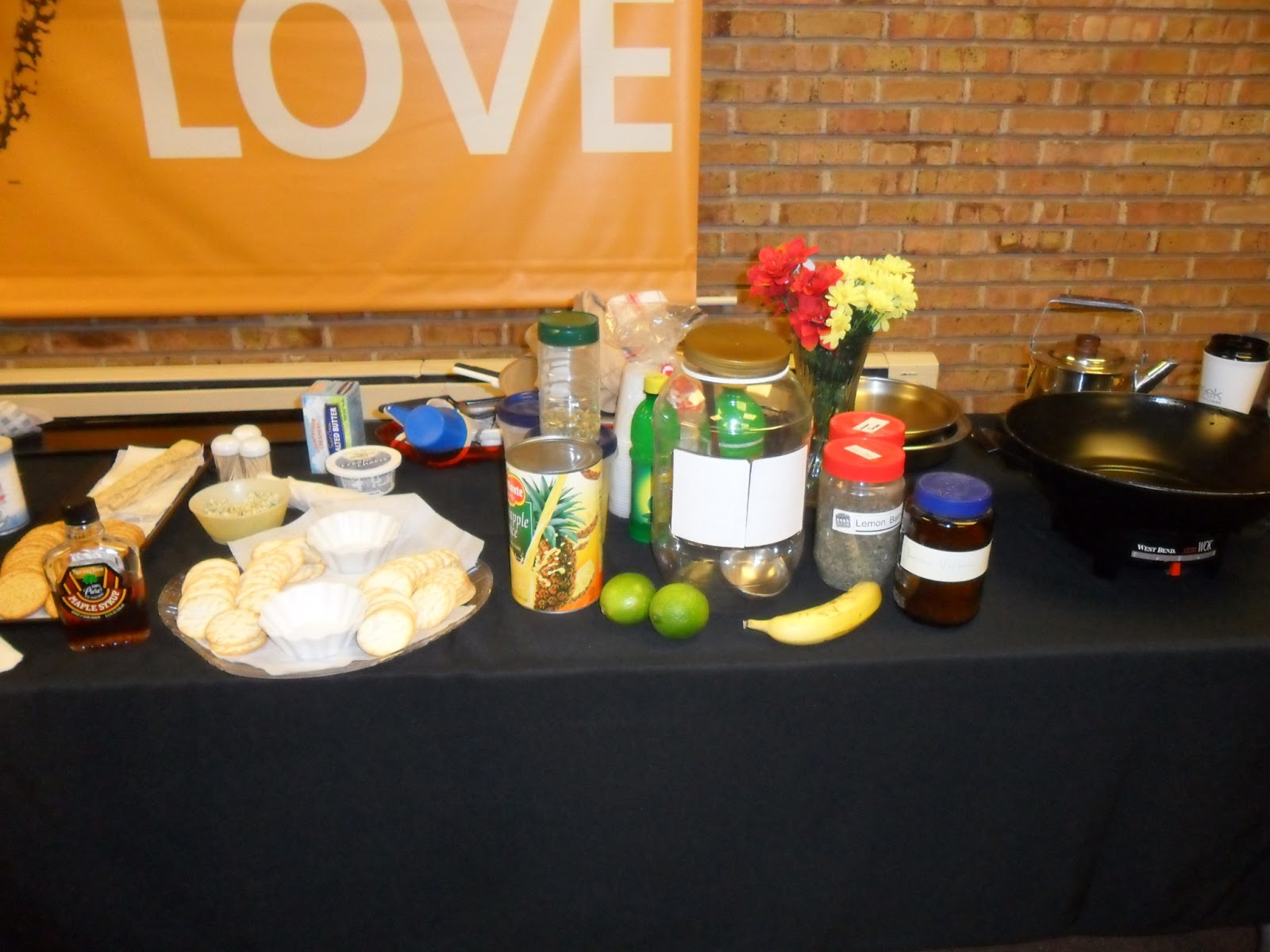
I was asked to present my Cooking with Herbs lecture and to give it a breakfast theme.  I even gave a few recipes for them to try out and present that morning and some members did use a few.  I was very flattered by that.  For a few other recipes from the program, check out the Program Recipes page of this blog.

Here was my set up before the program with herbs and ingredients laid out.


The participants mingled, chatted and drank tea from special collection of tea cups that are pulled out just of this event!  I thought it was a grand idea!  Aren't they lovely?


The Orange Juice was served in Ikea ceramic cups that look like terra cotta pots! And the members brought a smorgasbord of detectible treats as you can see.


The company was very delightful and we talked about movies and herbs and Downton Abbey and a number of other things.


After a great introduction I was able to share about making butters, vinegars, and cooking with fresh vs. dry herbs.  We sampled everything and I was able to impart a few jewels of wisdom.

herbal butters fresh on the left, dried herbs used on the right
Lemon Fruit Dip


Lemon Herb Yogurt Sauce for fruit

1 Tablespoon frozen orange juice or lemonade concentrate, thawed
1/2 Tablespoon of lemon herbs like lemon thyme, lemon balm, lemon verbena or lemon grass
1 tsp. lemon peel
1 container (8 ounces) vanilla yogurt

Whisk the juice concentrate and the herbs and lemon peel into the yogurt.  Serve chilled over fruit or as a fruit dip.   You can then use a fresh or frozen fruit salad and have this on the side or tossed in.


Seasoned pork with sage, parsley and maple syrup.
We tasted fresh herbs used to season pork and in savory breakfast muffins.

We ended by giving away from Fun Herb items and discussing medicinal herbs like Golden Seal and comfrey and wild crafting.


Savory muffins with parsley, dill and thyme.


I want to add a special thanks to Sallee, Fran, Sandy, Andrea and the others who made this such a special morning of fun and sharing!


If you want to see a list of all the program I can provide you your group, please see my Program Listings (located on the website.)

Sunday, June 10, 2012

Recipe for this weekend - Get your veggies


I love carrots.  I can eat them raw.   I can eat them cooked.  I can eat them glazed.  I could write a book -- Dr. Suss would be proud!


Recently someone I know pinned a photo on Pinterest showing some Veggie Fries.  I decided to try the recipe and make some of my own to add to my carrot repertoire.  You can also make this with zucchini, summer squash, and root vegetables like beets, turnips and rutabaga.

Veggie Fries

Carrots or other vegetables cut in 3 inch sticks
Olive oil (spray or brush)
seasoning
     I used Backyard Patch Soup and Salad Seasoning

Directions:
Preheat the oven to 425 degrees F.  Line a baking pan with parchment or wax paper.  Spray or bush on a light layer of olive oil onto the paper.  Add 1 Tablespoon of olive oil to a wide bowl and add 1 to 2 teaspoons of Soup & Salad Seasoning.  If you do not have Soup and Salad seasoning, you can add salt and pepper, paprika, hot pepper flakes, minced garlic, ground sage, thyme or rosemary or just about any other combination of herbs you think you will enjoy Our Potato Topper is great with roasted veggies like this.  Toss the vegetable sticks in the herbed oil and then spread in a single layer on your prepared baking pan.  Roast in the oven for about 20 minutes, tossing about half way through.  You will know they are done when they are golden and slightly brown at the edges.


Tuesday, June 5, 2012

How Tuesday - Let's Make Lemon Herbal Cooking Oil


This is a bit late, but my heart is in the right place.  The garden is dragging me away from the computer these days.  I have to garden when the temps and the rain are just right.  It rained all day the other day so I could sit down and get caught up on blog posts!  

When I taught the class out in Vernon Hills on cooking with herbs I discussed making herbal oils.  My first rule with them is do not believe any book you see that says make them and store them for longer than a week.  Unless you can pasteurize, it is just too dangerous to consume an herbal oil older than that.  However, an herbal oil is a great gentle way to bring the flavor of herbs without the bulk of herbs into a dish or a dressing.  And since it is salad season, I thought making Lemon Herb Oil would be a great How To.

Lemon Oil is also great to cook with and you can infuse the oil overnight and use it for a couple of weeks (keeping it in the refrigerator) before needing a new batch.  Chas and I enjoyed the batch I made for the lecture on chicken, salad, fish and even steak.  We tried the Sage oil with the recipe I included at the end here, but I recommend just about any flavored oil will help you make amazing mashed potatoes.

Making Lemon Cooking Oil

Ingredients:

2 Tbls. freshly squeezed lemon juice
1 tsp lemon zest
1 tsp lime zest
1 handful of lemon herbs (lemon verbena, lemon basil, lemon thyme, lemon balm or a combination is perfect)
   + I used lemon verbena, lemon thyme and lemon balm.  The Lemon Basil was still too young when I did this in early May.

Steps:

1. Wash and air dry the herbs, then place them in a glass jar with a tight fitting plastic lid.

2. Squeeze the lemon juice.  You notice that I cut the lemon peel (zest) off before I juiced it, much easier that way.

I grated the lime and peeled the lemon, it was more about after grating the lime I was too lazy to grate the lemon too!

3. Bruise the herbs in the jar lightly to release the essential oils.

4. Add the lemon juice and shake the jar to coat all the herbs with the juice.


5. Add one to 2 cups of good quality extra virgin olive oil.  Remember you need a good quality base to make a good finished product when it comes to cooking oils.

6. Make sure all the herbs are under the oil and place the jar in the refrigerator overnight.

By the next day it is ready to cook with and can be used to make dressings, marinades and sauces.  

Remember that the juice raises the water content, which can lead to spoiling, so keep it refrigerated when not being used and try to use it up in two weeks.  If you do not use all of it in that time, please discard it and make a new batch.  No need to get botulism!
 
Lemon Herb Oil

2 Tbls. freshly squeezed lemon juice
1 tsp lemon zest
1 tsp lime zest
1 handful of lemon herbs (lemon verbena, lemon basil, lemon thyme, lemon balm or a combination is perfect)

Place herbs and zest in jar and bruise the herbs lightly.  Add lemon juice and shake to spread it throughout the herbs.  Add 1 to 2 cups of olive oil over the herbs until they are covered.  Place in the refrigerator and meld overnight.  By the next day you are ready to cook with it.  Because of the juice the water content is higher so do not keep this oil longer than 2 weeks and always in the refrigerator.

Recipe to Try!
 
Olive Oil Mashed Potatoes
1 teaspoon anise seed, rosemary leaves, dried sage, or minced garlic
2 lbs. new potatoes, peeled
½ cup flavored olive oil
salt & pepper

Directions:
Put seed, rosemary, sage or garlic in heavy skillet over medium heat, toast for 4 minutes. Grind with a mortar and pestle. In a large sauce pan, combine 2 quarts of water with a tablespoon of salt.  Add potatoes and cook, covered 20 to 25 minutes until tender.  Drain. Run potatoes through a food mill or ricer.  Stir in oil, toasted herbs, salt and pepper.  Serve with steaks or chicken filets.  If you like a lumpier potato mash, just use a regular masher instead of ricer.
Related Posts Plugin for WordPress, Blogger...