Showing posts with label books. Show all posts

Friday, August 3, 2018

Book Review - Grow What you Love by Emily Murphy


I was going to do a Gardening / Herb Book of the month, however I cannot read a book in a month.  Between the teaching ,and the gardening, and the harvesting, and the making of herb products, and the writing of blogs and newsletters, not only for myself but for several organizations, I just cannot read a book in a month, so I am going with a book a quarter and if I finish early then I will add in a few extra.

I am starting this with a book I received in a contest giveaway in the Spring.  It is Grow What You Love: 12 Plant Families to Change your Life by Emily Murphy.  I have always liked chatting with her on twitter @passthepistil, through #gardenchat so when her book came out I was thrilled to get involved in promoting it.  She spoke at the Chicago Flower and Garden Show, as well has doing a Q&A on #gardenchat.  She also has a blog and if you follow her on twitter she links back to great articles regularly, or you can just check it out - https://passthepistil.com. Now that things have calmed down, I pulled the book out and began to reread what I started in the Spring before prepping for the Garden Walk became a “Thing” in my life. 

I have been carrying this book around with me this year.  Popping it open to read when I am bored or waiting for something.  I even had some fun entering a Chicago Flower and Garden Show swag giveaway with a picture of me reading it in my newly created book nook in the garden.  I enjoyed this book because of its easy-to-read style, but also the useful information.  There is nothing I dislike more than “nothing new here” or useless details about herbs.  This book, I am happy to say, suffers from neither of those issues.

Grow What You Love is organized by topic rather than plant.  I like that, as when it is plant organized I never seem to read the book, I just read the plants I want to learn about and skip over the other plants even if there is information there I might find useful. Those types do make good reference items however and I do refer back to them. 

Here is why I think you will love this book also:

She starts with the basics of how to get started in gardening.  If you have never gardened before you will find her easy to understand information very helpful and if you are a seasoned gardener her information on soil and composting is a must read.  She is great at walking you through the steps of something, like Hot Composting.  The “Emily’s Notes” found throughout the text are wonderful for directing you to better use the resources in the book and know your plants better. Like the suggestion to add Strawberries to your landscape planting because the foliage is lovely in the fall.  Who thinks of Strawberries in Fall?


One of the many "workshops" in the book.
The subtitle of the book is 12 plant families to change your life.  The plant directory gives you family groups like tender herbs and winter greens that force you to explore these topics and in the process find plants you might not have attempted to grow before (Varieties to try).  She even suggests individual cultivars to try. That is what makes this book accomplish its title.  Grow What You Love.  She explores the why a plant is good to grow along with the how of growing the plant.  You can delve deeper into plants you know while contemplating experimenting with those you don’t. 

Varieties to try and a related recipe!
Her advice to know the rules of gardening so you can break them is the best. And the Workshops in the book that will have you transplanting and rooting plants like a pro, among other tasks, are so nicely laid out in steps anyone can follow them and be successful. 

No book on gardening that contains herbs would be complete without a few recipes and this book does not disappoint.  Not only is there how to make candied violets and your own seed starting mix, you will learn to make a Savory Galette in easy to follow steps.  I had hoped to show you my version of this recipe, but I forgot to take pictures because we consumed it so quickly as it smelled awesome.

So sweet she even signed it for me!
The summer vegetable recipes, especially those using squash are on my agenda for the next few weeks, so stay tuned for that.

I hope you take my advice and check out a copy of Grow What You Love by Emily Murphy (Firefly Books Ltd, 2018)




Friday, January 15, 2016

Winter Reads

Winter is a great time to read books.  There is not garden calling for your attention and it gets dark early and a warm wooly blanket, a cracking fire and a cup of tea and you can spend a couple of hours getting lost in a good read.  So here are a few garden theme authors to try out.

China Bayles Mysteries
by Susan Wittig Albert
Set in the Texas town of Pecan Springs, this herbal shop owner China Bayles, escaping the big city, seems to run across dead bodies quite regularly.  Centered around her Herb shop Thyme and Seasons, this small town mystery series includes recipes and herb lore on various themes.  Recent titles include: Bittersweet and Blood Orange

The Brother Cadfael Mysteries
by Ellis Peter
Brother Cadfael is a fictional twelfth-century Welch monk and herbalist, a brother in the monastery of Saints Peter and Paul in Shrewsbury, England.  Cadfael’s adventures are centered on life in the monastery, where he grows herbs and prepares them for their medicinal and culinary uses – as well as using his skills, knowledge and sleuthing talents to solve murder mysteries.  There is also a great companion book, called Brother Cadfael’s Herb Garden: an Illustrated Companion to Medieval Plants and their uses, compiled by Rob Talbot and Robin Whiteman.

The Louise Eldridge Garden Mysteries
by Ann Ripley
Louise Eldridge is an amateur gardener, garden writer, and garden=show host with a penchant for digging up dead bodies.  Ripley’s fictions are filled with sophisticated, reliable gardening advice, arranged in separate essays, throughout the novels.  A few titles: Death of a Garden Pest, The Perennial Killer, Death of a Political Plant.

The Claire Sharples Botanical Mysteries
by Rebecca Trothenberg
Before her death in 1998, Rebecca Rothenberg wrote three mysteries featuring fictional microbiologist and plant pathologist Claire Sharples: The Dandelion Mysteries, The shy Tulip Murders, and the Bulrush Murders.  Lots of interesting botanical details are woven into the plots.

The Celia Grant Mysteries
by John Sherwood
This 10-book series (which ended in the 1990s) featured 50 something British widow and horticulturist Celia Grant.  A few titles: Menacing Groves, Bouquet of Thorns, Sunflower Plot,


One that I am currently enjoying that proves you do not need to be an enthusiast to enjoy a series is the Cat and Quilting Mysteries 
by Leanne Sweeney

Her fictional character a widow, named Jillian Hart lives in Mercy South Carolina and stumbles into mysteries related to cats.  A quilter she is also a cat lover so the cat tidbits she shares are fun and interesting.  Now I do not quilt, I can barely sew, but that does not diminish my enjoyment of these cozy mysteries. The most recent in the Cats in Trouble Series is The Cat, The Sneak and the Secret. 

Wednesday, April 22, 2015

Happy Birthday Phyllis Shaudys

Back in January of 2010 a wonderful herb garden book writer died without much fanfare.  Today is her birthday.  She would have been 85.

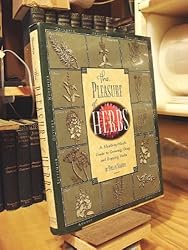
I never met Phyllis Shaudys, but I was profoundly effected by her writings on herbs when I was just a beginning herb gardener.  I have a well worn copy of her first book "The Pleasure of Herbs" as well as a copy of "Herbal Treasures."  Both books have an approachable writing style that is easy to read and yet imparts a great deal of information.  I posted something from the book in a previous post.


I still refer to the books when I am at a loss for something to blog about.  The month-by-month style always reminds we what is going on in the garden at certain times of the year,

I still share and use a bath salt recipe I found in "The Pleasure of Herbs" all those years ago. The book was republished by Barnes and Noble in the late 1990s as a hardback and I have that copy which I use when I lecture (rather than the ratty copy I read!)
The Pleasure of Herbs: A Month-by-Month Guide to Growing, Using, and Enjoying Herbs
Phyllis was a homemaker, publisher, business owner, author, and lecturer who specialized in herbs.  She started working with herbs in 1960 (a few years before I was even born) so by the time I discovered her books in the early 1990s she had quite a pedigree.  She lived in  Pennsylvania (an area I have notivced was the birthplace of other popular herb related things, like The Essnetial Herbal Magazine and Rosemary House.)

She is the author of five books, two of which are Storey books: Herbal Treasures and The Pleasure of Herbs. Additionally, Phyllis published a quarterly newsletter, Potpourri from Herbal Acres. She was also published in Women's Day, The Mother Earth News, The Brooklyn Botanic Garden Record and Whitchappel's Herbal, Flower and Garden.

All references to her say she lived in Washington Crossing, Pennsylvania, where she raised three children.

I did find a book on Amazon called Hobbying with Herbs a Month-by Month Guide which I think was an Arc copy of the Pleasure of Herbs,  Not being a book collector, I did not try to purchase it.

I have never found any of the other books she wrote,and an adequate biography does not seem to exist, but I always enjoy going through both her books and discovering new possibilities for growing herbs or using them in crafts/recipes. Her love and knowledge of her subject is evident throughout. And the nice pen & ink illustrations make you focus on the wealth of information instead of getting distracted by photographs.  The illustrations "inform" rather than "distract."  

I'd love to share an image of Phyllis, but I never located one, so let me just say Happy Birthday Phyllis Shaudys, I hope you know how many thousands of herb growers you influenced with your practical and informative style that made us all feel like we knew you and had seen your garden.

Herbal Bath Salts
(here is my version adapted from The Pleasure of Herbs)

3/4 cup Epsom Salts
3 Tbls. baking soda
1 Tbls corn starch
1 Tbls. sea salt
1 tsp. mixed herbs or lavender buds or rose petals
15 drops matching or complementary essential oil

Blend together and store in an air tight jar.  Use 2 Tbls. per bath or 1 Tbls for a foot soak.


Wednesday, May 8, 2013

Edible Flowers - Herbs of the Week

As it finally starts to get warm around here and the flowers begin to pop, I would like to point out that several spring and herb flowers are totally edible and can be enjoyed at your table.  I was recently perusing a copy of “Edible Flowers” by Catherine Wilkinson Barash.  It got me to thinking about the increased popularity of  using flowers that can be eaten.  I put together a program at the Morton Arboretum a number of years ago on edible flowers but at the time, I did not know about as many edible blooms as I do now and Catherine Barash’s book is one of the reasons I can now make several recommendations about flowers and flowering herbs you can use in your kitchen.

The flavor of flowers is as diverse as the flavors of herbs.  You can have sweet tasting flowers, savory flowers and even spicy flowers.  A sweet will compliment any beverage or fruit dish, while savories can be part of your main dish.  The spicy can be a compliment to a sauce or a way to enliven a simple main course.  The following list is broken down into those flavor categories.

SWEET FLOWERS

Flowers with a simple, sweet flavor as well as those with a perfumed or floral taste are unbeatable for flavoring beverages, fruit salads and cake batter. In the Spring choose dandelion flowers which are sweet when they first open but become bitter as they mature. Sweet flowers can be an interesting addition to fruit salsas and fish dishes. Honeysuckle's sweet flavor as luscious as it sounds and should be experienced if you have never tried it.  It is perfect when added to a dressing over fruit salad. 

Lemon or other citrus flavors which come from lemon and orange blossoms or tuberous begonias can be used to make colored and flavored vodka.   This time of year hunt out the mild white flowers of sweet woodruff which is a staple ingredient of May wine.  Be aware that the element coumarin found in those flowers can slow blood clotting and those with a clotting disorder or those taking a blood thinner should not eat the flowers.

All of the mints, whether peppermint, spearmint or the less familiar apple mint, ginger mint and others, have flowers with a flavor like that of the leaves. Mint flowers add a cool sparkle to yogurt sauces and vanilla ice cream.

Johnny jump-ups and pansies also have a mild minty flavor. Their delightful faces are particularly attractive placed on cheese. I once saw a grilled veal chop sauced with a thin layer of parsnip puree and covered with Johnny jump-ups; with only the bone showing, it looked like a flowery lollipop. The mint flavor of the flowers complemented the grilled chop perfectly.


SAVORY FLOWERS

Arugula and mustard leaves are found in many salad mixes. If you grow these greens, you know that the leaves become too bitter to eat when the plants bloom. Instead of digging out the plants, enjoy the tang of the pale yellow, four-petaled flowers. You can also pick the flowers of broccoli and radishes that are past their prime. With distinctive flavors much like the vegetables themselves, they are especially well suited for salads.

The flowers of the edible alliums and their relatives are composed of clusters of florets. Because the flavor may be very strong, you'll want to break the flowers into individual florets when cooking or garnishing with them rather than use the entire flower head.

I couldn't bear to be without chive flowers. Harvesting them from the time they begin to bloom in spring keeps them coming, although less profusely, all summer. Rub an entire mauve pom-pom in a wooden salad bowl to give a good oniony flavor to your salad and use florets to flavor marinades. Or make a vinegar with them and use that to craft your dressings.

In late summer, garlic chives can contribute their white umbels of flowers to stir-fried dishes. The delicate lilac flowers of society garlic have the mildest flavor of this group. Sautéed nodding onion heads are a good addition to soups and stocks in midsummer.

Edible herb flowers include the yellow umbels of dill, which give a dill flavor to pickling solutions and pair well with shellfish, and thymes, whose flowers may taste of lemon, caraway or garden thyme, depending on the variety. The tiny flowers of sweet marjoram are more delicately flavored than those of its cousin Greek oregano; both are favorites for flavoring vinegar. Basil's delicate flowers uplift an otherwise ordinary pesto.

These herb flowers consort well with vegetables, whether sprinkled atop cooked ones or mixed with oil and vinegar in a salad dressing. Chopped and mixed with sweet butter, they make a perky topping to baked or boiled potatoes.

STRONG SPICY FLOWERS
The red, orange or yellow blooms of nasturtiums are everywhere these days, from restaurant salad plates to supermarket mesculn mixes. People tasting them for the first time often are surprised by their peppery flavor. Some of the newer cultivars have a sweet taste first, followed by a good peppery kick.

Traditional Red bee balm has a minty flavor with a strong, spicy overtone.  The color makes it a nice addition to a salad and the spiciness counters perfectly with a wild leaf lettuce blend. I do not recommend the purple variety however, the flavor is not up to snuff. 

The licorice to anise flavors of anise hyssop and fennel flowers can lend a sweet and a spicy character to dishes.  I like to add them to fruit pastries like apple and rhubarb pie.  The flavor’s brightness is also good for cleansing the palate and freshening the breath, and the flowers are fun to nibble on in the garden. Anise hyssop, with spikes of tiny purple florets, blooms from midsummer to frost, and is one of my all-time favorites. Fennel's yellow umbels pair well with cauliflower and lima beans and add a different flavor to apple pie.  

A few last strong flavored herbs to consider are garden hyssop cilantro.  A little traditional hyssop goes a long way; it tastes a little like quinine, but it is excellent in a robust salad dressing.  Cilantro flowers have a mild flavor reminiscent of the leaves. 

FLOWERS NOT TO EAT

Parsley is one of the few culinary herbs with non-edible flowers, which points out a special point to make with edible flowers, eat only those flowers you know to be safe; some kinds are toxic. Use these rules when choosing herbal flowers to use in cooking:

• Eat only organically grown edible flowers.
• Don't eat flowers from nurseries, florists or garden centers.
• Don't eat flowers picked from heavily traveled roadsides.
• Don't eat flowers if you have a history of allergies, asthma or hayfever.
• Eat only the petals, removing pistils and stamens (except those of tiny flowers such as lilac, basil
and thyme).
• Don't assume that a flower is edible just because it is garnishing a dinner plate.
• Taste flowers before you use them in a recipe, as they can vary according to variety and cultural
conditions.
• Rinse flowers in running water before tasting.

RECIPES


Borage & Cucumbers in Sour Cream Dressing
3 long cucumbers
Salt
1 cup sour cream or fresh plain yogurt
2 Tbls. Chive blossom vinegar
½ tsp. celery seed
¼ cup chopped scallions
1 tsp sugar
¼ cup finely chopped young borage flowers
Salt & pepper to taste
Borage or chive flowers for garnish

Wash, score and very thinly slice the cucumbers.  Salt lightly and let stand in a colander for 30 minutes to drain.  Rinse off the salt and pat dry with paper towels.

In a bowl, mix remaining ingredients, adding salt and pepper to taste.  Add cucumbers and toss lightly.  Garnish with borage flowers or chive blossoms.  Refrigerate 1 hour before serving. 
 
Rose & Hibiscus Lemonade
Serves 8

4 tsp. dried Hibiscus flowers
4 tsp. dried rose petals
about 8 cups cold water
8 ounces frozen lemonade concentrate
ice
fresh lime wedge, to serve

In a medium saucepan, bring the water to a boil. Take water off the heat and add the tea.  Steep 5-10 minutes.  Strain out the flowers.  Pour tea into a large pitcher. Add about 2/3 of the can (or 8 ounces) of frozen lemonade concentrate. Stir to dissolve and let cool a bit before refrigerating until completely chilled. Pour over ice in a glass decorated with a fresh lime wedge. Enjoy!


Flower Spread
8 oz. package light cream cheese
¼ cup butter
1 ½ tsp. lemon juice
3 to 4 tsp fresh minced flowers
1 tsp fresh thyme or savory

Blend butter and cream cheese together with a fork in a medum bowl.  Add the lemon juice and herbs.  Allow to meld in refrigerator at least 1 hour before serving.  Spead of toasted French bread, crackers, cut vegetables or fruit wedges.

Check out my previous post on calendula and flavored marigolds for more edible flowers.

Friday, January 6, 2012

Happy Birthday Sherlock Holmes - herb recipes

Today is Sherlock Holmes’ Birthday.  Everyone who has read Sir Arthur Conan Doyle's Sherlock Holmes stories has noticed that Holmes appreciated good food and drink. Holmes and Watson were often sitting down to a meal prepared by their excellent landlady Mrs. Hudson or dining in a country inn or joining Holmes' brother, the large and reclusive Mycroft, for a meal at the Diogenes Club.
I have been an avid reader of Sir Arthur Conan Doyle’s creation since I was about 12.  And I love adaptations that stick to the personalities of the characters, so I love both the Robert Downey Jr. version and the new PBS version.  As a result of reading these Victorian novels so early in life, there is really no tangled writing style I cannot translate - which came to good use in my museum career.  Now my focus is on herbs and tea and Holmes again seems an appropriate fit in my life.
I own several Holmes theme cookbooks, although the detective himself probably never cooked a meal himself, he did eat, and the books and stories are liberally peppered with descriptions of dishes and situations.  If you enjoy the idea of British Victorian cooking then any of the cookbooks will introduce you.  Here is a list of the ones I know about (I found it interesting that the first batch came out around the Bicentennial and the second batch or reprinting came out when Jeremy Brett became extremely popular as the Great Detective.)
 The Sherlock Holmes Cookbook or, Mrs. Hudson's Stoveside Companion formed upon principles of economy and adapted to the use of private families by Sean Wright and John Farrell - Published in 1976, the book features a sensible approach to preparing British food from the Victorian era, while connecting actual menus to specific stories. The title tells you they are adhering to those descriptive titles cookbooks seemed to have at the turn of the last century and the recipes included are just as authentic.
Dining with Sherlock Holmes: A Baker Street Cookbook by Julia Carlson Rosenblatt and Frederic H. Sonnenschmidt  - First printed in 1976 and reprinted again in 1990.  Recipes are divided into different eating occasions in Holmes life, such as “Breakfast at Baker Street,” “On the Chase,” and “The Horrors of a Country Inn," which breaks out meals by the name of the Inns where Watson and Sherlock dined.
 The Sherlock Holmes Victorian Cookbook: The Favorite Recipes of the Great Detective and Dr. Watson by William Bonnell - Published in 1977, this book is laid out by type of dish – soups, salads, meats, etc, Story quotes appear at the top of each recipe. Rather than support a notion that Holmes was interested in food, the quotes reinforce how focused he was on the case at hand.
The Sherlock Holmes Cookbook by Charles A. Mills – printed in 1990 pulls together recipes mentioned in the various stories.
Cooking for Sherlock Holmes and Dr. Watson: British Recipes for Two Persons by William S. Dorn – this self published book from 2004, was nicely researched and contained typical hearty fare and is divided by type of food like Bread, desserts, soups, etc.
For the purists, here is a very good Victorian Recipe that can be found in The Sherlock Holmes Victorian Cookbook, which for authenticity is my favorite.  The credited source for the dish is “Mrs. Beeton’s Book of Household Management” (1861), which I think I have mentioned in posts before.  This one appealed to me because WGN was at ½ Acre Brewery in Lincoln Park yesterday and got me thinking about food and beer!
 Asparagus Soup with Pale Ale
Serves 4-6
2lb lean beef, diced
2 tbsp all-purpose flour
2 tbsp butter
5 cups beef stock
1 cup pale ale or beer
1 tsp salt
1 tsp dried marjoram
½ tsp dried mint
2 cups chopped fresh spinach
2 bunches asparagus stalks
1 tsp sugar
Salt and pepper to taste
Dust the beef with the flour. Melt the butter in a large saucepan over medium heat, and cook the meat until it browns on all sides. Add the stock, ale, and 1 tsp salt. Bring to a boil, then reduce the heat and simmer, covered for 30 minutes.
Add the marjoram, mint, and spinach. Bring to a boil again, then reduce the heat. Cut the top 3 inches from the asparagus stalks, and chop them into bite-sized pieces (the remainder of the stalks can be saved for vegetable stock). Add the asparagus tops to the soup and simmer until they are tender (4-5 minutes). Stir in the sugar. Season with salt and pepper. Serve hot.

For those who want an herb or tea related recipe to celebrate Sherlock’s Birthday, might I suggest these two:
From Cooking for Sherlock Holmes and Dr. Watson  here is Mrs. Hudson’s SODA BREAD.  This is great for a quick ham sandwich or with jam and a cup of tea for breakfast.  Originally suggested to the author by a reference in The Adventure of the Beryl Coronet, it makes two loaves of soda bread.
Mrs. Hudson’s Soda Bread
(makes 2 loaves)
4 cups of flour
1 teaspoon of salt
1 teaspoon of baking soda
1 tsp. Rosemary, broken
1 tsp. Thyme
2 1/2 cups of low fat buttermilk

DIRECTIONS
Preheat the oven to 450F.  Mix the flour, salt, and baking soda together in a medium-size
Bowl.  Make a well in the center of the dry ingredients in the bowl. Gradually add the buttermilk while gently and quickly mixing the dough.  Shape the dough into two circular loaves; if the dough is too moist to shape, add a little more flour.  Place each loaf on a greased, 8 inch pie plate.  With a knife cut a deep cross on the top of each loaf. Bake the loaves for 15 minutes at 450F. Reduce the oven temperature to 400F.  Bake for another 25 minutes (If the crust appears to become too brown, cover each loaf with some aluminum foil.) If the bread is not lightly brown or does not sound hollow when tapped, bake longer.  Cool the bread loaves on a wire rack.

My second recipe is adapted from Dining with Sherlock Holmes.  It is a sweet English biscuit recipe I dressed up with a few lemon herbs to accent its gentle lemon flavor. This is perfect with a nice cup of Earl Grey.

Mrs. Hudson’s Biscuits
About 70 biscuits

INGREDIENTS
½ cup butter
1 cup icing sugar
2 tsp. vanilla sugar
     or 2 tsp sugar with 2-3 drops of vanilla extract
1 egg
1 pinch of salt
juice and grated peel of 1/2 lemon
2 tsp. lemon balm, dried
1 cup flour
7 Tbls. corn starch
1 tsp. baking powder
butter to grease pan

Glaze
¾ cup icing sugar
2 Tbls. lemon juice

DIRECTIONS:
Whip the butter until it is fluffy, then slowly add the powdered sugar; Add the vanilla sugar, egg, salt, lemon juice and peel and lemon balm; Add the flour, baking powder and corn starch slowly and mix well; Grease a baking tray with butter; Fill a pastry bag with the dough and press small biscuits onto the baking tray; Bake in a preheated 400F oven for 10-15 minutes. Make the glaze by mixing the icing sugar and lemon juice. Brush biscuits with it, and let it dry.


Do not forget Winter is the best time to have soup and our soup mixes are on sale for 25% off in the Etsy Store until the end of the month.  Just use the code JANSALE25 when you check out!

Tuesday, June 21, 2011

New Product - Herbal Zodiac Kits

Those born between June 22 and July 22 are born under the sign of Cancer (my sister's sign).  Recently I was rereading a book by Bertha Reppert entitled Herbs of the Zodiac.  It was an article the May June edition of the Essential Herbal Magazine that featured a reprint/rewrite from the section on the sign of Cancer originally from Bertha rewritten by her daughter Susanna Reppert Brill that made me realize I had gotten the book years ago.  When I found it, I also found Herbal Wisdom: Unlock the Power of the Zodiac to Benefit from the Healing Properties of Herbs by Roni Jay and Your Zodiac by Charles and Vivia Ray from the 70s (thank goodness I file my books by theme!)
I sat down one evening and poured over these books hoping for some healing inspiration for some personal ailments and instead found inspiration of a line of Herbal Kits based on the ideas presented in the books. 
So far I have created three Zodiac Herb Kits (Gemini, Cancer and Leo), each crafted for a specific Zodiac  Sign containing items crafted especially for them. 
Since my sister's birthday was coming up I did her sign first -- Cancer the water sign ruled by the moon.
The Zodiac Kit for Cancer includes 4 packages of single herbs, 2 different specially chosen Herb Mixes and a Cancer Sign Potpourri blend all of which compliment the herbal synergy of a Cancer.
The loose herbs are important to both health and well being and can be taken in food or as tea.   Recipes for using them are also enclosed.

For the sign of Cancer I chose:
  • Parsley
  • Dill 
  • Spearmint
  • Rose buds
Since lettuce and cucumber are special plants of Cancer, I also included two different salad dressing mixes in the kit to encourage the consumption of the beneficial vegetables:  The Backyard Patch Italian Dressing and Marinade and our Buttermilk Ranch Dressing, both containing more beneficial herbs. 
I then blended a special Potpourri for Cancer that includes roses, spearmint, parsley, dill, and St. John's Wort which is scented with Rose essential oil to give the Cancer rest, relaxation and peace.
I then gathered all of the above listed items together in a decorative box with a printout of Herb and Zodiac Information tailored to the Sign of Cancer.
Once I was on a roll I made one for Gemini and Leo too!  The herb combinations are different with each one and for Leo I made a tea similar to the one in Bertha Reppert's book because when I made the recipe myself I liked it too much not to share.  I only make this tea for the Leo Zodiac Kit however, to make it special for them.  I will be adding more signs of the Zodiac as the months progress, so if you do not see yours listed yet, come back again.
We have other Herbal Zodiac Kits and you can find them all listed under our Seasonal Products section on Etsy. 

UPDATE: We now have Zodiac Kits for Virgo, Capricorn, Pisces, Aquarius, Libra, Sagittarius, Scorpio, Aries, and Taurus. They are listed about 3 months before the season of the zodiac they are for and are removed 30 days after the zodiac season they are for.  You can find them all in our Seasonal Herbs Section on Etsy.  If you want one out of season, click the custom order button on any zodiac listing and ask me if I can make it.

Wednesday, January 5, 2011

Book Review - Essential Guide to Growing and Cooking with Herbs

I was cruising for cookbooks recently and found one written by the Herb Society of America that is so much more than a simple cookbook I thought herby people needed to know about it.  It is entitled Essential Guide to Growing and Cooking with Herbs.

Essential Guide to Growing and Cooking with Herbs
Ed. By Katherine Schlosser
(Louisiana State University Press, 2007)

The book is unique in that in addition to the hordes of recipes in the book it also has a short history of the origin and planning to for National Herb Garden which is located at the U.S. National Arboretum in Washington D.C. which opened in 1980.  The garden, which is the largest planned herb garden in the world, is in the wonderful shape of a skeleton key with a ring of theme gardens and a long path and an entrance knot garden.

The book gives a short history of the origin and planning of the garden and its funding, then wraps with a long chapter (at least 60 pages) that details all the theme gardens and sections of the herb garden.  It has great ideas if you are contemplating a theme of any kind.  One of the gardens is a Dioscrides Garden using the writings in his 5 volume De Meteria Medica written in the first century A.D.  It was a comprehensive book about botany and pharmacy that was consulted for centuries and resulted in the idea that plant study and the medical uses of plants were indeed two different sciences.  The Garden holds 51 of the plants from De Materia Medica.  In addition to this garden are the 10 theme gardens, ranging from dye, Colonial, medical, beverage, Asian, to Native American.  The descriptions include a plant list which makes them a valuable resource to those wanting to try a theme garden.

The 15 pages of notes and bibliography are also a who’s who of great herb related texts.  And the index sorts by recipes and herbs used.  Before the recipes is a plant listing that is more detailed than most you find in books with almost 100 listings.  It breaks the herbs into two groupings GRAS (Generally Recognized as Safe) and those that are not GRAS.  I was surprised by some of the herbs listed as not GRAS, but after reading the listings I realized it is perhaps not all about the herb being dangerous as it containing a naturally occurring chemical that in some concentrations has been dangerous, but since no studies can prove the concentration in the plant is dangerous these are just cautions.  At some point I will discuss the herbs in GRAS and where that designation comes from.


Overall this book is a wealth of information on Herbs backed up by the most amazing collection of herbal recipes collected from members of the Herb Society of America all over the country that are both simple and complex and include traditional yet uniquely herbed recipes.  The recipes have a simple herbal elegance and use herbs in many special ways just outside of ordinary, but not difficult.  Here are two that I have adapted from the book.

RECIPES

Summer Iced Tea

2 cups water
1 cup sugar

2 packages of Backyard Patch Shamrock Tea (about 1 cup)
6 oz. frozen lemonade
6 oz. frozen limeade
Juice of 1 orange or lemon

Combine water and sugar in a saucepan and bring to a boil; reduce heat and simmer for 5 minutes.  Remove sugar syrup from heat and add tea.  Allow to steep 5 to 15 minutes, then strain out the leaves.  Add lemonade, limeade concentrates, and orange (or lemon) juice.  Store well, then add enough water to make one gallon.  Chill until ready to serve.  Can be kept in the refrigerator for several days.

Herbal Asian Chicken Salad with Noodles

I love peanut dressing, especially on Chicken.  When I found this recipe in the book I had to try it.

1 lb. boneless chicken breasts
2 bay leaves
1/3 cup chicken stock
10 oz. noodles (I like rice noodles, but cellophane or angel hair are also good)
2 tsp. sesame oil
2 tsp, orange juice
1 cup bean sprouts
1 romaine heart
1 cucumber skin scratched with a fork and sliced thin
1 carrot diagonal cut
1 red pepper, seeded and sliced
2 scallions sliced or a bunch of fresh chives, chopped
½ cup cilantro, chopped

Poach chicken breasts in stock with bay leaves.  Reserve the stock after cooking.  Slice chicken.

Boil noodles.  Rinse under cold water and toss with sesame oil, orange juice and bean sprouts

Slice romaine into ribbons and arrange on 6 individual plates.  Top with noodles and chicken.  Garnish with cucumbers, carrots, red pepper scallions and cilantro.  Serve with Peanut dressing.  Yield 6 servings.

Peanut Dressing

10 Thai basil leaves
½ cup peanut butter
1/3 cup reserved stock
¼ cup light soy sauce
4 Tbls. sesame oil
2 Tbls. minced gingerroot
2 Tbls. minced garlic
2 Tbls. sugar
2 Tbls. rice wine vinegar
2 tsp. hot chili oil
¼ cup heavy cream

Blend all ingredients except cream in a food processor.  When well blended, stir in cream.

Marcy Lautanen-Raleigh
Related Posts Plugin for WordPress, Blogger...