Showing posts with label red tea. Show all posts

Sunday, March 4, 2012

Drink your herbs - herbal tisanes and teas

Many years ago I stopped using in general conversation the real name for an herbal tea, a tisane.  Recently I was watching Masterpiece Mystery on PBS and they were showing a Hercule Poirot episode where he was constantly drinking healing tisanes.  It reminded me that when I was a teen reading Agatha Christie for the first time, I had no idea what that was, now I drink them every day, just like the great detective.

If regular tea is not your thing and you find coffee to be too strong and soda before lunch out of the question, then perhaps it is time to consider a tisane, otherwise known as herbal tea. We’re talking herbs, fruit, flowers, roots, grains and just about any other plant material you can get your hands on. Steep it in hot water and you’ll have a low-calorie, flavorful and healthful beverage.

Tisane drinkers fall into two categories: those who drink them for flavor and those who drink them for health benefits.

Half my customers don’t care what it does for you as long as it tastes good. The other half don’t care what it tastes like as long it’s beneficial.  I realized that although I blend my herbal teas for taste first, because I think medicine should go down well, it was still the medicinal properties of those teas that some people cared most for.  Recently I started rewriting my tea descriptions to include these medicinal pieces of information so tisane drinkers could make the best choices.  If you want to see the rewritten descriptions, check out our Herbal Tea Listings in our Shopify Store.

While I do not dispense medical advice, many customers are seeking specific herbs that have health-benefiting qualities, so I try to craft herbal teas that work in combination with certain medicinal properties. It is important, however, that customers use the same discretion with herbs as they would with products in a drugstore.  There are a world of plants to be explored in terms of flavor and benefits. 
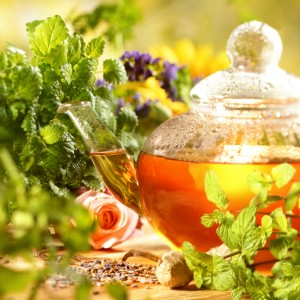
When brewing a tisane you need to realize that unlike black tea a brewing time of 2 minutes is rarely long enough.  If you use a root, like Echinacea you may need to steep as long as 15 minutes to extract the medicinal properties and flavors.  I general recommend 5 to 7 minutes except when I have included certain long steep herbs. Different palates also demand different strengths so when trying a new herb, sample it after just a few minutes of steeping. It can always be diluted if it gets too strong. The standard formula is one teaspoon of herbs for each eight ounces of water.  

Some herbal remedies made as a tisane can bring almost instant relief, when they are taken to ease a headache for example, others take time to strengthen and stimulate the body systems which in turn promote healing.  So when hoping to effect rheumatism, patience will be required.

Tacoma Washington’s Mad Hat Tea Co has an herbal tea called “Pounding Headache”  that was designed by co-owner Maureen McHugh.  Made from white willow, lavender, rosehips, blue violet, lemon peel and chrysanthemum it is a good relaxer and has the essential components to work on headaches.  Willow bark is the original ingredient used in making aspirin.

Herbal Infusions of a single herb are not nearly as flavorful or as healthful as a blend. I make a popular blend called Dreamtime that I originally formulated as an alternative to Sleepy time from Celestial Seasonings which I found to be too strong in flavor to help me relax.  Dreamtime” tea blend helps to promote sleep, with a mixture of chamomile, catnip, lavender and when I have some, skullcap.  Many sleep blends contain mint which is a great herb for relaxation and settling the mind, but I dislike mint so this blend does not use it.  Unable to avoid making a mint relaxation blend to promote restful sleep I did make a minty flavored tisane called “Rest Easy.” Using lemon balm, chamomile, catnip, spearmint and lemon grass the blend is slightly mint-flavored and but sweet and citrusy.

Another item to consider when brewing herb tea is not only what will enhance the flavor, but also what will improve the look or aroma of the tea.  Natural Herb tisanes are general light in color. Sometimes colorless, so you need to add hints of color and touches of extra flavor with additional ingredients.  I use hibiscus to add a rich red color, like in Holy Basil Relaxing Tea and cinnamon it lend a natural brownness as it does in Afternoon Lift Tea.  When I want something sweeter fennel seed, anise seed or licorice root will work. I put that in a winter teea called Holiday Magic.  Strongly flavored medicinal herbs like valerian can be covered by adding other strongly flavored herbs like peppermint or lemon verbena.

The following is a varied list of herbs that are safe to drink on a daily basis (the only exception being the caffeine in yerba mate which should be treated similar to coffee and tea). Pregnant women should consult their doctors before using any new herb.  Many herbs are not advisable for those pregnant or breast feeding.

ROOIBOS (we give more details on this tea herb in the Herb of the Week Rooibos post)

This is the herbal drink for people who don’t like tea. It’s not bitter, grassy or even green. In fact, its nickname is red tea. The bushy shrub grows only in South Africa where it has long been a staple.

Some describe the flavor as citrus; others liken the taste to a grain like wild rice. Whatever people taste, the slightly sweet flavor is unique. It brews into a deep honey-colored liquid.

There are many health claims surrounding rooibos, but one thing is certain: it has high levels of antioxidants. Weve used this in seasonal teas, as well as specialty teas.

YERBA MATE

One might not think of holly when reaching for an herbal tea but that’s what yerba mate is. A South American holly to be exact. A popular drink in Argentina and other countries south of the equator the herbal infusion is traditionally drunk through a metal straw from a gourd.

The herb is sold dried in green and roasted forms. The green version has a grassy flavor, reminiscent of bamboo. The roasted replaces that grassy flavor with smoky and grain notes.
Because yerba mate has caffeine and other xanthines, However, the profile of those stimulants is different from that of coffee and tea and some studies have suggested it affects the body in a different way. It’s high in antioxidants and can give a morning lift.

Maureen McHugh, who believes in the curative properties of yerba mate and rooibos that she blended them together in a tea she calls “Remedy for death.”  I love that idea, and may be making a similar version myself.

MINT

I grow a black stem peppermint because the scent and flavor or both sweet and cooling and stronger and more singular than other mint varieties.  I drink it for the soothing qualities it has on my throat when I have to do a lot of speaking and lecturing.  The scent will help wake you up and I love using it in my bath as well as tea products.  The girl scouts always gravitated to Peppermint when we would use the herb in programs, so I always include it in a tea blend for children.

Since peppermint is a strong mint flavor I will also use Spearmint or Applemint (which a spearmint cultivar) in my tea blends (like Winter Remedy) when a gentler hint of sweetness and mint are desired. 
Mints will be both cooling and warming as well as stimulating, but they are also good for relieving digestive problems and soothing fevers.  Peppermint is said to be good for migraines and headaches.

LEMON BALM

Lemon Balm is a great choice for growing in the garden as it has a pleasant lemon-scented leaf.  It is also good for attracting bees to the garden and the aroma is said to drive away insects.  In the Middle Ages it was one of the herbs strewn on the floor.  Lemon balm is a known anti-bacterial with anti-oxidant properties.  It is a calmative, anti-spasmodic, sedative, and nervine.  Its antidepressant qualities are gaining popularity. The tisane can relieve tension, restlessness, nervous sleep disorders, menstruation, digestive and gastrointestinal disorders.  It can rejuvenate the central nervous system. And most importantly, lemon balm leaves make a wonderful refreshing and calming summer iced tea. Recent research shows it may benefit "cognitive performance and mood and may therefore be a valuable adjunct in the treatment of Alzheimer's disease."

Good for feverish colds, nervousness and depression including post natal depression, the light flavor of lemon balm makes it good for children and it is a great remedy for childhood infections and chronic bronchitis.  The oil of lemon balm has been used on cold sores and a handful of the leaves are even good used in the bath to add relaxation.

As part of a new idea I thought I would share at least one herbal tea recipe a month and then use it as a spring board to discuss the herbs included and how to grow or use them during the rest of the month.  So here is an herbal tea (tisane) to try on your own:

Sweet Mint Remedy
This is a great cold remedy with anti-bacterial properties and stomach calming attributes.  It is also good fro women issues and cramps and upset form menstruation.  With the licorice it is sweet enough that no sugar or honey will be needed.

1 Tbls. plus 1 tsp. peppermint leaf
3 slices Chinese licorice root *
2 tsp. raspberry leaf
1 tsp. lemon grass
1 quart water, boiling

Steep the herbs in the boiling water covered fro 4 minutes.  Strain and discard herbs but save licorice root and return it to tea for some extra sweetness.  Enjoy the tea hot or chilled. (Makes 4 cups.)

*Licorice note – Chinese licorice is available at Chinese markets and herb shops.  Do not substitute American or European licorice, both are strong laxatives and will not give you exactly what you were expecting with this tea.

Wednesday, January 18, 2012

Rooibos - Herb of the Week

In keeping with herbs good for hot tea in the month of January (which is HOT TEA month!) I decided to discuss
Rooibos Aspalathus linearis, red bush tea as the Herb of the week.

photo courtesy of www.bushmanskloof.co.za
Deep in the heart of South Africa, in the mountains and valleys of the Cedarberg region near Cape Town, vast vistas, fields of verdant green bushes, fill the landscape. Traveling throughout this precipitous expanse, one may not suspect that this bright bush, which the locals refer to as "Rooibos," (pronounced roy-boss), could be such a versatile and remarkable herb. Among Rooibos' many uses, Rooibos' most popular utilization is as a tisane, or herbal beverage. Also known as Red tea, Bush tea and Redbush tea, Rooibos tea has become the hottest trend in the tea industry.

The product has been popular in Southern Africa for generations and is now consumed in many countries. Rooibos is grown only in a small area in the region of the Western Cape province of South Africa. Like most real teas (Camellia Sinensis), Rooibos tea goes through a fermentation process. Rooibos tea is finely chopped, bruised and left to ferment in heaps. Rooibos tea is then left to dry in the African sun, where it changes from a vivid green to a deep mahogany red the unique color which Rooibos tea is known and adored. This process produces the distinctive reddish-brown color of Rooibos and enhances the flavor. Unoxidized "green" Rooibos is also produced, but the more demanding production process for green Rooibos (similar to the method by which green tea is produced) makes it more expensive than traditional Rooibos. It carries a malty and slightly grassy flavor somewhat different from its red counterpart.

In South Africa it is common to prepare Rooibos tea in the same manner as black tea, and add milk and sugar to taste. Other methods include a slice of lemon and using honey instead of sugar to sweeten.

Rooibos is becoming more popular in Western countries, particularly among health-conscious consumers, due to its high level of antioxidants such as aspalathin and nothofagin, its lack of caffeine, and its low tannin levels compared to fully oxidized black tea or unoxidized green tea leaves. Rooibos also contains a number of phenols, including flavanols, flavones, flavanones, and dihydrochalcones. Two rooibos flavonoids, quercetin and luteolin have been known to have cancer fighting qualities. Rooibos does not contain the antioxidant Epigallocatechin-3-gallate (EGCG).

HISTORY
Through the 17th and 18th centuries, European travellers and botanists visiting the Cederberg region in South Africa commented on the profusion of "good plants" for curative purposes. In 1772, Swedish naturalist Carl Thunberg noted that "the country people made tea" from a plant related to rooibos or redbush.

Traditionally, the local people would climb the mountains and cut the fine needle-like leaves from wild rooibos plants. They then rolled the bunches of leaves into bags and brought them down the steep slopes on the backs of donkeys. The leaves were then chopped with axes and bruised with hammers, before being left to dry in the sun. The Dutch settlers to the Cape developed Rooibos as an alternative to black tea, an expensive commodity for the settlers who relied on supply ships from Europe.

In the 1930s, Ginsberg persuaded local doctor and Rhodes scholar Dr. Le Fras Nortier to experiment with cultivation of the plant. Le Fras Nortier cultivated the first plants at Clanwilliam on the Klein Kliphuis farm. The tiny seeds were difficult to obtain, as they dispersed as soon as the pods cracked, and would not germinate without scarifying. Le Fras Nortier paid the local "volk", some of whom were his patients, to collect seeds. An aged Khoi woman came again and again, receiving a shilling for each matchbox filled with seed. She had found an unusual seed source: having chanced upon ants dragging seed, she followed them back to their nest and, on breaking it open, found a granary. The attempts by Dr. le Fras Nortier were ultimately successful, which led Ginsberg to encourage local farmers to cultivate the plant in the hope that it would become a profitable venture. Klein Kliphuis became a tea farm, and within ten years the price of seeds soared to an astounding rate, the most expensive vegetable seed in the world. Today the seed is gathered by special sifting processes. Since then, rooibos has grown in popularity in South Africa, and has also gained considerable momentum in the worldwide market. A growing number of brand-name tea companies sell this tea, either by itself or as a component in an increasing variety of blends.

Due to the difficulties buying and shipping tea (once again, I'm referring to "real" tea) from war-ridden Asia during World War II, the demand for a substitute beverage was urgent. Since Rooibos tea was such a fitting alternative, Rooibos' popularity rapidly rose.  But it wasn't until decades later that Rooibos teas' real success began. In 1968, South African mother Annique Theron fortuitously stumbled across Rooibos teas' ability to calm her baby, relieving the infant of colic and insomnia. Gratified by Rooibos' natural healing potential, Annique went on to investigate and document Rooibos' health-promoting properties. In 1970, Annique published her findings a book titled "Allergies: An Amazing Discovery." With this publication, Rooibos tea first became widely recognized worldwide.

Widely acclaimed throughout the media and a New York Times Bestseller, The No.1 Ladies Detective Agency by Alexander McCall Smith extols the delicious qualities of naturally sweet Rooibos tea. Set in Botswana, Africa, The No.1 Ladies Detective Agency is the first book in a series (of the same title), wherein the main character, Precious Ramotswe, frequently entertains clients and visitors with a cup of what is referred to as "Bush" tea or "Redbush" tea (these, as we know, are colloquialisms for Rooibos). The enormous success of this series seems to have catalyzed a remarkable demand for Red tea, bringing Rooibos tea to the forefront of the beverage world.

USES
No matter what it is called (Red Tea, Redbush Tea, Bush tea, Mountain tea, Long life tea, Herbal Allergy tea or Rooibos Tea), all can agree that Rooibos is a delicious, naturally sweet and versatile beverage.  When Annique first made this discovery, it was impossible for her to know the many amazing health benefits Rooibos tea can provide. Throughout many years of rigorous scientific investigation, many benefits have surfaced and more are sure to follow.  Although most health claims about Rooibos have not been entirely proven, we are very clear that Rooibos tea contains many flavinoids, free-radical fighting antioxidants (similar to Polyphenols which have made Green tea famous). Even more alluring, unconfirmed studies are showing that these flavinoids may be up to 50 times more effective than those found in Green tea.

Rooibos is purported to assist with nervous tension, allergies and digestive problems. Traditional medicinal uses of rooibos in South Africa include alleviating infantile colic, allergies, asthma and dermatological problems.  Although human studies of rooibos are scarce in scientific literature, animal studies suggest it has potent antioxidant, immune-modulating and chemopreventive effects. In addition, no adverse side effects of consuming rooibos tea have been documented.  Being that Rooibos tea is naturally caffeine free (an especially important benefit for pregnant women, children and caffeine-sensitive drinkers), Rooibos tea can be consumed before sleep without caffeine's stimulant side effects. Rooibos tea has also been shown to soothe the body's reaction to allergy and rashes. Rooibos tea also contains anti-spasmodic agents which can relieve stomach pains. In Asia, it is known as "Long Life" tea, in that many believe that Rooibos has anti-aging effects

When added to lotions, Rooibos has been shown as an effective herbal remedy for skin ailments such as eczema and acne. In cooking, Rooibos tea has been shown to be an effective meat tenderizer and a wonderful marinade. Rooibos is also being used as a dye, a vitamin, a spice and just about anything that could be imagined.

RECIPES

Orange flavored Rooibos

3 Rooibos teabags
One can of Concentrated Orange Juice (341 ml Frozen and unsweetened)
Iced cubes

Prepare 1 liter of strong Rooibos (by steeping 3 bags in 1 liter of boiling water for more than 10 minutes).  Sweetner can be added to the warm Rooibos if a sweetened drink is required. Remove the teabags and add the frozen orange juice. Stir and add ice (2 to 3 trays of ice will be enough to cool down the tea and dilute the concentrate) Serve immediately with more ice cubes, garnished with fruit slices and mint. This mix can also be served later but then we recommend that you add less ice and let it cool down normally. Will serve 12 glasses.


Rooibos Fruit Smoothie

1/2 banana (preferably frozen)
3 cups fruit (peaches, berries, frozen or not)
Cold Rooibos tea until it reaches the top of blender

Blend and enjoy! A healthy energizing treat anytime!

Rooibos Pancakes

Using yesterday’s tea to make this mornings pancakes is a great way to use up Rooibos and add flavor, color and nutrients to your recipe.

2 cups cold Rooibos tea (or warm if it happens to be)
2 eggs
2 cups whole wheat or unbleached white flour
1 teaspoon baking soda with a tsp of apple cider vinegar to activate it
1 teaspoon vanilla (optional)
2 tablespoons oil of any kind (I use olive, canola or sunflower would be fine)

Combine the wet ingredients (except vinegar and oil), add the dry ingredients including baking soda and add the vinegar right on top. Once it fizzes, stir dry ingredients into wet until you have a smooth mixture. If it seems too stiff, add more rooibos, water or milk. If it seems too liquid, add a little more flour. The last step is to add the oil and stir just a few times so you can see the oil coating the outside of the batter. Heat cast iron pans or some other non stick pan. Pour into fry pans by the cup and when you see bubbles across the top of the pancake flip and cook on the other side for 25-50 seconds depending on the heat. The pancakes should be a golden brown color on both sides and cooked all the way through.

Rooibos Vegetable Soup
1/8 cup olive oil 
3 onions, finely chopped
2 cloves of garlic, crushed
1 lb of bacon, diced
2 cups broccoli, broken into florets
3 carrots, chopped  
4 potatoes, diced
2 1/2 cups green beans, cut into 1” pieces
2 cups cabbage, sliced (optional)
1 small can tomato paste
6 chicken stock cubes, dissolved in 6 cups of hot Rooibos Tea
Coarsely ground black pepper and salt to taste   
 ¼ cup Tbsp fresh parsley, chopped

Sauté garlic & onions in heated oil in a large saucepan until tender.  Add bacon & fry until done, but not brown.  Add the remaining vegetables and stir-fry slightly. Add chicken stock and bring to boil. Reduce heat and simmer until vegetables are tender. Flavor with salt, pepper and nutmeg. Sprinkle with parsley & serve.  (Serves 8-10)
Related Posts Plugin for WordPress, Blogger...