Showing posts with label pineapple mint. Show all posts

Tuesday, August 7, 2018

Pineapple Mint Ice

Yesterday we shared a Basil-Lime Sorbet recipe.  Today I have a Pineapple Mint Ice which is simpler to make with just a blender and a pan to freeze the ice.


Pineapple Mint Ice
1 cup cubed fresh pineapple (or 1-8.25 oz. can unsweetened chunks)


1/4 cup honey

1/2 cup grapefruit juice
15 to 20 fresh pineapple or apple mint leaves
1/2 tsp grated fresh lemon peel

2 Tbls fresh lemon juice
Springs of fresh mint for garnish

Mix all ingredients together.  Puree until pineapple is completely blended and mint leaves are finely chopped.  Place in the freezer in a backing pan until mixture is firm but not solid, about 1 to 2 hours.  Scoop out into sherbet or tall parfait glasses.  Garnish with mint sprigs and serve.


To find any recipe featured this month - use the search box and type: GardAug

To find any theme recipe from this year type: recipe2018

For 2018 the monthly recipe themes will be:
   January - Chicken Soup (ChickJan)
   February - Beef Stew (StewFeb)
   March - Jambalaya (JambMar)
   May - Ham and Shrimp Dishes (ShrHamMay)
   June - Bread recipes (BreadJun)
   July - Grilling (GrillJul)
   August- Garden Delights GardAug
   September - Salsa, Corn and Jelly 
   October - Squash Dishes 
   November - Pumpkin Recipes 
   December - Herbal Cocktails 

Monday, March 12, 2018

Not all Herbs are created Equal - Annuals, perennials, tender perennials, biennials and shrubs

When choosing herbs to go into your garden or herb garden you must recognize that not all herbs are the same.  They need different growing conditions, they have different habits, they even come in different colors.  For the most part all herbs need full sun which is defined as 6 to 8 hours of sunlight a day, they enjoy a well-drained soil with a moderate amount of water.  Herb as weed-like so they can survive less than perfect conditions by growing more slowly or producing less leaves and flowers.  However, some actually thrive in different conditions, so it helps you know your plants a bit better.  I am going to present few terms you might find in books or on seed packets and what that means to growing certain herbs.

Annuals

Some herbs are annuals, these herbs are not cold hardy and have a single season growing habit that produces flowers and seeds for next year.  Many, like dill, have seed you can use to cook with as well as the leaves.  However, these plants are always trying to make seed so harvesting and cutting flowers off will increase their size and deter their natural habit.  Chervil, summer savory, any basil, cilantro, and dill are all annuals, but are easily grown from seed sown directly into the garden patch.


Dill – sow seeds bi-weekly for a continuous crop of this annual, giving you leaves and seeds to use in cooking.


Fennel - bronze Fennel is pretty with darker leaves than it green cousin and it is an annual you can grow easily from seed. Here it looks great flanked by Swiss Chard

Hardy Perennials

Some are hardy perennials, these will come back year after year producing many branches to be cut and used or dried.  They sprout early and sometimes depending on the weather you can actually get a hefty harvest in April even in the colder north. Mints, lavender, catnip, lemon balm, oregano, all are hardy perennials.

Apple Mint

Pineapple Mint
Mints – you can enjoy the many sub species to get different flavors, like Orange Mint, Mojito Mint, Chocolate Mint or Lemon Mint.

Tender Perennial

Tender perennials can come back year after year, but generally are not hardy below 32 degrees so if you live in the north you treat them as an annual or bring them in for winter, but in the south you may, with protection, be able to winter them over. Examples of a tender perennial include, rosemary, scented geraniums, pineapple sage, bay laurel and marjoram.

Marjoram -- is a tender perennial and many people grow it as an annual and harvest it to the ground before the first frost in the fall.

Biennial

parsley
Between tender and hardy perennials are the biennials.  These are herbs that come up a second year, but in that second year they are planning to flower and produce seed and not much else.  Many, like parsley and angelica, become less tasty during the second year and are often grown as annuals.

Parsley - this leafy plant grows in whorls close to the ground, but sprouts into a stock in the second year when producing seed.


Woody Shrub

Woody shrubs are herbs with a strong woody stem and can be grown in the landscape as a shrub or in the herb garden as a perennial.  These would include sage, winter savory and even the tender perennial lemon verbena. Some people consider lavender a woody shrub because it is often grown as a hedge, but the stems rarely get woody.

Common Garden Sage

Sage is attractive and comes in several varieties including purple and tri color, however the colored varieties are not as hardy as the original.

Tri-color Sage

Other Textures and Conditions

Some familiar herbs come different colors or textures, like tri-color sage, bronze fennel, golden oregano, variegated lemon balm.
Golden Lemon Balm
Some herbs love a dry area, like thyme which works great in a path or a rock garden.  

thyme in a stone walkway

You can also enjoy some great varieties here, with creeping thyme that has a great pink/purple flower; or variegated lemon thyme that adds color and other thyme varieties with different shades of green or white highlights like silver thyme, or Wedgewood thyme.
Golden Thyme
variegated lemon thyme
A few herbs even like wetter conditions, like Marsh Mallow or Meadowsweet.

Marsh Mallow - This bog dweller sends up tall spikes of lovely pink flowers and stately foliage. Reaching up to 6 feet in height, marsh mallow prefers full sun. Its seeds, flowers and leaves are edible, and yes its root is used to make marshmallows


Meadowsweet - Meadowsweet’s frothy cream-colored flowers and fragrant leaves are very useful. The plants grows 2 to 6 feet tall and is happy in moist or wet soil, in sun or part shade.


Wednesday, February 8, 2017

Exotic Herbs for 2017 - Herb of the Week

I always encourage folks to grow at least one herb that is new to them.  Something you have not tried before, something that is a bit harder to locate and might require on-line ordering or a special inquiry at your local nursery or a trip to a plant sale or nursery out of your local area.  I think it is important to explore plants and herbs and this is a great way.  You do not have to be the one how know every herb or grows them all, but try one new something that is out of the ordinary.

Here are some suggestions:


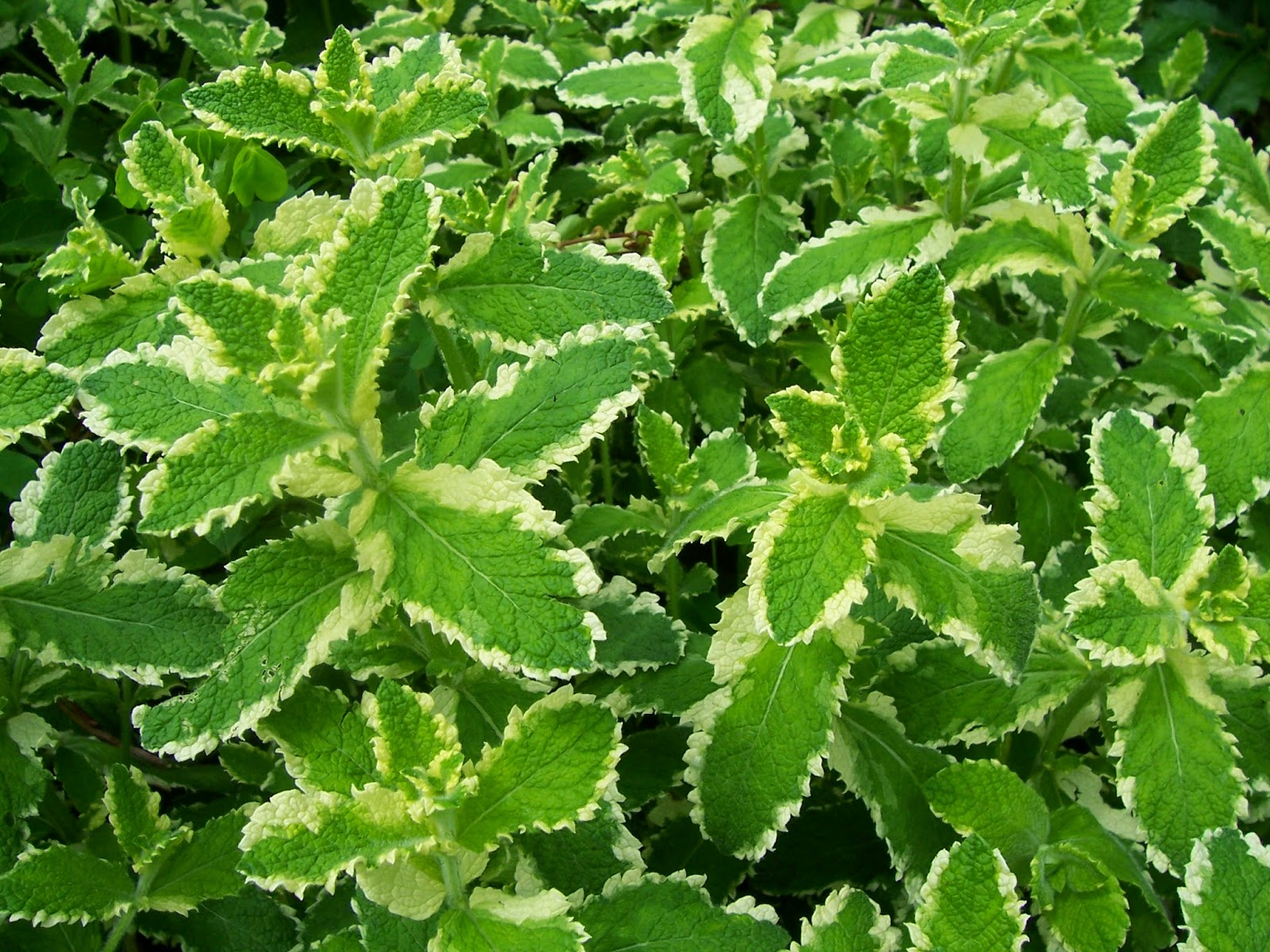
Pineapple Mint (Mentha suaveolens 'Variegata') - this is a mint we will have available at the Garden Club of Villa Park Plant sale on May 11 & 12, 2017.  I love it as a focal point plant because it has variegated leaves that are random in nature.  Some are green and white, others white and green, still others only white or only green, sometimes all on the same stem. It smells and taste minty with a hint of sweet pineapple.  It is great tossed into a fruit salad or made into a fuit dip.  I think the best thing about it is, the plant is not always winter hardy.  It may not make it though a Midwest winter so you do not have to worry about it taking over the garden.  It has a somewhat less than upright habit which makes it very attractive in a container kind of falling out the sides.  For more info on this plant check out the previous blog post - Herb of the Week Pineapple Mint.

Variegated Lemon Balm

Variegated Lemon Balm (Melissa officinalis 'Aurea') - You will have to search for this one, it is not easy to locate, but do not be afraid to ask for it at your nursery because it is is hardy and will grow in part shade it is often int he landscaping section with the catnip.  This is also a mint and like its cousin Lemon balm can grow well and spread.  You can use it anywhere typical Lemon Balm is used in cooking and tea and has all the same soothing and relaxing properties.  I love the color of the leaves more yellow and green than white and green, as it makes a great contract in an otherwise overly green herb garden.  it is also lovely planted among white items like Dusty Miller Artemesia and snowy catnips.

Lemon Grass is another great plant that is often overlooked in the Midwest.  It is an annual here (native to Zone 9,) so you must dig it up and bring it in to over-winter or do what I do and harvest it at the end of the season at ground level and hang dry it.  The grass fronds are lime green to bluish green and can get 3 to 5 feet tall in a single growing season. I like to plant them in groups of three, but the other two plants can be other grasses like a zebra grass or a red grass for contrast.  The lemon grass has a wonderful lemon scent, especially when cut.  It needs full sun and rich well-drained soil with ample moisture.  I planted mine last year in the rain garden and it soaked up the extra moisture and grew thicker more fragrant leaves as a result.  It can be used in cooking and tea.  The citrus-lemon flavor is great in broths and stir fry and the tea is light and lemony and a wonderful after-dinner tea to aid digestion. There was an Herb of the Week post on lemon grass in 2010

I've made suggestions like this in the past for exotic herbs to try, so here are a few of my past suggestions you can check out too:

Exotic herbs to try  (from 2013)

Exotic Mint Varieties (from 2016)

Wednesday, April 29, 2015

Pineapple Mint - Herb of the week

When deciding which mint to have at the Men's Garden Club plant sale (coming up soon on May 8 & 9, 2015 -- 320 E Wildwood Ave, Villa Park, IL 9am to 3pm), we decided to choose a mint that was somewhat unique and exotic.  Something that you might not find in just any garden center.  The mint we chose was Pineapple Mint.


So today's Herb of the Week is 
                  Pineapple Mint (Mentha suaveolens ‘Variegata’)

This is a highly ornamental, fragrant, useful herb, all owing to its green-and-cream variegated leaves. A great choice for gardeners looking to combine the ornamental and edible gardens into one. It is also deer resistant and attractive to butterflies and hummingbirds.

Mint -- the name has a romantic and scandalous Greek story behind it! Hades, the God of the Underworld, fell in love with Minthe (or Menthe), a river nymph. When Persephone, Hades’s wife, found out, she turned Minthe into a plant, so that everyone would walk all over her
and crush her. Unable to undo the spell, Hades gave Minthe a magnificent aroma so that he could smell her and be near her when people trod on her. 

Multiple Mints
The best-known mints are spearmint (Mentha spicata) and peppermint (Mentha x piperita). To confuse the matter, there is also water mint (Mentha aquatica), horse mint (Mentha longifolia), and pennyroyal (Mentha pulegium). And then there are the flavored mints: apple mint, pineapple mint, chocolate mint, orange mint, and ginger mint. Mints are almost too easy to grow, so unless you speak very firmly to them and tell them they are not allowed to cross the street, your neighbor will have them in her marigolds. They crossbreed easily, too, so if you want your pineapple mint to remain true to its divine nature, give it a separate garden spot of its own or be ready to replace it each year.

Most of the plants in the mint family, including the true mints, are not native to the United States, but were introduced by Europeans. It’s common to find spearmint growing along streams or springs in many parts of the United States. This is because pioneers moving westward often carried along a few spearmint roots to plant in springs and along streams, believing mint purified water. The sweet aroma of mint next to the cool water of a spring on a hot day was nearly as refreshing as the water itself.

To Grow

Pineapple mint is a variegated cultivar of apple mint (Mentha suaveolens). It features attractive, variegated leaves, usually with white margins, on plants that grow up to a foot tall. The leaves are bumpy and hairy and the white edging can make them look as though they are sporting a ruffle. It is often referred to as a fuzzy mint.

White or light pink flowers bloom on small spikes at the top of the plant in summer. The flowers attract a wide variety of pollinating insects, including bees and butterflies. Deer dislike strong fragrances and hairy leaves, so they have two reasons to dislike pineapple mint. It makes an attractive and fragrant ground cover, and also grows well in containers and hanging baskets.

Mints seldom grow true from seed. Even if grown some distance from each other, the plants often cross and the seedlings can be some mixed-up little mints. For this reason, cuttings generally are the method of choice for propagating mint, especially pineapple mint.  Never grow different mints in the same bed, as they will grow together and lose their distinctive flavors. Keep them separated, or grow different varieties in pots on your patio.

Pineapple Mint is hardy to Zone 5.  Grow pineapple mint in full sun or partial shade in rich, moist soil. Plants grown in sun tend to stand upright, while those that get afternoon shade sprawl near the ground.
Keep the soil evenly moist until the plants are well-established. Once they are growing well, you’ll only need to water them during dry spells. The plants don’t need regular fertilization when planted in good garden soil. Older plants become woody and unattractive. Pull them up and let younger plants fill in the empty space.
Pinch out the growing tips of pineapple mint plants regularly to keep them compact and bushy. You may occasionally find solid green sprigs of mint mixed in with your pineapple mint. These are sprigs of apple mint – the parent plant of the pineapple mint cultivar. You should pinch them out as you find them because, like most variegated plants, pineapple mint isn’t as vigorous as its non-variegated parent plant, and the apple mint will soon take over.
You can see the non-variegated apple mint popping up in this bed
The only problem with pineapple mint is that it spreads vigorously. This can be good if you want to use it as a ground cover to fill an area, but it will eventually find its way into the rest of the garden unless you install a deep edging around it. Growing pineapple mint in containers is a good way to keep this and other mints under control, but you’ll still need to take some precautions. The plant has been known to escape through the drainage holes in the bottoms of pots and even jump from pot to pot in container groupings. If you plan on planting pineapple mint in a pot, keep in mind that its roots grow quickly. I recommend using a medium sized pot, around 12 to 15 inches deep and seven to 10 inches wide. If you are going to plant mint in the ground, keep it away from other herbs. It will give a minty flavor to its closely surrounding plants. On that same note, don’t plant different types of mint next to each other, as they will loose their original flavors.


To Use

Place a couple of fresh mint leaves in the filter with the freshly ground coffee as it brews in the morning for a very pleasant cup of coffee. A few leaves in hot chocolate tastes great, too. I add a couple of dried mint leaves to my sugar bowl in summer to add flavor to the sugar, for serving to guests with iced tea. There are a number of pineapple mint uses that make this versatile plant well worth growing. Use it in beverages, as an attractive garnish, in potpourris and in any dish that calls for mint.

Recipes

Minty Chickpea and Cottage Cheese Salad

1 large cup chickpeas, drained
¼ red pepper, chopped
½ cup cherry tomatoes, halved
Freshly grated ginger
½ cup low-fat cottage cheese, crumbled
1 tbsp extra virgin olive oil
Salt and freshly ground pepper to taste
Handful of fresh pineapple mint leaves, chopped
1 tsp grated lemon zest

Mix everything together and enjoy a satisfying, summery salad.

Mango Mint Salsa
Use it as a sauce on chicken or fish or dip into it with veggies or tortilla chips.

2 ripe mangos -- peeled and chopped
3 green onions -- finely chopped
1/2 cup chopped pineapple mint
11/2 tablespoons lime juice
Freshly ground black pepper

Directions:
Combine all ingredients. Process until smooth.  Set aside for a minimum of 15 minutes before serving at room temperature. Keeps well, covered and refrigerated up to a day. Makes up to 11/2 cups.

Broiled Eggplant with Garlic Yogurt and Mint
Eggplant broiled until it's luxuriously tender and slightly sweet from caramelization finds great flavor contrast with a simple sauce made with tangy yogurt, pungent garlic and fresh mint.

Eggplant is a very good source of potassium and vitamins B1 and B6, and a good source of folic acid, magnesium, copper, manganese and niacin. Low in calories and an excellent source of dietary fiber, eggplant may also help lower cholesterol levels. Recently, researchers have discovered that eggplant skin contains an anthocyanin flavonoid called nasunin, which is a potent antioxidant and free-radical scavenger that protects cell membranes from damage. Nasunin also helps move excess iron out of the body.

2 eggplants (each about 1 lb), cut crosswise into 3/4-inch slices
Nonstick cooking spray (preferably olive oil)
1/2 tsp fine sea salt, divided
1 clove garlic, mashed
1/2 cup nonfat plain Greek yogurt
2 tsp freshly squeezed lemon juice
1/4 cup packed fresh pineapple mint leaves, chopped

Directions:
Preheat broiler, with rack set 4 to 6 inches from heat source - Broiler pan sprayed with nonstick cooking spray (preferably olive oil.)  Place eggplant on prepared pan and spray generously with cooking spray. Sprinkle with half the salt. Broil for 15 to 20 minutes, turning occasionally, until very soft.

Meanwhile, in a small bowl, combine garlic, the remaining salt, yogurt and lemon juice.

Serve eggplant topped with garlic yogurt and sprinkled with mint.


Related Posts Plugin for WordPress, Blogger...