Showing posts with label cats. Show all posts

Sunday, September 13, 2020

Improvements and Changes to Backyard Patch Herbs

Covid has taken a lot out of me.  I am sure you can relate.  I did not realize how much I need to interact with others to boost my own creativity.  I miss just talking randomly about herbs.  Comments on my blog aren’t doing it, discussions on Facebook aren’t doing it.  I just need to have spontaneous questions. Everything seems to take me longer to do: Making herb blends, printing labels, packing items.  I can spend hours and lose track of time.

I have tried in this down time of quarantine to learn how to edit videos, so far I have not finished one of them.

I did clean and organize the cabinets in the herb room, scanned a pile of recipes (still not much of a dent in the collection.) I organized my craft room and cleaned out my part of the garage. Seriously, I never do these things, much to my husband’s chagrin.

Working during Quarantine

I am working from home, all of my jobs are now in one building.  This could be part of my problem I never escape.  My living room is now my office, my dining room was for teaching via zoom, my basement is for blending herbs.  The only escape I have is the garden. Which is probably why I have been spending so much time there.  Neglecting things I should be doing, like writing my monthly newsletter.


The weeds have never been more tamed.  But I have not grown one herb or flower that was new, except those two biennials I planted last year.

The Silver Dollar Plant flowered wonderfully and made these great branches when I harvested the seed.


The hollyhocks turned out to be black (I had no idea from the gift seeds I got.) When the sun shown on the plants they actually looked deep purple.  I liked the color difference from morning to evening.


But beyond this I have not been very creative in the garden. 

We do have cats again.  It was hard being on lockdown with no pets so we contacted a fostering agency called Mutts and Meows and got a pair of young cats.  Aren’t they adorable?


I have not written an email to my membership in months, mostly because even finding the energy to post to the blog has been hard, a newsletter is time consuming and I have had ½ a dozen false starts.

There are few events to promote, no talks to support with info and no new herbs to share.  And since we are not traveling, I do not have any cool places for you to visit right now.  That makes finding newsletter topics difficult.  So finally when the weather turned cooler this week I sat down with my journal and a pen and a view of these….


Zinnia, Cosmos, calendula and on the arbor is hops, just about to ripen.  All I need is a couple days of sun and I will have a huge hops harvest.  Might need to learn to brew beer!

In my journal I wrote down product ideas, garden ideas, newsletter topics, recipe ideas and finally after all that writing I decided a few things.
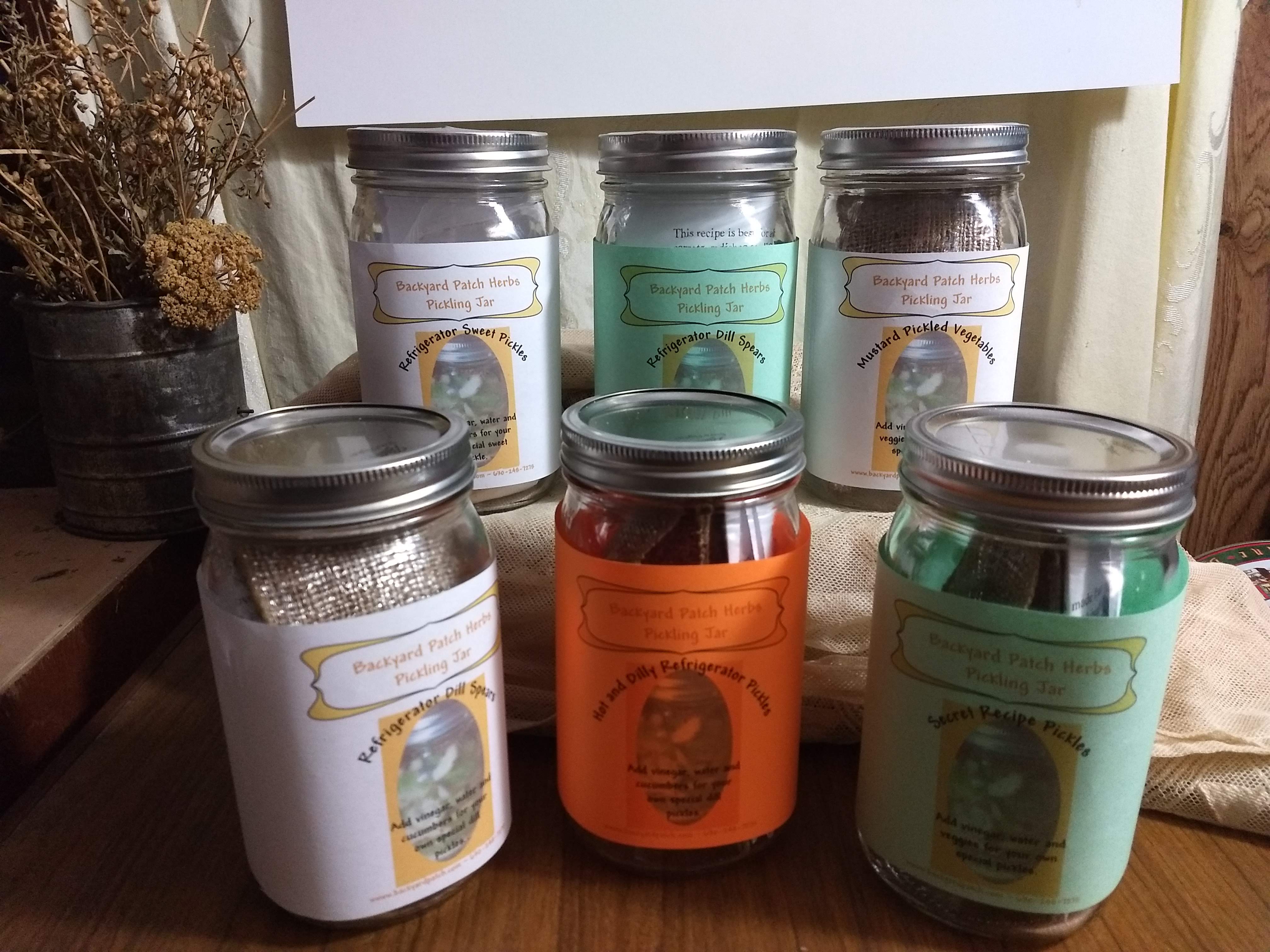


I created a DIY product - DIY Refrigerator Pickles. Doing things at home being popular these days made it fun to make kits for making refrigerator pickles. They have everything needed except vinegar, water and the veggies.  And as long as the veggies are fresh, they can come from a garden or from the store or farmers market.  In 24 hours one can have pickles without having to know how to can.  

If one wanted to know how to can, my Canning Basics class is coming up in October with District 214.  It will be virtual, so you don't need to leave home.  I am also showing how to make vinegar, sugar, honey and other items infused with herbs in a special three-part class called INFUSION which is happening starting September 16th at 7 PM via Zoom.

Time for Change

I have decided after making all my notes and watching YouTube videos on growing my business that things need to change. Don’t get me wrong.  I have nothing to complain about.  I still have my part time day job, I am still teaching in a limited capacity and Backyard Patch Herbs did very well during lock down, so I unlike many I could still pay the rent and pay bills.  My soup mixes and baking products were a big hit as were my gift baskets.  But I realized I need to simplify. The wide variety of products available all the time is terribly time consuming to make, even if I don’t make things ahead and only do on-demand crafting, it is still a lot of work. 

·        So I have decided to rework my product line and my email strategy, as well as what I do on Social Media. Here is the short list: 

  • My newsletter will be once every three weeks.  Not quite twice a month, but not once a month either. I will add more fun to the newsletter and cover more things, but in different ways, this way I can create useful content more often than before in less time.  
    • I will share garden images; 
    • easy and challenging recipes for the beginner and the adventuresome cooks; 
    • share more information of what I enjoy from my herb and gardening friends with links to websites you may have overlooked; 
    • book reviews on garden and herb topics; 
    • sharing the herb and gardening wisdom of my herby friends. 
    • If you want to join the newsletter visit this link.
  • I have enjoyed choosing recipes on a theme to post each month on the blog (this month the theme is quiche), so I will be doing more of that, expanding to include recipes with photos on Instagram. In other words, you get to see some of my hubby’s tasty creations.
  • I will also be changing my product line.  I plan to add some special items that will be DIY type creations that are available seasonally and will allow folks to enjoy herbs in new and different ways.
  • I will reduce my herb blends to those that are most popular and with the exception of my Italian Dressing and Marinade I will be retiring all blends that have salt. Stock up now they will be gone on December 31, 2020. If you want to vote on your favorite herb mixes, as there are 45 - I will be holding a vote of some sort in the newsletter and on Facebook in the coming weeks.
  • Although I love to experiment with Herb teas, I am going to reduce the offerings to 10 - 12 teas, those being my most popular. Other teas will come and go seasonally in much the way I have begun offering Holiday only teas for Halloween and the Winter Holidays.  Those of you who love a tea will always be able to order it, just remember the name and email and can send it.
  • I am going to offer subscription services, like a CSA style box as well as tea of the month and herb blends of the month. This is where I will share my new experiments rather than adding them instantly to my product line as I have in the past.
  • I will continue to offer remote programs on Zoom as well as in-person programs, but will work to add programs to a Youtube channel (I think I will trade herbs for editing assistance.) And eventually create an herb cooking class on a platform like Teachable where folks can learn at their own speed.
If there is anything you think I should or should not do in the coming times?  Any products you might like to see?  All suggestions will be considered.


Wednesday, September 3, 2014

Catnip - Herb of the Week

My cats have been bored since there was another heat wave here and I would not let them out on the patio in the humidity.  As a result they were bugging me to share the catnip.  So I chose as this week’s herb of the week -- Catnip Nepeta cataria

A perennial herb, belonging to the family Labiatae, the catnip plant, most commonly serves as a piece of recreation for house cats. Apart from this, the herb is also popular for its soothing effects and medicinal use for treating cold and flu symptoms and digestive problems. This is the reason why most people enjoy a tea made from the herb. Tinctures, infusions, and poultices have also been crafted from catnip.

In ancient times Catnip was cultivated for cats by the Greeks and Romans. Catnip symbolized fertility and was associated with goddesses of a cat figure and a lion. It was believed to change women into cats at night. In the language of flowers it is said to mean intoxication with love.


In medieval times it was grown in kitchen gardens as a flavorful salad herb and eaten fresh with other greens. It was also used to season meats, because of its robust flavor. 

 also a great pollinator attractor
Catnip tea was a popular drink in England before Chinese or Indian tea became available.  Catnip, with its strong appeal to cats, was grown around houses to keep rats away. Catnip is native to the Mediterranean, but is now grown on all continents.

An old Dutch recipe (reciept) from the 1600s used catnip (among other herbs) as a flover in egg fritters. 
“To make Egg-fritters which are good, first you take all sorts of herbs: Fennel, Violet leaves, Tansy, Sorrel, Spinach, Catnip, Beet and some Leeks and cut them fine together.”

Scientific nomenclature of the catnip plant is Nepeta cataria and it has an active ingredient known as Nepetalactone. Cats are known to have an extremely strong attraction towards this chemical, which is contained in the leaves and stems.


To Grow

Catnip is a perennial plant in the Lamiaceae family and, like all mints, can be invasive if not contained   Catnip (Nepeta cataria) is a tall (about three to four feet) plant with white flowers. It smells very strong with mint undertones. Catmint (or Nepeta mussinii,) on the other hand usually tops out at 15 inches and has purple flowers. If you would like to grow catnip, but don’t want to become a favorite feline hangout, Nepeta mussinii is the catnip for you. Some believe it’s more attractive in the landscape, too.  Both are deer resistant.
 
catmint (Nepeta mussinii)
Catnip is a very hardy plant that will grow in poor to rich soil and in full sun or light shade. More essential oil is produced when it is grown in full sun. Catnip will self-sow where it is planted. The plants are very hardy and need little attention, except for weeding. Catnip plants can be easily grown from seed. You can plant them outdoors or indoors, as well. However, keep them out of the reach of your cats, while they are establishing themselves.

The catnip plant has a tolerance for sunny and dry areas, and is considered drought tolerant, making it a popular landscaping plant. It will grow well from zones 3 through 9.  The plant does well even in poor soil, but one that is well-drained. Dense, well-shaped forms may be obtained by pinching the plant often, while it is in its growing period.

Harvest the plant upon flowering. Late morning is considered as the best time to do it. After getting them dried, crumble them, put into cloth toys and give some to your cat to enjoy.

To Use

To harvest catnip, cut the leaves off the stems and dry in a single layer in a dim, dry, and warm location. Catnip leaves have their highest concentrations of essential oil just before flowering in mid-summer. However, since they bloom from June through September you can also harvest while they are flowering. Dry them upside down in bundles, then store in airtight containers.

Catnip tea has been used to relieve headaches and upset stomachs, to induce sleep, and to relieve colic in children. Chewing the fresh leaves can also relieve a toothache. It has been used as a home remedy for colds, nervousness, fevers, and nightmares. Catnip tea is calming and helps induce relaxation and sleep, especially when mixed with lemon balm and chamomile. Catnip tea can have a sedative effect on people and is useful in settling an upset stomach. Boil 1 cup of water and add either 3 teaspoons of fresh catnip leaves or 1 teaspoon of dried leaves and steep and sweeten to your taste.  The scent of catnip, when used in aromatherapy, acts as a mild sedative, the opposite effect in humans as for cats. Catnip is often used in sleep or relaxation teas as well as in sleep inducing pillow mixtures.


Catnip oil has been used in perfumes, candies, and pharmaceuticals. Catnip tea is said to remove dandruff from the scalp.

Cats and other members of the cat family respond to catnip by sniffing, chewing and licking and body rubbing. This is an inherited response that is present in about two-thirds of all cats, so do not be surprised if your kitty is immune to the effects. The effects are not from ingesting the plant, but rather from an aromatherapy effect through their sense of smell. The plant must be crushed to release the chemicals responsible for this pleasurable effect. The fresher the catnip, the more essential oil the leaves contain, and the greater effect it has on cats. Sniffing catnip gives cat a feeling of euphoria that can make them playful, languid, or even hyperactive.  The effects of the nepetalactone don’t last long—after about 15 minutes your cat is generally ready for another nap.

It is the essential oil in catnip called nepetalactone that gives catnip its characteristic odor. Researchers have found this essential oil to be ten times more effective at repelling insects, especially mosquitoes, than DEET (the hazardous chemical compound found in many commercial insect repellents). Catnip also repels cockroaches.


Catnip has a very strong characteristic odor, so most often it is used in tea instead of as a food flavoring. When using catnip in cooking, choose the Lemon Catnip variety (sometimes called catmint or lemon catmint) and use only the flowers. Remove all bits of leaves as these are usually too strongly flavored to enhance cooking.


RECIPES

Pleasant Dream Pillow Herbal Mixture

3 Tbls. rose petals
3 Tbls. chamomile

1 Tbls. catnip
1 Tbls. spearmint
Pinch of thyme

Directions:
Combine ingredients and sew into a small pillow or put in a muslin bag or seal in a oversized tea bag. Tuck this into your pillow case for a restful night’s sleep and pleasant dreams.


Relaxation Tea
A tea to help you unwind and relax, it also promotes sleep with a relaxing and calming effect.

1/3 cup lemon balm, dried
1/3 cup catnip, dried
2 tablespoons seedless rosehips, dried
1 tablespoon lemon peel, dried
1 teaspoon organic lavender, dried

Directions:
Mix all ingredients together and store in an airtight container away from heat and light.

To Use: Place one level teaspoon of tea in a tea ball or tea infuser and place in one  cup of boiling water. Cover and steep for 5 minutes. Sweeten to taste, if desired, Sip and savor.


Sleepy Lemon Tea

1/2 cup chamomile
1/2 cup lemon balm
1/2 cup catnip
2 tablespoons lemon verbena
2 tablespoons lemon peel
1/2 cup green tea (optional)
1 teaspoon lavender flowers

Directions:
Blend all ingredients together and store in a airtight glass jar.

To Use: Use one teaspoon of tea to an eight ounce cup of water. Place one teaspoon tea in muslin bag or tea infuser. Fill cup with one cup boiling water and cover. Brew 2 minutes if green tea was added to recipe; or brew 3 to 5 minutes for herbal blend without green tea. Strain tea and serve sweetened with honey and lemon, if desired.

NOTES ON CATNIP TEA: Catnip tea can have a sedative effect on people and is useful in settling an upset stomach. Some research has shown that the juice from catnip leaves can stimulate menstrual flow, so pregnant women should avoid drinking catnip tea.

Relaxing Healing Herbal Bath Mix
Enjoy a relaxing bath with this fragrant mixture of dried herbs especially formulated to relax tense muscles and soothe the soul. The warm water releases the healing properties of the herbs which are then absorbed by your skin. The therapeutic effect of a relaxing bath will take effect in about 20 minutes.

6 Tbls. lavender
6 Tbls. lemon balm
2 Tbls. sea salt
2 Tbls. Chamomile
2 Tbls. Roses
2 Tbls. lemon peel
2 Tbls. calendula
2 Tbls. catnip

Directions:
Mix herbs in container and store in a tightly lidded jar.  Makes roughly 1 ½ cups

To Use: Place one tablespoon of relaxing bath mix into a muslin bag, coffee filer or even a tea ball and close securely. Add the bag to warm tub water and infuse while tub is filling. Remove bath sachet
from tub and allow to drain.

Insect Repellents (for more recipes on this topic check out this post from Wellness Mama) 
This recipe uses the essential oil of catnip to make a repellent.  I have also used a catnip hydrosol with the other essential oils added it to make a spray-on repellent.

8 oz apple cider vinegar, witch hazel, or vodka* OR a dry oil such as jojoba
       (water will work, too, but won’t preserve the potency of the oils as long)
15 drops lemongrass essential oil
15 drops eucalyptus essential oil
15 drops lemon essential oil
15 drops catnip essential oils 

Directions:
Blend all ingredients together and place in a dark colored glass bottle.  Shake well before applying.  

To Use: You can use a spray bottle or if using oil for the base, apply to skin like lotion.

Catnip Mosquito Repellent

2 cups catnip, washed
2 cups almond oil

Directions:
Bruise catnip and pack into a clean jar. Cover with oil, put a lid on the jar and set in a cool, dark place for two weeks. Shake jar lightly every day, and push herbs under the oil to avoid mold. Strain into a clean jar, seal and refrigerate for up to 8 months. (If your mosquitoes are especially ferocious, you can add other strong-smelling herbs, such as rosemary, pennyroyal, basil.) It's a good idea to try your concoction on a small spot of skin before you smear it all over yourself, to test for allergies.

To Use: Rub on exposed skin.

Catnip Cat Toys

If you have some sewing skill, I suggest cutting two squares of felt about 2 inches or so on each side.  Sew them on three sides, then stuffed it with catnip and sew it shut.  This little pillow will be your cats favorite toy if they are among those who enjoy catnip. 

If, like me, you cannot sew then you can do one of two things.  Buy an already made cat toy, slip open a seam and fill the toy with catnip, or place the toys in a zip seal bag filled with catnip and allow them to “marinade” for a day or two.

Since it is all about the smell, even a toy that has just hung out with catnip will carry the scent for a while making it a fun play toy.  I place 4 or 5 toys in a bag at a time and then take them out one at a time to let the cats enjoy them.

Tincture of Catnip

A tincture of catnip can be used as a sleep enhancing mixture before bedtime. I have given more detailed instructions for making a tincture elsewhere, but if you treat catnip like any other mint you would be tincturing, I think you will be successful.  Here is a quick way to craft the tincture. I fill quart canning jar 3/4 full with crushed dried catnip then fill jar with 100 proof alcohol, like Vodka or Everclear.  Take the tincture by the teaspoon added to water, tea or other liquid before bed. (See warning above under tea.)  

Thursday, January 3, 2013

Cat and Dog Treats you can make at home!


My cats are bored.  The squirrels that play on my patio keep then entertained when there is daylight, but as you all know in the northern hemisphere this time of year the days are shorter and the nights are longer. 
As a result the cats get bored and start picking on each other.  We got them many new toys for the holidays, a catnip mouse and a small stuffed cigar that can be carried around in the mouth, which my one cat loves to do.  We even created a new cat sleeping area under my husband's desk that is getting rave reviews.   However, they still wake us up in the middle of the night with cat wrestling matches.
Malo Gato
So we decided to reward good behavior with treats.  Let us sleep through the night and you get treats in the morning.  Don't and you have to wait until night time for anything special.

I can make treats with tuna and chicken, but these cheese bites seem to be the most popular in the morning.  They are even more popular than squirrel watching!


Savory Cheese Treats
·   3/4 cup white flour
·   3/4 cup shredded cheddar cheese
·   5 tablespoons grated Parmesan cheese
·   1/4 cup plain yogurt or sour cream
·   1/4 cup cornmeal

Preheat the oven to 350 degrees Fahrenheit. Combine cheeses and yogurt. Add flour and cornmeal. If needed, add a small amount of water to create a nice dough. Knead dough into a ball and roll to 1/4 inch. Cut into one inch sized pieces and place on greased cookie sheet. Bake for 25 minutes. Makes 2 dozen.
PaddyWhack

Now, just because the cats are getting treats, we cannot leave out the dog, so here is a treat for the pooch as well!

Dog Treats


biscuit dough:
1 1/2 cups flour
3/4 cup oatmeal
1/4 cup wheat germ
1/3 cup peanut butter
1/4 cup vegetable oil
2 Tablespoons honey
1/2 teaspoon baking powder
1/2 cup water
glaze:
1 large egg
2 Tablespoons milk

1. Preheat the oven to 275°.
2. In a large bowl: combine the flour, oatmeal, wheat germ, peanut butter, vegetable oil, honey, baking powder and water.
3. Mix the ingredients until thoroughly combined.
4. Roll the dough out to a ½-inch thick on a lightly floured surface. Cut into desired shapes and place on baking sheets.
5. In a small bowl, mix together the egg and milk. Brush the glaze on the biscuits.
6. Bake for 30 minutes. Rotate the pans, and bake for an additional 20 - 30 minutes, until biscuits are golden and firm.

Monday, October 31, 2011

Happy Halloween


Happy Halloween!


Related Posts Plugin for WordPress, Blogger...