Each year I make a point of saving
a few seeds, but this year I thought I might make a more concerted effort.
In chatting with a few friends, I
realized that some people do not collect seeds because they are unsure what the
seeds look like and how to save them.
Now when I started looking for info
to share, I came across Mr. Brownthumb. He has several
great blog posts including one on making a kit for collecting seed. Now I
am not as organized as he is, but I do collect some of the same seeds.
The largest family of
flowering plants is Compositae (Asteraceae). So if you are hoping to save the
seed of flowers from your garden these are probably the ones you are trying to
save. The Aster family includes asters,
sunflowers, Black-eyed Susans, rudbeckias, daisies, gazanias, calendula and
zinnias.
Another place to look up information on seed saving is the seed saving forums on Garden Web.
The largest family of
flowering plants is Compositae (Asteraceae). So if you are hoping to save the
seed of flowers from your garden these are probably the ones you are trying to
save. The Aster family includes asters,
sunflowers, Black-eyed Susans, rudbeckias, daisies, gazanias, calendula and
zinnias.
 |
| Zinnia of the Compositae family |
I experiment with
various annuals each year, trying a new basil or two, growing a different dill
or a unique nasturtium color combination.
When I discover a plant I want to try again, I will save the seed. I could say it saves you money buying seed in
the spring, but I cannot say seed saving has ever saved me from spending once
the catalogs arrive.
You want to save seeds
when you have a good year and this was a very good year, which got me to
thinking about being more organized. You
want to pay attention to the weather report and harvest before a rain or highly
humid day, moist air can cause a dried seed to expand and crack ruining it for
spring germination.
Where are the Seeds?
On herbs it is hard to miss the seeds as they tend to be obvious, like on dill or basil. But flowering herbs like Nasturtiums are a bit harder to locate.
Where are the Seeds?
On herbs it is hard to miss the seeds as they tend to be obvious, like on dill or basil. But flowering herbs like Nasturtiums are a bit harder to locate.
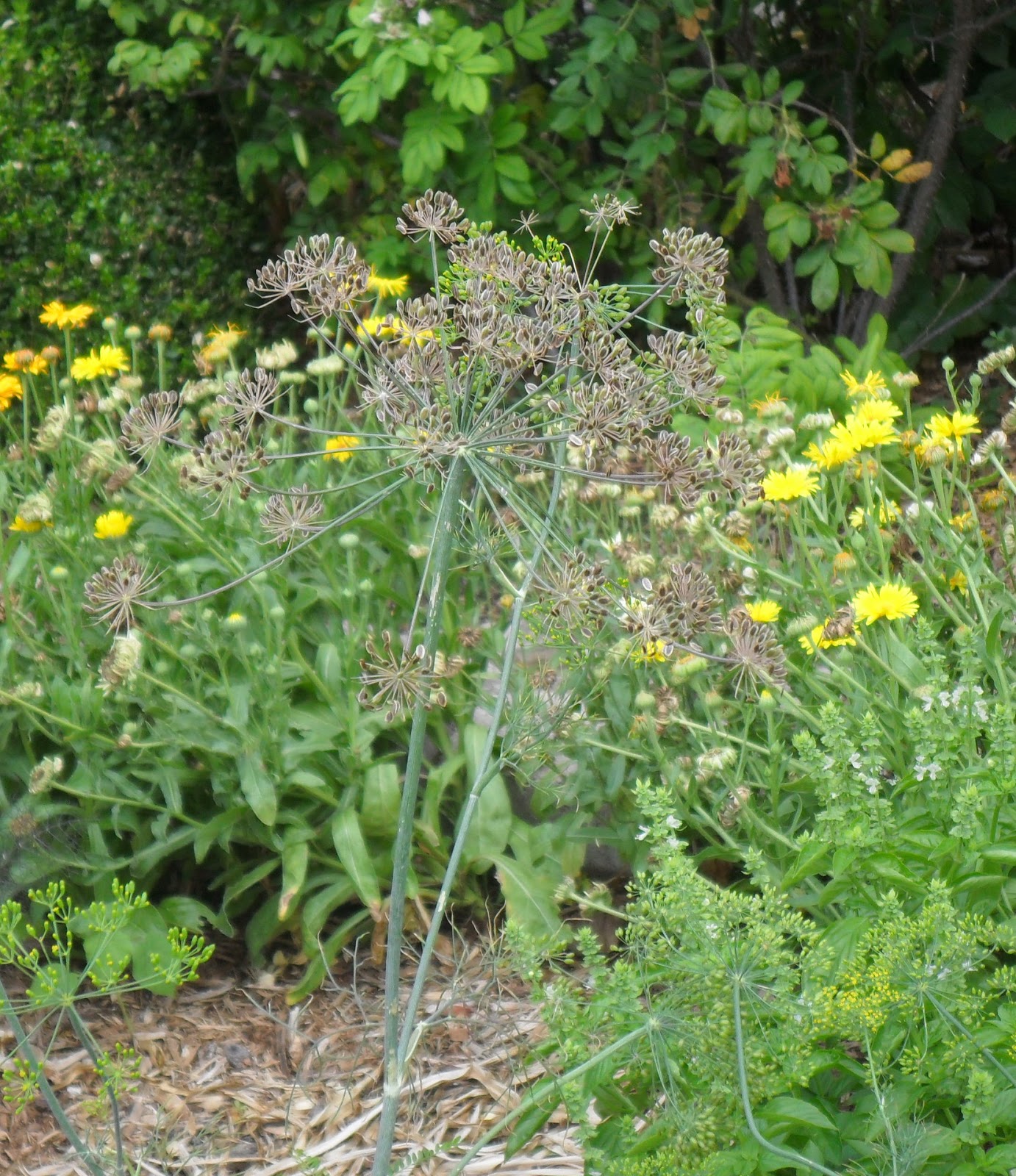
Plants in the Mint
family may produce many tiny flowers among a stem, like basil or Anise hyssop. These are a spike of tiny flowers each with a
seed nestled back at the stem. Collect these seeds by shaking them inside of a
paper envelope. Cutting off the stalks and hanging them upside down also helps release
the seeds inside. Of course this
assuming you let them flower which I do not always do, clipping the flowers off
as soon as I see them. However, come September
I choose the best looking plants and let them flower and go to seed so I have
seeds to collect.

With Coneflowers like Echinacea
or black eyes Susans. (Aster Family) the center of the flower is black and is
actually made up of smaller flowers that each produce a seed. You will be capturing that entire center as
the seed head. Compositae flowers, like those of calendula and zinnia, have
tight bunches of petals, with no “eye,” but the seeds develop right in the
center.


With a flower like a
dandelion the ends of the petals are the seeds so you want to collect the
flower head before the flower is entirely faded, because it will blow away in
the wind taking your seed with it.

As you see the key to
flowering plants is to look near the petals.
The colorful petals attract the pollinators, then once pollinated die
back or fall away leaving the seed exposed so it can be scattered.

Nasturtiums have a
very open flower that does not develop a seedpod, instead the seeds hang below
the flower in a little bundle. But all
you have to do to find them is sweep back the plant flowers and they will be
hanging underneath.
Alliums, or chives, are a flowering bulb, but the attractive puff ball flowers do produce seeds as well. You want to cut the flowers before they drop, but after they seem spent. If you wait too long the seed will scatter before you collect the flower head.

Seeds from vegetables and fruits like tomatoes, peppers, cucumbers are found
inside among the flesh.
Saving the Seeds
To save seeds you need
containers to keep them in while collecting and those to store them in once collected
and separated.
I generally collect in
paper bags and paper envelopes so any moisture in the seeds is not trapped in a
plastic container.

Once the seeds are
dry, then I place them in a new envelope or other sealed container to improve their
longevity. If I have a collection of
envelopes, I place those in a canning jar or a coffee can.

Record the information
about your plant when you harvest the seed, plant name, soil conditions, and
height of the plant. You have to do it
when you harvest because even 15 minutes later you will forget what you cut from
where.
Don't crowd too many
plant stems or seed heads into a small envelope when you're harvesting seeds.
To dry the seeds after
I collect them I spread them like my herbs on paper towel in cardboard
trays. Or I leave them in the paper bag
I used to collect them. You want to
remove as much plant matter (leaves, petals, etc.) as you can to avoid
mold. If leaving them in a paper bag you
want to shake the seed heads to keep them evenly drying. I will actually stir those on the tray with
my fingers occasionally. You only need a
few days to get the seeds dry if conditions are right.

Once the seeds are dry
place them in small envelopes for finally saving. You can use a plain envelope. Or you can make
a specialized one or even a decorative one. If you like a reminder of what to put on the envelopes of seed, try this template for seed envelopes.
Once you have all the
envelopes labels, place them in a glass jar with a tight fitting lid to keep
moisture from coming back into to the seed damaging its germination rate.


